Lessons
Princess Yoshiko Kawashima
A Princess Caught Between Worlds Yoshiko Kawashima in her high school days (Wikipedia) Princess Yoshiko Kawashima, born Aisin Gioro Xianyu in 1907, was never destined for an ordinary life. As a descendant of the Manchu Qing Dynasty’s imperial family, she had royal blood running through her veins, but after the dynasty fell in 1912, she was sent to Japan and raised by Naniwa Kawashima, a nationalist with his own ambitions. Stripped from her homeland, she grew up navigating a strange, shifting identity — was she Manchu? Was she Japanese? Or was she simply a survivor?
By J.B. Millerabout 4 hours ago in History
The Cognitive Tax of Debt: Why Africa’s Future Rests on the Shoulders of Masisi’s Women Beyond the Spreadsheet:. AI-Generated.
The Human Cost of Macroeconomics While macroeconomists at the IMF track the Democratic Republic of Congo’s multi-billion dollar debt-servicing hurdles, women like Ms. Zaina, president of the Tuungana cooperative, are paying the interest in "mental bandwidth." In Masisi, the national debt is not an abstract figure; it is the bridge that was never built, the clinic that lacks medicine, and the land title that remains a legal ghost. The Behavioral Economy of Scarcity Psychology teaches us that chronic financial insecurity functions like a computer processor running too many background programs.
By Hermano Badeteabout 5 hours ago in History
The Nazca Lines Paradox
In the Peruvian desert lie thousands of geometric shapes and massive animal drawings that can only be fully seen from aircraft, created by people who supposedly never developed flight, and nobody knows why they spent centuries making art they could never view.
By The Curious Writerabout 6 hours ago in History
The Foreign Accent Syndrome: When a brain injury suddenly changes the way you speak your native tongue.
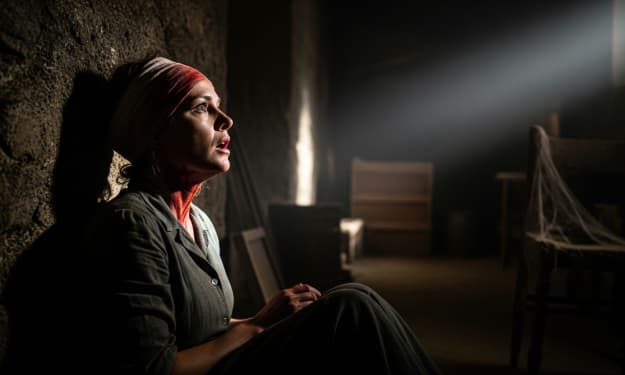
The smell of scorched wool and ionized air clung to the damp walls of the cellar in 1941 Norway. Monna Lorentzen didn't notice the blood at first. She noticed the ringing. It was a high, thin whistle that seemed to come from inside her teeth. A Nazi bombing raid had just leveled the block, and a piece of shrapnel had kissed the left side of her skull. When she finally opened her mouth to scream for help, the sound that emerged was not the liquid, familiar lilt of her native Norwegian. It was Berlin. It was a guttural, precise, and visceral German cadence. In an occupied nation where hearing that accent meant death or collaboration, Monna had just become a phonetic traitor to her own kin. Her brain had rewritten her heritage while she was unconscious.
By The Chaos Cabinetabout 18 hours ago in History
Trapped Beneath the Rubble
Darlene Etienne's miraculous rescue from Haiti's devastating 2010 earthquake and the faith that kept her alive The story of Darlene Etienne's survival for seventeen days beneath the rubble of a collapsed building following the catastrophic 7.0 magnitude earthquake that devastated Haiti on January 12, 2010, represents one of the most medically improbable survival stories ever documented, challenging everything doctors understand about how long humans can survive without water and food, and her rescue on January 29, long after search and rescue teams had given up hope of finding anyone else alive in the ruins, brought a moment of joy and wonder to a nation that had suffered unimaginable tragedy and loss. The earthquake killed an estimated two hundred and twenty thousand people, displaced over one million, and reduced much of Port-au-Prince and surrounding areas to rubble, and in the chaos and devastation of the immediate aftermath, thousands of people were trapped under collapsed buildings, and international search and rescue teams worked frantically in the first days to pull survivors from the wreckage, but after about two weeks the official rescue operations were winding down because conventional wisdom held that no one could survive longer than ten to twelve days without water, and any people still trapped were presumed dead.
By The Curious Writera day ago in History
Nuclear Shock: Iran Tests a Bomb
Nuclear Shock: Iran Tests a Bomb The Middle East has entered a new and dangerous phase of geopolitical tension. Reports and speculation about nuclear capabilities in Iran have intensified fears across the globe. As conflict escalates between Iran, Israel, and the United States, the possibility of nuclear weapons development has become a central concern for international leaders and security analysts.
By Wings of Time a day ago in History
Ancient Super Weapons That Changed Warfare Forever
Throughout recorded history, warfare has shaped civilizations. Long before drones, missiles, and cyber warfare, ancient societies were already engineering terrifying and brilliant machines designed to dominate the battlefield.
By Areeba Umaira day ago in History
semen Veritatis:. AI-Generated.
In a world increasingly driven by personal choices and societal interactions, the essence of responsibility often boils down to one fundamental principle: our actions define our accountability. Whether in our personal lives, professional endeavors, or community involvement, the decisions we make and the behaviors we exhibit have far-reaching consequences. This article explores the profound connection between actions and responsibility, highlighting how the choices we make shape not only our own lives but also the lives of others around us. By understanding this relationship, we can cultivate a greater sense of accountability and intentionally navigate the complexities of our responsibilities.
By Alain junior2 days ago in History
The Lioness of Brittany: How Jeanne de Clisson Became the Most Feared Pirate in Medieval France
The transformation of Jeanne Louise de Belleville from aristocratic wife and mother into the most feared pirate of the fourteenth century began on a summer day in 1343 when she stood at the edge of a crowd in Paris and watched her husband's head fall from the executioner's block, an execution ordered by King Philip VI of France based on accusations of treason that Jeanne knew with absolute certainty were fabricated lies designed to seize her family's lands and wealth, and in that moment of unbearable grief and rage something fundamental shifted in her soul, transforming a woman who had been raised in privilege and educated in the genteel arts expected of noblewomen into an instrument of vengeance who would spend the next thirteen years hunting French ships across the English Channel and making the French nobility regret the day they decided to murder her husband and destroy her family. History has largely forgotten Jeanne de Clisson, relegating her extraordinary story to footnotes in academic texts about medieval warfare and piracy, but in her own time she was legendary and terrifying, known as the Lioness of Brittany, commanding a fleet of warships painted entirely black with blood-red sails that announced her presence and her intentions to every French vessel unfortunate enough to encounter her on the open sea.
By The Curious Writer3 days ago in History