
Trump Says U.S. Struck Kharg Island, Core of Iran’s Oil Economy
The reported strike on Iran’s most vital oil export hub raises fears of regional escalation and global energy disruption.
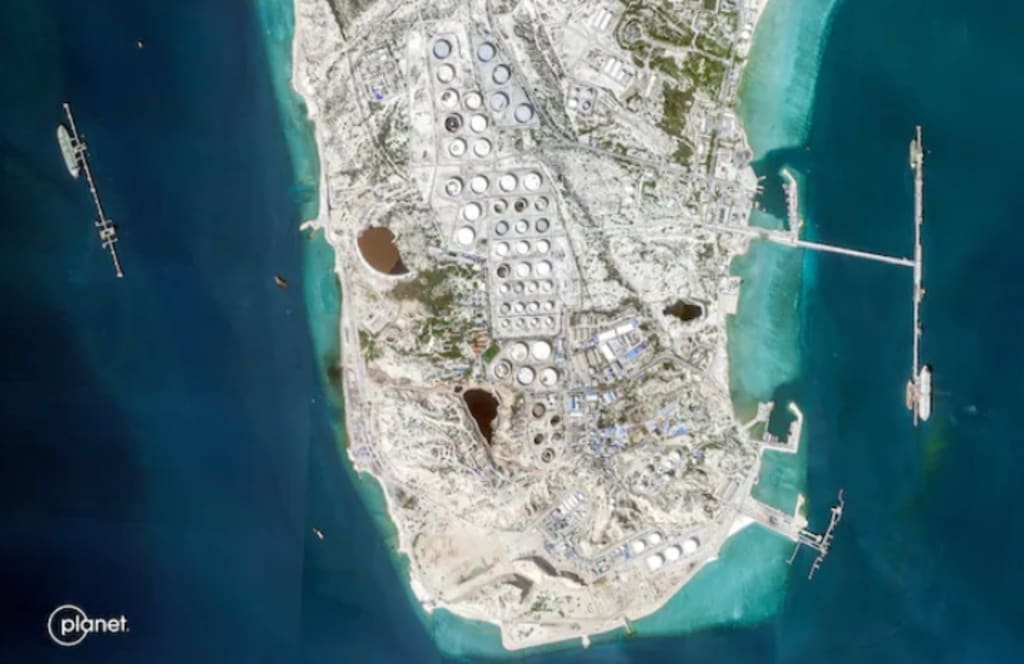
Tensions in the Middle East escalated dramatically after former U.S. President Donald Trump announced that American forces had carried out a strike on Kharg Island, a location widely considered the heart of Iran’s oil export system. The claim immediately sparked global attention, raising concerns about the potential consequences for regional stability, global energy markets, and already fragile diplomatic relations between Washington and Tehran.
Kharg Island plays a crucial role in Iran’s economic infrastructure. Situated in the Persian Gulf, the island functions as the country’s primary oil export terminal, handling the majority of Iran’s crude shipments to international markets. Any attack on this facility would represent a major strategic blow, not only to Iran’s economy but also to global energy supply chains.
Trump’s statement, delivered through public remarks and social media, framed the strike as a decisive action targeting key infrastructure linked to Iran’s oil operations. According to him, the strike was intended to send a strong signal regarding U.S. resolve in the region.
While details about the operation remain limited, the announcement alone has stirred significant debate among analysts, diplomats, and global observers.
Why Kharg Island Matters
Kharg Island is not just another oil facility. It is widely considered the backbone of Iran’s petroleum export network. For decades, the island has served as the central hub through which most of Iran’s crude oil reaches international buyers.
The island houses large storage tanks, loading terminals, and key logistical infrastructure that allow supertankers to transport Iranian oil to markets across Asia and beyond. Because Iran relies heavily on oil revenues to fund its government and economy, any disruption at Kharg Island could have severe financial consequences.
Experts estimate that a large portion of Iran’s crude exports pass through this single location. As a result, the island has long been viewed as one of the most strategically sensitive energy facilities in the Middle East.
During previous regional conflicts, including the Iran-Iraq War in the 1980s, Kharg Island was repeatedly targeted due to its economic importance. Despite those attacks, Iran consistently worked to rebuild and maintain the facility because of its essential role in sustaining the country’s oil industry.
If the reported strike significantly damaged infrastructure on the island, it could disrupt export capacity and ripple through global oil markets.
Rising Tensions Between Washington and Tehran
Relations between the United States and Iran have been tense for decades, marked by sanctions, diplomatic standoffs, and occasional military confrontations.
Tensions intensified during Trump’s presidency after the United States withdrew from the 2015 nuclear agreement, formally known as the Joint Comprehensive Plan of Action (JCPOA). The withdrawal led to renewed sanctions against Iran, targeting its banking system, trade networks, and most importantly, its oil exports.
Iran responded by gradually scaling back its commitments under the agreement and expanding aspects of its nuclear program. This triggered further political and military tensions across the region.
In recent years, confrontations between the two countries have taken various forms, including cyber operations, economic sanctions, and military incidents involving regional proxies.
A direct strike on Kharg Island—if confirmed—would represent a significant escalation in this long-running rivalry.
Potential Impact on Global Oil Markets
The possibility of damage to Kharg Island has raised concerns among energy analysts worldwide. Because the island serves as a major export point for Iranian crude, any disruption could tighten supply in global oil markets.
Even the threat of conflict around key energy infrastructure in the Persian Gulf tends to cause market volatility. Oil prices often respond quickly to geopolitical developments in the region because so much of the world’s energy supply passes through nearby shipping routes.
Kharg Island’s importance goes beyond Iran itself. The Persian Gulf region as a whole accounts for a large share of global oil production. If tensions escalate further or lead to disruptions in shipping lanes, the effects could spread far beyond Iran’s borders.
Energy traders and governments are therefore watching developments closely, assessing whether the reported strike could trigger wider instability.
Questions About the Strike
Despite the dramatic nature of Trump’s announcement, many details remain unclear. Officials have not publicly confirmed the extent of damage to Kharg Island or provided specifics about the timing and method of the alleged strike.
In situations like this, information can often emerge slowly, particularly when governments control access to military details.
Iranian authorities have historically responded strongly to attacks on critical infrastructure. Whether Tehran confirms damage, denies the claim, or announces retaliation could shape the next phase of regional tensions.
Military analysts also note that infrastructure like Kharg Island is heavily protected due to its strategic importance. Striking such a facility would require careful planning and significant military capability.
Until more information becomes available, the exact nature of the reported strike remains uncertain.
Risk of Escalation
One of the biggest concerns following Trump’s statement is the possibility of escalation. Strikes on critical economic infrastructure are often interpreted as major strategic actions, which can provoke retaliatory responses.
Iran has previously demonstrated its ability to respond through various means, including missile attacks, drone operations, and actions carried out by allied groups in the region.
A cycle of retaliation could quickly widen the scope of the conflict, drawing in neighboring countries and threatening key shipping routes in the Persian Gulf.
The region already faces multiple security challenges, including ongoing conflicts and geopolitical rivalries. Any additional confrontation between the United States and Iran could further destabilize an already volatile environment.
Diplomatic Reactions
International reactions to the claim have been cautious. Governments and diplomatic organizations are likely to wait for verification before issuing strong responses.
Many countries have long advocated for de-escalation between Washington and Tehran, recognizing that direct conflict between the two powers could have far-reaching consequences.
Global leaders have frequently emphasized the importance of diplomatic solutions to disputes involving nuclear programs, sanctions, and regional security.
If the strike is confirmed and tensions rise further, diplomatic pressure for restraint could intensify.
The Broader Strategic Picture
Beyond the immediate political and military implications, the reported strike highlights how energy infrastructure has become a central element of modern geopolitical competition.
Facilities like Kharg Island represent more than economic assets—they are strategic leverage points in global power struggles. Control over energy production, transportation, and exports can influence international politics in profound ways.
For Iran, oil exports remain a lifeline for its economy. For the United States and its allies, limiting Iran’s ability to generate revenue from oil has long been a key component of economic pressure.
A strike targeting such infrastructure therefore carries both symbolic and practical significance.
An Uncertain Path Ahead
Trump’s claim that U.S. forces struck Kharg Island has added another layer of uncertainty to an already tense geopolitical landscape.
Whether the reported strike leads to broader confrontation or remains an isolated incident will depend on how regional actors respond in the coming days and weeks.
What is clear, however, is that Kharg Island sits at the center of one of the world’s most sensitive geopolitical fault lines. Any conflict involving the facility has the potential to affect not only Iran and the United States but also global energy markets and international security.
As more information emerges, the world will be watching closely to see whether the situation stabilizes—or moves closer to a dangerous new phase of confrontation.
About the Creator
The Forsyth House Fire
Since 1851, Forsyth House has stood on the corner of Union Street and Gordon Street in the heart of Glasgow. Its iconic, or was... because on Sunday 8th of March, 2026, a fire broke out in a small, seemingly un-named shop in the building and tore all that history down. As I write, the rubble is still unsettled and the street is still blocked off. Central Station is quiet on the upper level, and around 30 small businesses have quite literally gone up in smoke.
By S. A. Crawford4 days ago in The Swamp


Comments
There are no comments for this story
Be the first to respond and start the conversation.