
The Legacy Trump Is Building for Himself
A president's quest for legacy - and the public memory he cannot control

“Who has a hole in them so big they need to take cheap shots at the dead, especially since the dead can no longer defend themselves? Actually, we know the answer to that question: Donald Trump. Donald Trump has a hole in him that big."
— electoral-vote.com
At 79 years old, Donald Trump has to know that his final sunset is not too far in the future. Yes, actuarial tables estimate that a man his age might live about nine more years, but that does not account for the impediments he has put in his own way. Between a diet heavy in McDonald’s and other fast food and a political climate he has helped cultivate that has led to multiple alleged attempts on his life, Trump may not have as long as other men his age.
With far more years behind him than ahead of him, it seems natural that “legacy” is something Trump thinks about often. Mortality has a way of sharpening a person’s focus on how they’ll be remembered.
But true to form for someone who was born on third base and believes he hit a triple, Trump does not seem interested in doing the work of building this legacy. Rather than trusting that a grateful populace will someday turn public buildings and programs into memorials to his leadership, he has simply begun renaming them himself.
The Trump Kennedy Center for the Performing Arts, the Donald J. Trump Institute of Peace, TrumpRx.gov, Trump‑class battleships, Trump Accounts, and the Trump Gold Card are just some of the ways the President has embedded his brand into the federal government. Many of these moves have sparked legal challenges or raised questions about presidential authority, but that has not slowed his pace.
In moves that echo the propaganda aesthetics more commonly associated with authoritarian regimes than with an American democracy, the President has propagated his likeness throughout Washington D.C.’s landscape. This includes large banners with his face hung on the building housing multiple agencies, including the Departments of Justice, Labor, and Agriculture.
Despite longstanding prohibitions on placing images of living presidents on currency, the Treasury Department has approved commemorative gold coins featuring Trump’s likeness. It has also announced that his signature will appear on future U.S. paper currency—a first for a sitting president.
These actions allow Trump to cement his legacy without taking the kinds of actions that would lead his fellow citizens to call for tributes when he eventually passes. The multitude of public buildings bearing the “Kennedy” name were not christened by JFK or RFK themselves; grieving Americans bestowed those honors on their fallen leaders.
Ironically, Trump seems far less concerned with legacy when it comes to the deaths of those who dared to oppose him.
When Rob Reiner was brutally murdered, he could have used the moment to respect the office of the presidency and eulogize a national figure. Instead, he blamed Reiner’s death on “the anger he caused others through his massive, unyielding and incurable affliction with a mind-crippling disease known as TRUMP DERANGEMENT SYNDROME.” It was a striking response that fell far short of the decorum that used to be expected of presidents.
As if to underscore the accusations that he routinely responds to tragedy with hostility, Trump took the death of Robert Mueller as an opportunity to attack. Apparently still upset that the former FBI Director, who served the country under presidents from both parties, had not absolved him of wrongdoing after his own administration appointed Mueller to investigate Russian interference in the 2016 election, Trump marked his passing with a stunningly blunt posting on the social media network that he owns:
"Robert Mueller just died. Good, I'm glad he's dead. He can no longer hurt innocent people! President DONALD J. TRUMP"
One has to wonder if Trump has the emotional intelligence to recognize that these types of reactions may shape how his critics respond when the time comes to write his obituary. Many see them as nothing less than deeply inappropriate, and they increase the calls to remove his name from public spaces once the Republican Party he has taken over is no longer in a position to protect those designations.
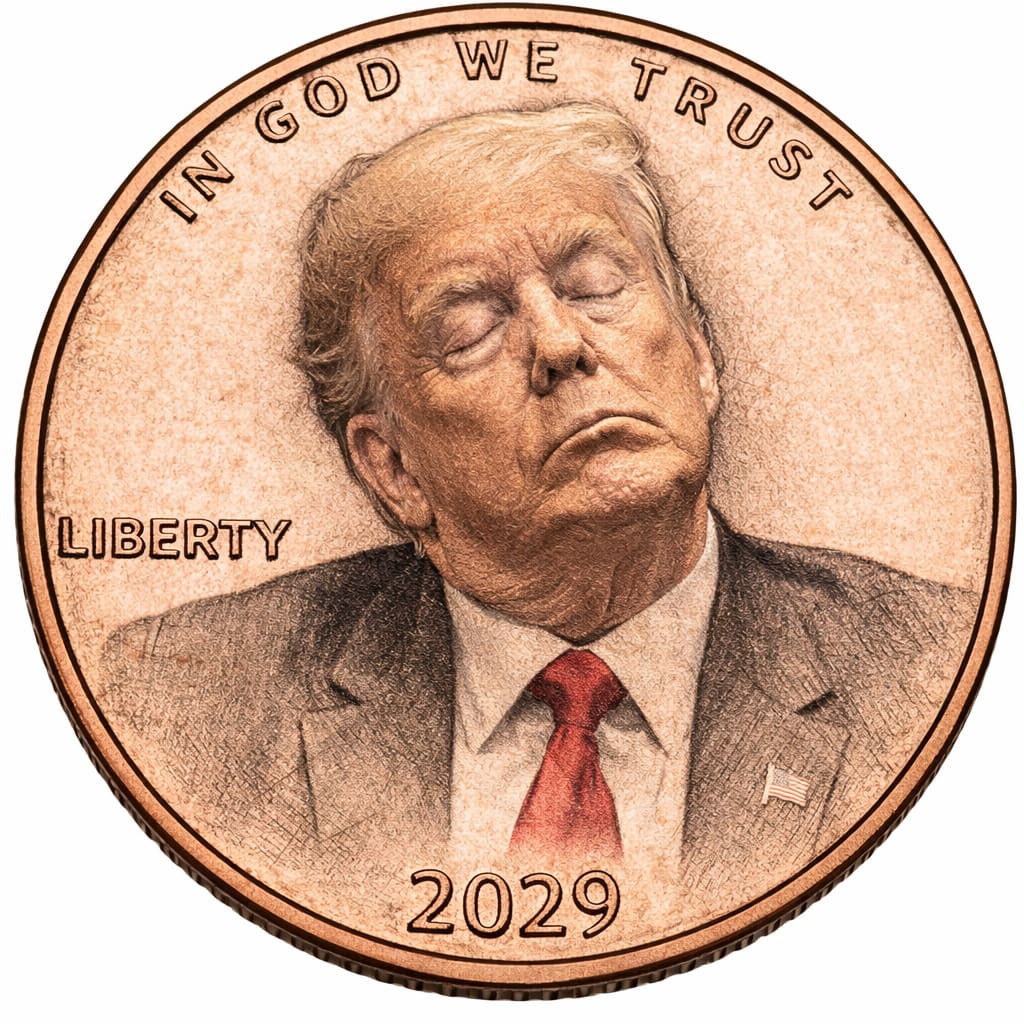
If the failure to learn from history dooms us to repeat our mistakes, then it will not be enough to simply erase Trump’s name from policies and public landmarks; the public needs to be reminded of what his presidency cost us. What better way to do that than to put his face on the most humble coin in your pocket — the penny. As an added benefit, it would reverse Trump’s decision to stop minting the coin.
About the Creator
Carl J. Petersen
Carl Petersen is a former Green Party candidate for the LAUSD School Board and a longtime advocate for public education and special needs families. Now based in Washington State, he writes about politics, culture, and their intersections.
Keep reading
More stories from Carl J. Petersen and writers in The Swamp and other communities.
The Forsyth House Fire
Since 1851, Forsyth House has stood on the corner of Union Street and Gordon Street in the heart of Glasgow. Its iconic, or was... because on Sunday 8th of March, 2026, a fire broke out in a small, seemingly un-named shop in the building and tore all that history down. As I write, the rubble is still unsettled and the street is still blocked off. Central Station is quiet on the upper level, and around 30 small businesses have quite literally gone up in smoke.
By S. A. Crawford18 days ago in The Swamp
THE LONG GAME: Bin Laden's Bullseye
The Long Game: How We Fell for the Ultimate Bear Trap Pull over the car, grab the oxygen mask, and stare directly into the sun—because the "War on Terror" wasn't a war at all. It was a giant, neon-lit invitation to a suicide pact, and we signed it in blood and high-interest credit.
By Meko James 6 days ago in The Swamp
Why Wiked: For Good is Undeservingly the ‘worse movie’
So… off the bat, we’re about to delve into something ridiculous. Just so we’re clear on that, ok? The first thing anyone that knows a thing about these dual movies… knows… is the original movie and sequel were shot together.
By Gabriel Shames3 days ago in Humans


Comments
There are no comments for this story
Be the first to respond and start the conversation.