celebrities
No matter their age, some celebrities have old souls; poems written by celebrity poets and your favorite celebrities' favorite poems.
"The Flowers of Evil" by Charles Baudelaire
Charles Baudelaire’s poetry is often considered one of the beginnings of ‘carcass writing’ and so, it is only obvious that the reader would notice the numerous different ways in which death and dying are discovered, written, analysed and iterated throughout the anthology. Dying is especially important because of the fact it can be attached to various different ideas such as: religion - the reader sees the Devil and God ready at the dead’s moment of new being, violence - the amount of violence required to inflict death may not be so great, but the graphic descriptions of the violent actions are numerous and often linked to the mangling of the human body through pain and suffering. After this, the reader encounters themes such as: images and symbols of death - the way in which images of death (coffins, corpses and graveyards) change the narrative or the atmosphere of the poem either make the poem darker and yet, in the darker poems, the reader often sees a peacefulness brought to the violence, suffering, pain or anguish through the inevitable act of death. This shows that death is not only used as a darkness or evil in which the narrator and characters often fear and hate the own thought of their demise or the demise of those they love, but it is also the tranquility after the storm-like narrative in which the narrator and characters experience something terrifying in life, or are being purposefully hindered from doing something, completing something or are experiencing intense amounts of pain, depression or are suffering upon earth in any extreme way. When investigating the theme of death within this anthology, there are so many different things that the reader has to take into account that the image of death often overtakes the idea at hand or, it adds to it. Whether it is of suffering and pain or of peace and tranquility, death often makes the poem seem bearable for either the narrator or the subject of the poem, in the fact that either it is the beginning and therefore the lesser of the sufferings, the most important section of the grieving process that makes the narrator’s thoughts beautiful and picturesque or the end of the suffering that the narrator or character has suffered for what seems like too long according to the poem. Blended with the themes of the poem, this leads the reader to believe certain ideas such as whether the narrator or character has a belief in God, or whether they have faith in the Devil, whether they are emotionally violent or whether they are emotionally detached - but all in all, the reader will realise that there is often more than one dimension to the characters and the narrators of Baudelaire’s poems.
By Annie Kapur6 years ago in Poets
Anna Akhmatova
Anna Akhmatova was one of the most well known poets in Russian History and is, to this day, one of the most respected poets of the 20th century. I read Akhmatova's poetry whilst I was in school via a tiny book I found called "The Everyman Poets: Anna Akhmatova". She uses so much incredible language with such raw emotion and the quotations about imprisonment and love have such a vivid image to them. Anna Akhmatova was the basis for reading all Russian Poetry of the difficult ages, the transition between Royalist Russia to Communist Russia. She was the borderline between those who were on the outside of the situation and those who were on the inside, and by inside, I mean prison.
By Annie Kapur6 years ago in Poets
The Best Works: Federico Garcia Lorca
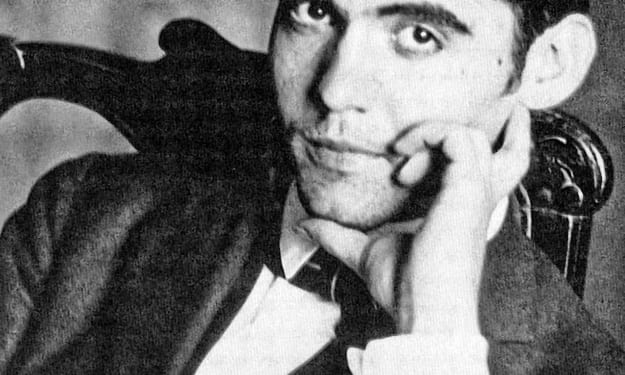
Federico Garcia Lorca is possibly one of the most recognised names in 20th Century poetry. During one of the greatest ages of European Modernism, Spain's 'Generation of '27' (referring to the year 1927) came to prominence with his works at the forefront. Not only a poet, but also a man of plays, Garcia Lorca is also famous for being a rival of Nationalists during the Spanish Civil War. He was killed by them in 1936 and his body has yet to be entirely located.
By Annie Kapur6 years ago in Poets
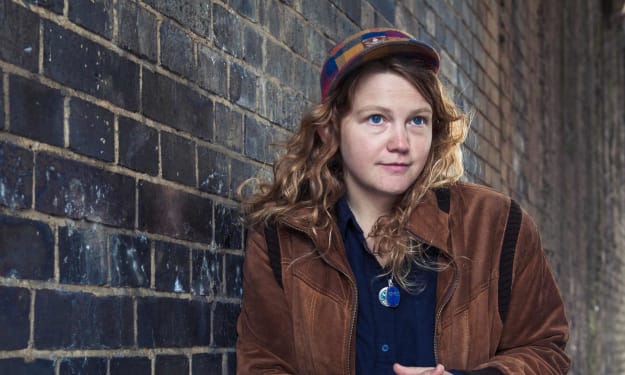
"Hold Your Own" she said...
When I write poetry it is like an unconscious spiel of emotion, of thought, of... everything. Some writers have an endless list of other writers who inspire them. While I’m sure I do have this in my subconscious somewhere, I never really consciously acknowledge who they were or why they inspired me. Not really, not truly. I mean, of course there are the classics; Shakespeare, Bronte, Joyce, Austin; but nobody ever really spoke to me. Not until I first heard the poetry, the spoken word, of Kae Tempest.
By Celious Blanc6 years ago in Poets
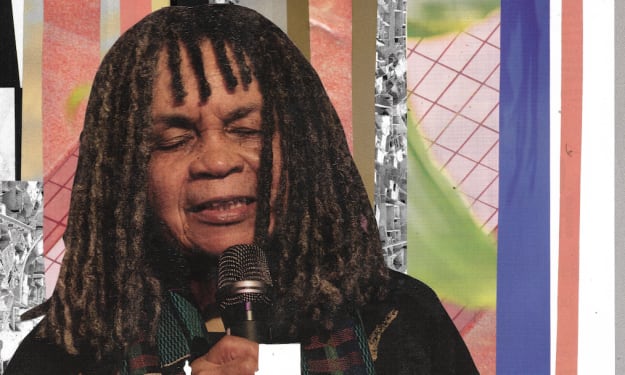
In The Name of Sanchez: Women Who Inspire.
The first time I read Sonia Sanchez my soul combusted. I must have been about seven. I was sitting on the floor in my room, in the middle of my pile of books, and from the first sentence, I could feel her words kissing my face. It felt like I was coming home again but coming back to something I had never known before. Every single time I read her work, I feel it all over again. She has saved my life more than once.
By Doriana Diaz6 years ago in Poets
The Turkish Dervishes
They processed in slowly to the haunting music of Ney, Sas, and Drum. Like a funeral dirge, the Dervishes move solomly, wearing the tombstone Sika and the black funeral shroud. After four circuits around the Teka, the Dirvishes bowed deeply, then, dropped their black shrouds to reaveal a white robe which flared out as they began to turn.
By Shamsuddin Jim Norton+*6 years ago in Poets