Research
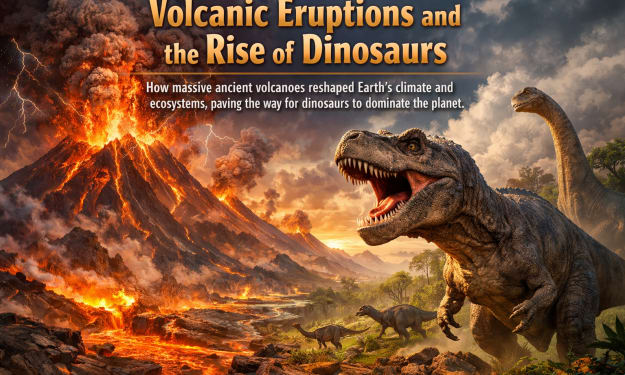
Volcanic Eruptions and the Rise of Dinosaurs
The story of dinosaurs is one of the most fascinating chapters in Earth’s long history. These incredible creatures ruled the planet for more than 160 million years, evolving into hundreds of different species that ranged from tiny feathered hunters to gigantic plant-eating giants. While many factors contributed to their rise, scientists believe that volcanic activity played a crucial role in creating the environmental conditions that allowed dinosaurs to flourish.
By Irshad Abbasi 2 days ago in History
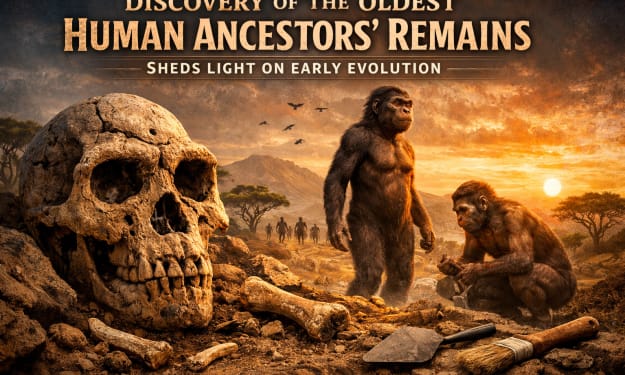
Discovery of the Oldest Human Ancestors’ Remains Sheds Light on Early Evolution
The story of human evolution continues to unfold as scientists discover new fossils that deepen our understanding of where we come from. Recently, researchers announced the discovery of what may be the remains of some of the oldest human ancestors ever found. These ancient fossils are providing remarkable insights into the early stages of human evolution and how our distant relatives lived millions of years ago.
By Irshad Abbasi 2 days ago in History
Dinosaur DNA Structure Revealed After Millions of Years
In a groundbreaking discovery that has sent ripples through the scientific community, researchers have successfully deciphered the structure of dinosaur DNA for the first time. This unprecedented finding offers a unique glimpse into the genetic blueprint of creatures that roamed the Earth over 65 million years ago and raises fascinating questions about evolution, extinction, and the potential of ancient DNA research.
By Irshad Abbasi 2 days ago in History
The Catastrophic Aftermath of the Dinosaur-Killing Asteroid
Approximately 66 million years ago, the Earth experienced one of the most dramatic and catastrophic events in its history: a massive asteroid, now identified as the Chicxulub impactor, collided with the planet near what is today the Yucatán Peninsula in Mexico. Measuring roughly 10 kilometers in diameter, this space rock unleashed energy equivalent to billions of atomic bombs, marking the end of the Cretaceous period and triggering a chain of events that wiped out approximately 75% of all species on Earth, including the iconic non-avian dinosaurs.
By Irshad Abbasi 2 days ago in History
Why Was the Asteroid That Wiped Out the Dinosaurs So Deadly?
Around 66 million years ago, Earth experienced one of the most catastrophic events in its history. A giant asteroid slammed into the planet and triggered a chain reaction of destruction that eventually led to the extinction of the dinosaurs. Scientists have spent decades studying this event, trying to understand why this particular asteroid impact was so devastating that it wiped out nearly 75 percent of all species on Earth.
By Irshad Abbasi 2 days ago in History
A 40,000‑Year‑Old Masterpiece Offers New Insight into Early Human Art
In a remarkable archaeological discovery that reshapes our understanding of early human creativity, scientists have identified a 40,000‑year‑old painting of a cow‑like animal on a cave wall, potentially making it one of the earliest examples of figurative art ever documented. The site — located deep within the dense forests of Indonesian Borneo — reveals that our distant ancestors were not merely marking surfaces with abstract symbols but were intentionally depicting real‑world animals tens of thousands of years ago.
By Irshad Abbasi 2 days ago in History
Ancient Stone ‘Gates’ Unearthed in Saudi Arabia Rewrite Prehistoric History
Here’s a complete English article (approx. 700 words) with a title and subtitle based on the recent news about the discovery of thousands‑year‑old “gates” in Saudi Arabia’s desert Archaeologists and researchers have uncovered an astonishing prehistoric landscape hidden beneath the deserts and lava fields of western Saudi Arabia — one marked not by cities or temples, but by hundreds of enigmatic stone structures resembling monumental “gates.” These formations, visible in satellite imagery and confirmed through field surveys, offer fresh insight into ancient human activity on the Arabian Peninsula, challenging long‑held assumptions about where and how early peoples lived, traveled and interacted with their environment. 
By Irshad Abbasi 3 days ago in History
Jerusalem’s Most Sensitive Sacred Site: Why the Future of Al-Aqsa Mosque Matters to the Entire World
Across the long and complicated story of human civilization, certain places acquire a meaning that goes far beyond their physical structure. They become symbols of identity, spirituality, and collective memory for millions of people. One of the most powerful examples of such a place is Al-Aqsa Mosque. Located in the ancient city of Jerusalem, Al-Aqsa Mosque is one of the most historically and religiously significant sites in the world. For Muslims, it is the third holiest place in Islam, after the sacred mosques in Mecca and Medina. Yet the importance of this location extends far beyond a single faith community. The wider Jerusalem area contains sacred sites for Muslims, Christians, and Jews, making it one of the most spiritually complex places on the planet. Because of this unique significance, any discussion about the future of Al-Aqsa Mosque often sparks global attention. Understanding why this site matters so deeply requires looking at history, religion, geopolitics, and the emotional connections that billions of people have with the city of Jerusalem. The Religious Importance of Al-Aqsa Mosque For Muslims, Al-Aqsa Mosque is not simply an architectural landmark. It represents centuries of spiritual tradition and religious devotion. According to Islamic tradition, the mosque is connected to the event known as Al-Isra wal-Mi’raj, the miraculous night journey of Prophet Muhammad ﷺ. During this event, it is believed that the Prophet traveled from Mecca to Jerusalem before ascending to the heavens. Because of this spiritual connection, the mosque holds a special place in the hearts of Muslims around the world. The mosque stands within a larger sacred compound known as Al-Haram Al-Sharif, which contains several historic structures, courtyards, and prayer areas. This entire complex is considered a sacred site within Islam and has been a place of worship for centuries.
By The Insight Ledger 3 days ago in History
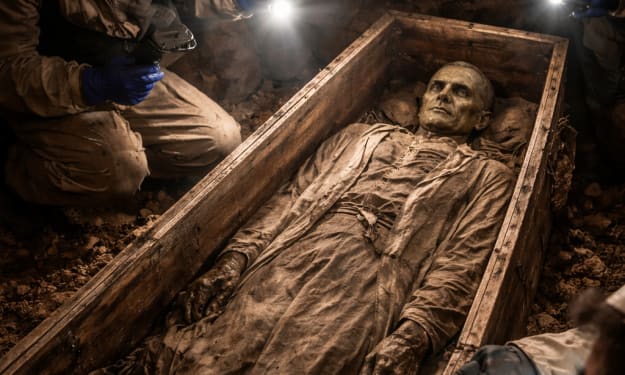
Mummified Body Found in Coffin Believed Empty for 150 Years
For more than 150 years, a coffin thought to be empty sat in silence, dismissed as a symbolic burial vessel or an archival mistake. Historians, caretakers, and local researchers had long assumed it held no human remains at all. But that belief was dramatically overturned when a recent examination revealed something no one expected: a mummified body carefully preserved inside.
By Irshad Abbasi 3 days ago in History
Mummified Monkey Found at Minnesota Department Store
Shoppers expect to find clothing, household goods, seasonal decorations, and maybe the occasional odd collectible at a department store. What they do not expect to find is a mummified monkey. Yet that is exactly the kind of bizarre discovery that has captured attention in Minnesota, where reports say a preserved monkey was found inside a department store, leaving employees, customers, and local authorities both puzzled and fascinated.
By Irshad Abbasi 3 days ago in History
Ancient Egyptian Recipe for Preserving Bodies for Centuries Finally Uncovered
For centuries, the mystery of how ancient Egyptians preserved bodies so successfully has fascinated historians, archaeologists, and scientists alike. Their mummies, some thousands of years old, have survived with skin, hair, and even facial features remarkably intact. Now, researchers believe they have identified what may be one of the key “recipes” behind this extraordinary process — a detailed embalming mixture that helps explain the science behind one of history’s most iconic burial traditions.
By Irshad Abbasi 3 days ago in History