General
The Next Phase of Global Conflict: Technology, Power, and the Future of War
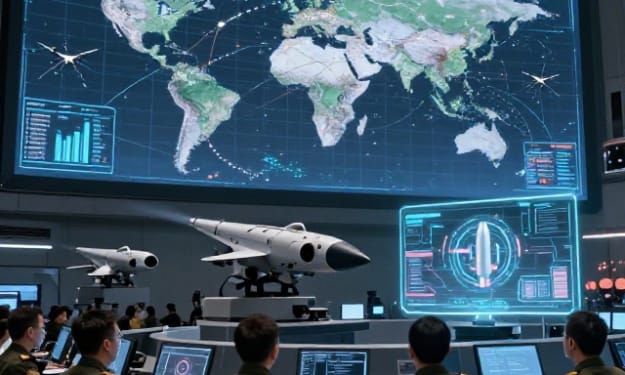
The Next Phase of Global Conflict: Technology, Power, and the Future of War The nature of war is changing faster than ever before. In the past, conflicts were fought mainly with soldiers, tanks, and aircraft. Today, however, the battlefield has expanded into cyberspace, artificial intelligence systems, and digital infrastructure. Governments around the world are rapidly investing in new technologies that could determine the balance of power in the coming decades.
By Wings of Time 12 days ago in History
The Middle East Question: Power, Peace, and Double Standards
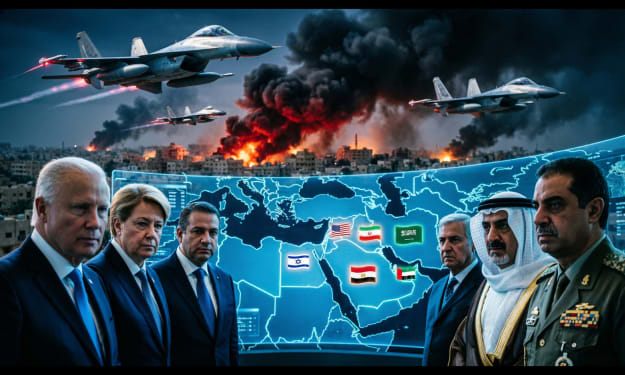
The Middle East Question: Power, Peace, and Double Standards In recent years, the conflict in the Middle East has once again raised serious questions about global politics, justice, and the meaning of peace. Many observers around the world ask the same question: if powerful countries speak so often about peace and human rights, why did they remain silent when violence and suffering were happening earlier?
By Wings of Time 12 days ago in History
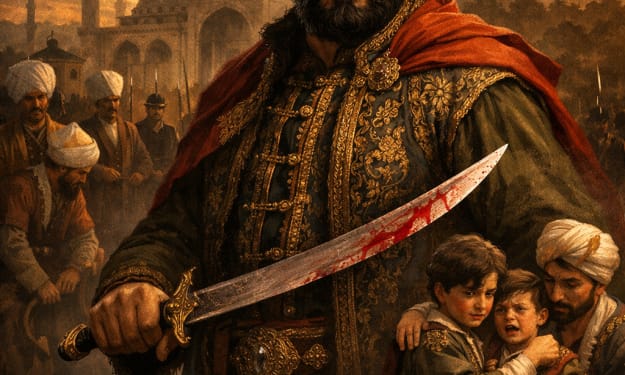
Royal Blood and the Survival of the Throne: The Ottoman Tradition of Fratricide
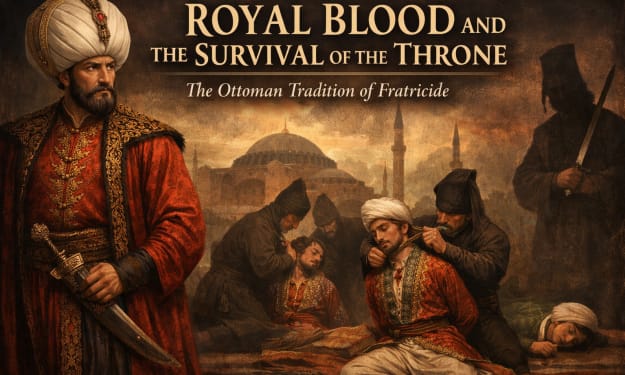
Among the many powerful dynasties in world history, the Ottoman Empire stands out for its longevity, political sophistication, and vast territorial reach. At its peak, the empire stretched across parts of Europe, Asia, and Africa, ruling over diverse peoples and cultures for more than six centuries. Yet behind the grandeur of its palaces and the power of its sultans lay a grim and controversial tradition: the execution of royal brothers to secure the throne.
By Irshad Abbasi 12 days ago in History
The “Greater Israel” Map Controversy: Saudi Arabia, Palestine and Arab League Condemn the Idea
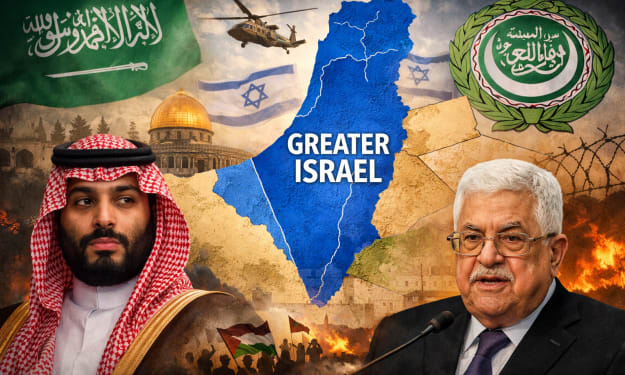
A recent controversy over a map circulating online and in political discussions has reignited tensions across the Middle East. The map, often referred to as the concept of “Greater Israel,” depicts a much larger Israeli state stretching beyond its current internationally recognized borders and into parts of neighboring countries. The idea has drawn sharp condemnation from Arab states, including Saudi Arabia, Palestine, and the Arab League, who have dismissed it as dangerous political rhetoric and an unrealistic extremist vision.
By Irshad Abbasi 12 days ago in History
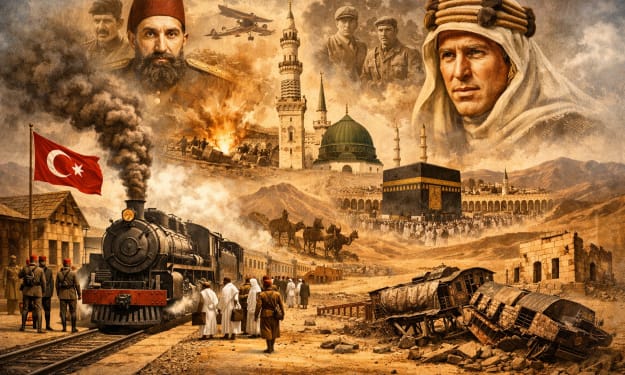
The Hijaz Railway: Why the Ottoman Empire’s Grand Vision to Unite Muslims Was Left Abandoned
In the early twentieth century, the Ottoman Empire launched one of the most ambitious infrastructure projects in the Muslim world: the Hijaz Railway. Conceived as both a symbol of Islamic unity and a practical solution to improve travel for pilgrims heading to Mecca, the railway represented the Ottoman Sultan’s vision of connecting distant Muslim lands. Yet, despite its promise and initial success, the project was ultimately left abandoned due to war, rebellion, and the collapse of the empire itself.
By Irshad Abbasi 12 days ago in History
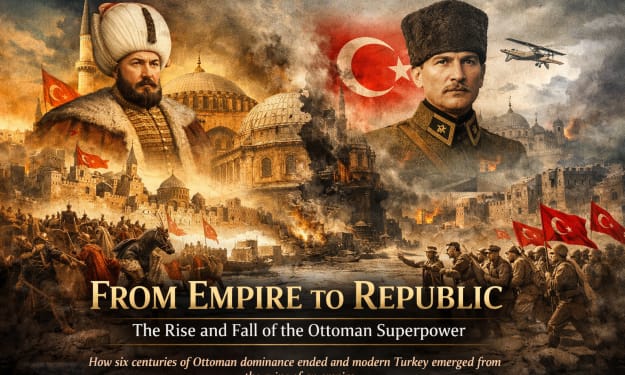
From Empire to Republic: The Rise and Fall of the Ottoman Superpower
For more than six centuries, the Ottoman Empire stood as one of the most powerful and influential states in world history. Stretching across three continents—Europe, Asia, and Africa—it controlled strategic trade routes, diverse populations, and some of the most important cities of the medieval and early modern world. Yet by the early twentieth century, this once-mighty empire collapsed, giving birth to the modern Republic of Turkey. The story of its rise and fall is one of military brilliance, political struggle, and dramatic reform.
By Irshad Abbasi 12 days ago in History
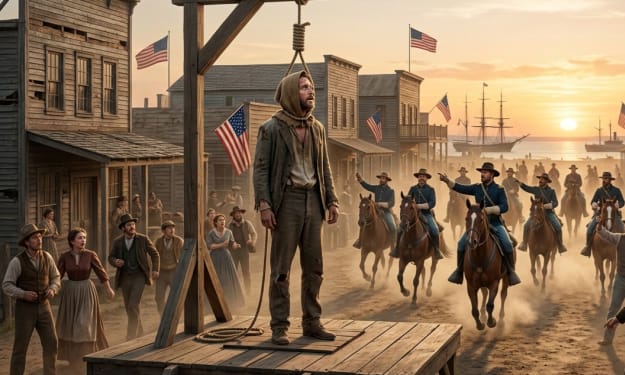
The Day the Rope Broke
On June 19, 1865, in Galveston, Texas, a rough rope pressed against my neck as though it were a dull saw cutting through timber. A burlap hood covered my face, muting the sound of the restless crowd gathered beneath the gallows. Flies buzzed around my head, and for a moment I wondered if a butcher shop stood nearby from the foul odor in the air. Then I realized the smell came from my own bruised and bloodied body. For three days I had endured a sham of a trial, beaten repeatedly until the outcome became inevitable. I felt no regret. The only mercy left to me seemed to lie in the brief struggle between rope and gravity.
By LUNA EDITH12 days ago in History
The Partition of the Ottoman Empire: How Britain and France Reshaped the Middle East
The collapse of the Ottoman Empire after World War I dramatically transformed the political map of the Middle East. For more than four centuries, the Ottoman Empire had ruled vast territories stretching across the Middle East, North Africa, and parts of Europe. However, by the early twentieth century, the empire had weakened politically, economically, and militarily. When the Ottomans joined Germany and the Central Powers in World War I, Britain and France saw an opportunity to reshape the region according to their own strategic and economic interests. The result was the partition of Ottoman lands, an event that still shapes Middle Eastern politics today.
By Irshad Abbasi 13 days ago in History
Selim I: The Ottoman Prince Who Ordered the Execution of His Own Family
In the long and dramatic history of the Ottoman Empire, few rulers are remembered as fiercely and controversially as Selim I, also known as Selim the Grim. Rising to power in 1512, Selim I transformed the Ottoman Empire into a dominant force in the Islamic world. Yet his reign began with a chilling series of executions that shocked even his contemporaries. To secure the throne, Selim reportedly ordered the deaths of his own brothers, nephews, and even some of his sons—an act that reflected the brutal political realities of the Ottoman dynasty.
By Irshad Abbasi 13 days ago in History
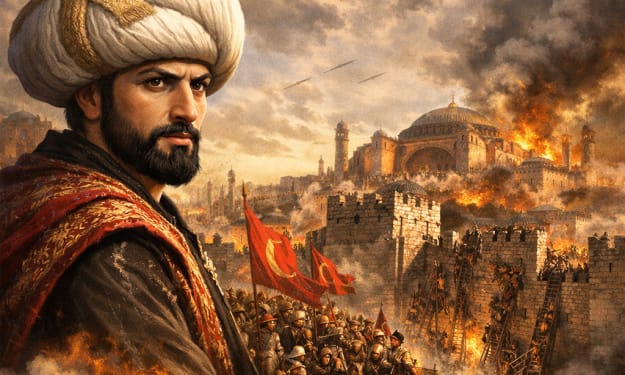
Sultan Mehmed II: The Conquest of Constantinople That Europe Never Forgot
In the spring of 1453, one of the most dramatic moments in world history unfolded when Sultan Mehmed II captured the great city of Constantinople. This event did not simply mark the fall of a city; it ended the thousand-year-old Byzantine Empire and transformed the balance of power between Europe and the Muslim world. Even centuries later, the conquest remains one of the most significant turning points in global history.
By Irshad Abbasi 13 days ago in History