
A Post World War II History of the USSR
Remembering the Soviet Cold War Era

In the postwar era, the USSR dominated Eastern Europe. The victory of the Red Army had ensured the rise of communist regimes in Poland, Romania, Czechoslovakia, and Hungary. An Iron Curtain had descended across Europe, which stretched from the Baltic to the Adriatic. No longer were the Allies really allies, as the Americans began to reconsider their postwar foreign policy after the Potsdam Conference.
During the postwar era, the USSR would begin to develop its own nuclear weapons. They would not be complete until 1949 when the first Russian A-bomb was tested. Russian nuclear research had now bridged the gap with the Americans, and it marked the beginning of the nuclear arms race, which would gain increasing momentum during the 1950s.
Stalin remained the Red Czar until the early 1950s. The victory of the Red Army had ensured that Stalin was now a war hero who had masterminded the USSR’s victory. Stalinists would therefore dominate the Politburo until 1953 when Khrushchev became Soviet Premier.
The emergence of Khrushchev as successor would ensure a new era for the USSR. Stalinists such as Molotov disappeared from the Politburo, and Khrushchev began to reveal some of the unsavory Kremlin documents left behind from the Stalin era. Such documents highlighted that Stalin was no war hero.

During the 1950s, the USSR developed increasingly sophisticated missiles. They were the first to develop ICBMs (Intercontinental Ballistic Missiles), which could be nuclear-mounted. This gave them an advantage in the arms race. Further to this, the Russians were also the first to launch a satellite into space in 1957 with Sputnik 1. Soviet rockets also blasted the Russian cosmonaut Gagarin into orbit for the first time. It was a great triumph for the USSR and Russian science.
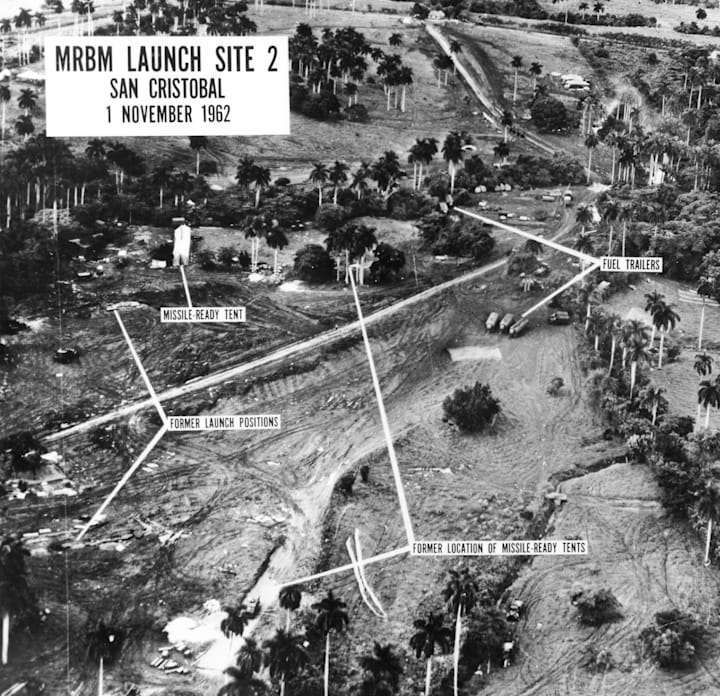
In the early 1960s, the Cuban Missile Crisis was a Cold War flashpoint. The Russians sent nuclear missiles to Castro’s Cuba, which had begun providing nuclear missile bases for them. However, the missiles were removed after American promises to withdraw their own missiles from Turkey.
Hereafter, the USSR and the West would begin to establish nuclear treaties. Among them was the 1963 Limited Test Ban Treaty, which limited nuclear testing. This was followed by the 1968 Nuclear Non-Proliferation Treaty, aimed at further reducing nuclear weapon production.
Khrushchev was replaced by Brezhnev. Brezhnev would usher in the Détente period, in which the USSR and USA would begin to halt further production of nuclear weapons, although the Soviet military was still expanded during the period. The SALT treaty would be one of the more significant of the Cold War era.

This Détente would last until the Americans boycotted the 1980 Moscow Olympics. A large boycott of the Moscow Olympics ensured that fewer countries than usual participated, and without the American team, the USSR had the largest gold medal total comfortably. Others within the communist bloc, such as East Germany, Bulgaria, and Hungary, also won a good number of medals. Overall, the era of Détente is considered to be one of stagnation in the USSR.
After the demise of Brezhnev, Gorbachev would begin to introduce reforms in the USSR. Glasnost and Perestroika would become two buzzwords of the reforms. In addition to this, the reduction of the Soviet nuclear stockpiles would ensure that the Cold War with the West would gradually begin to end. Treaties such as the INF Treaty further ensured this.
These reforms in the USSR encouraged reformist parties in the Eastern Bloc. In 1989, the Iron Curtain crumbled as the communist regimes across Eastern Europe disappeared. In East Germany, the Berlin Wall was opened, and it began to be demolished. This paved the way for German unification.
The fall of the Eastern Bloc was also the catalyst for the dissolution of the USSR. Not long after the 1989 Revolutions, Baltic states such as Latvia and Estonia began to break away from the USSR in the early 1990s. The rest of the Soviet Union followed, and Gorbachev resigned from the Politburo.
Since the demise of the USSR, the Russian Federation has had open elections and introduced free market reforms. Statues of Lenin and Stalin that once stood high in the cities and provinces of the USSR have now been torn down by the Russians. Former republics of the USSR, along with much of the former Eastern Bloc, have since joined the EU. As such, communism in Russia and Europe is history.
About the Creator
Matthew A
Matthew is the author of Battles of the Pacific War 1941-1945. Battles of the Pacific War is available on Amazon and Lulu in e-book and paperback formats. Check out the book’s blog at battlesofthepacificwar.blogspot.co.uk.
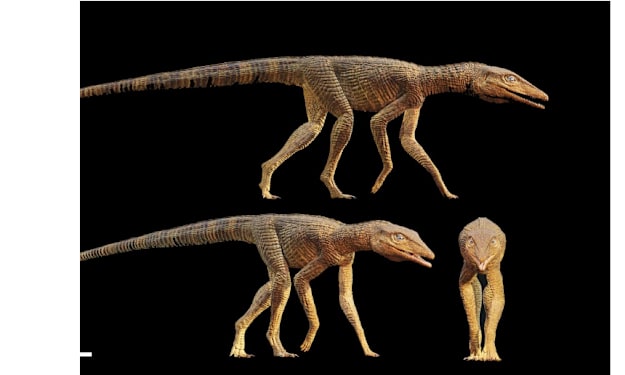
About 215 million years ago, a crocodile that resembled a greyhound dog thrived on Earth.
A 215 million-year-old fossil discovered in England almost 60 years ago has shown a swift, land-running ancestor of crocodiles. By demonstrating that these hunters were already separating into several running methods prior to the end-Triassic die-off, that animal modifies early croc evolution.
By Francis Damia day ago in History
The Kid Who Ruled 33% of the World
In 1908, a mysterious Imperial procession moved through the night toward a red-gated mansion in Beijing. Their mission was to collect a two-year-old boy named Puyi. The toddler, terrified by the strangers, hid in a cupboard and screamed as servants pulled him away from his home. He was being taken to the Forbidden City to become the Xuantong Emperor, the next ruler of the Qing Dynasty. At an age when most children are learning to speak, Puyi was transformed into a living god, presiding over nearly one-third of the world’s population.
By Edge Words3 days ago in History
Afrika Bambaataa, Dead at 68
Pioneer and alleged pedophile, Afrika Bambaataa is no more. Though he lost in a civil suit against a man who said Bambaataa molested him when he was twelve years old, no criminal charges ever surfaced against the rap trailblazer and supposed pervert.
By Skyler Saundersabout 12 hours ago in Critique



Comments
There are no comments for this story
Be the first to respond and start the conversation.