Advocacy
The Forest That Breathes 🌲
THE WOOD WIDE WEB 🕸️ Beneath every forest on Earth there exists a network so vast and so complex that scientists who discovered it compared it to the internet, a web of fungal filaments called mycorrhizal networks that connect the root systems of virtually every tree in the forest into a single integrated communication and resource-sharing system through which trees exchange nutrients, water, chemical signals, and even electrical impulses, and this discovery has fundamentally altered our understanding of forests from collections of individual competing organisms to interconnected superorganisms where cooperation rather than competition is the dominant survival strategy 🍄
By The Curious Writera day ago in Earth
The Whale Who Sings Alone 🐋
52 HERTZ: THE FREQUENCY OF LONELINESS 🎵 Somewhere in the vast dark waters of the Pacific Ocean there is a whale who has been calling out for a companion for over thirty years and has never received a response, a whale whose vocalizations are produced at a frequency of 52 hertz which is dramatically higher than the frequencies used by any known whale species, blue whales communicate at frequencies between 10 and 39 hertz while fin whales use frequencies around 20 hertz, and this frequency mismatch means that while the 52-hertz whale can hear other whales they cannot hear it, or if they can hear it they do not recognize it as a whale call and do not respond, and this animal has been swimming through the ocean for decades producing calls that travel for hundreds of miles through water that carries every other whale's communications perfectly but that turns this whale's voice into something unrecognizable and unreachable 🌊
By The Curious Writer2 days ago in Earth
The Tree That Survived Everything ☀️🌳
THE OLDEST LIVING THING ON EARTH 🌲 High in the White Mountains of eastern California at an elevation of over ten thousand feet where the air is thin and the soil is poor and the wind blows with enough force to strip paint from metal, there stands a tree that was already ancient when the Egyptian pyramids were being built, a Great Basin bristlecone pine named Methuselah that has been alive for approximately 4,855 years making it the oldest known living non-clonal organism on Earth, and this tree has survived everything that the planet and human civilization have thrown at it including ice ages and droughts and lightning strikes and disease and the complete rise and fall of every civilization that has existed during its lifetime, and it continues growing, adding a fraction of an inch to its trunk each year with the patient persistence of something that measures time in millennia rather than in the minutes and hours that define human urgency 🌎
By The Curious Writer2 days ago in Earth
The Squirrel Mirror:
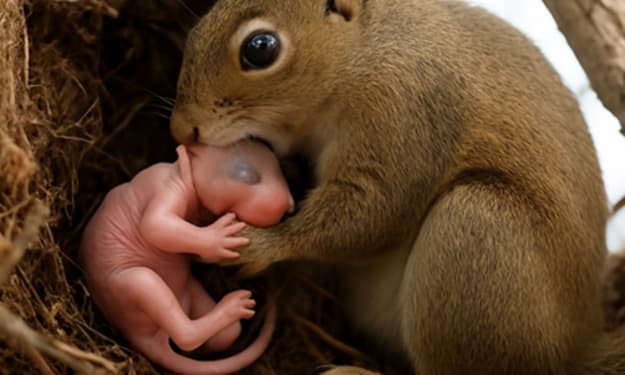
Humans love the idea of animals behaving nobly. The image of a squirrel cradling a tiny pink newborn seems to confirm our deepest hope—that love and care transcend instinct, species, and bloodlines. Social media amplifies this comforting myth with the same captioned claim: “Squirrels will adopt another squirrel baby if its parents die or can’t care for them.” It’s sweet, shareable, and slightly anthropomorphic.
By Dr. Mozelle Martin5 days ago in Earth
⭐ East-West Line
Saudi Arabia East- West Petroline The Middle East has long been the center of global energy politics, with its vast oil and gas reserves shaping not only regional dynamics but also the priorities of major world powers. However, in recent years, a critical question has emerged: should the world continue relying on a few strategic maritime chokepoints for energy transportation, or is it time to develop alternative routes?
By Wings of Time 6 days ago in Earth
Israel-Iran War: Environmental Risks Overview
Nearly a month into the Israeli-US war against Iran, it is clear that the environmental costs for Iran and the wider region have been substantial and are continuing to mount. The primary environmental threat during this stage of the war is conflict-linked pollution, which has the potential to impact public health, as well as terrestrial and marine ecosystems, and natural resources such as soils and aquifers. Contamination of water bodies is of particular concern for Iran, where drought and mismanagement have depleted water resources.
By Ibrahim Shah 7 days ago in Earth
Thousands Take to the Streets Across America for "No Kings" Day
March 28, 2026 Today, people in cities and towns all across the United States stepped outside, made signs, and marched together for what's being called "No Kings III" — the third major mobilization organized by the No Kings Coalition.
By Jayden Hua8 days ago in Earth
Pakistan is Now the World’s “Guru”
Pakistan is Now the World’s “Guru” In recent years, Pakistan has quietly transformed its global image. Once viewed mainly through the lens of regional conflicts and economic challenges, Pakistan is now increasingly seen as a country offering diplomatic balance, strategic wisdom, and peace-focused leadership. This shift has led many analysts and observers to describe Pakistan as becoming a "world’s guru" — a nation offering guidance in an increasingly unstable global environment.
By Wings of Time 9 days ago in Earth
A volcanic outburst nearly wiped off the early human population, reducing it to less than 1,000.
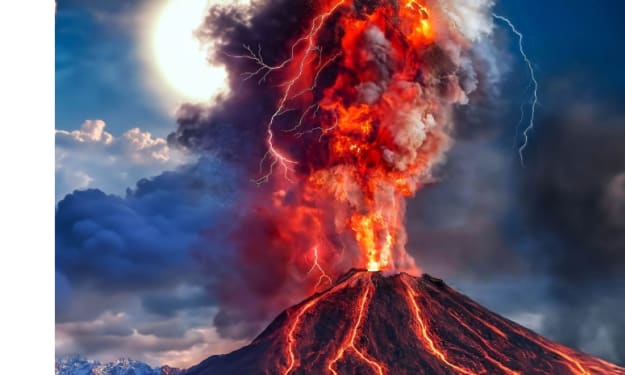
Researchers have discovered that early humans quickly changed their diet to include more food from rivers in order to survive one of the biggest volcanic explosions in Earth's history. This answer shows how environmental stress may have forced human populations to continue migrating instead of collapsing.
By Francis Dami11 days ago in Earth