photography
Forensic photography and photos depicting crime scenes, notorious killers and criminal activity of all types.
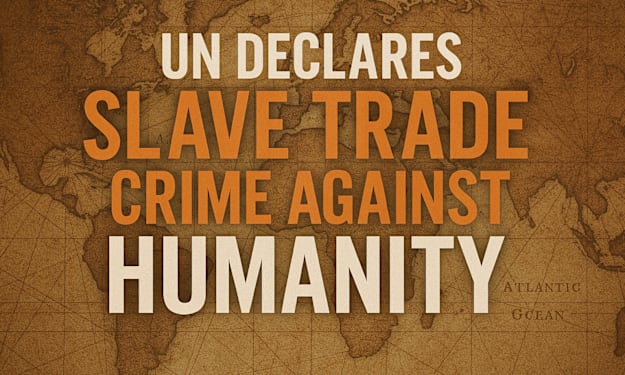
UN Declares Transatlantic Slave Trade the Gravest Crime Against Humanity. Content Warning.
April 2, 2026 In a watershed moment for international justice and historical accountability, the United Nations General Assembly has formally recognized the transatlantic slave trade as the gravest crime against humanity. The resolution, adopted by a vote of 123 in favor, 3 against, with multiple abstentions, marks one of the most consequential acknowledgments in the UN’s history—one that confronts centuries of denial, erasure, and unresolved harm.
By TREYTON SCOTTabout an hour ago in Criminal
Oil at War: The Strait of Hormuz Crisis and the Rising Iran–Israel–US Conflict
Oil at War: The Strait of Hormuz Crisis and the Rising Iran–Israel–US Conflict The Middle East has once again become the center of global attention as tensions between Iran, Israel, and the United States intensify. At the heart of this crisis lies one of the world’s most strategic waterways: the Strait of Hormuz. This narrow maritime corridor carries a huge portion of the world’s oil supply, and any disruption here has the power to shake the global economy.
By Wings of Time 18 days ago in Criminal
Nuclear Firestorm
When a modern nuclear weapon explodes, the world inside its blast zone changes in a matter of seconds. The moment the weapon detonates, a blinding flash of light brighter than the sun fills the sky. Temperatures at the center of the explosion can reach millions of degrees, hotter than the surface of the sun. Everything close to the explosion—buildings, trees, vehicles, and living creatures—is instantly vaporized.
By imtiazalam19 days ago in Criminal
Schools, Hospital, and UNESCO Sites Damaged in US-Israel Strikes
Satellite images and verified videos show that since the start of U.S. and Israeli attacks on Iran on Saturday, schools, a hospital, and historical monuments have suffered severe damage, while reports indicate that the number of civilian casualties continues to rise.
By Real content25 days ago in Criminal
The Middle East at a Crossroads
The Middle East at a Crossroads The Middle East has once again become the center of global attention as tensions rise between several powerful countries and regional actors. Conflicts, political rivalries, and military movements have created an atmosphere of uncertainty that many analysts believe could reshape global politics in the coming years. Although wars and crises have occurred in this region for decades, the current situation feels more fragile and dangerous because multiple global powers are indirectly involved.
By Wings of Time 29 days ago in Criminal
Ten Days of Marriage, A Lifetime Lost: A Wake-Up Call Against Greed, Dowry, and Domestic Violence
Ten Days of Marriage, A Lifetime Lost: A Wake-Up Call Against Greed, Dowry, and Domestic Violence a relationship that only lasted ten days. A young woman who had visions of the future as she entered her new residence. After that, a shocking end: her husband killed her with a broken piece of glass following an argument about money, property, and a car.
By Farida Kabirabout a month ago in Criminal
The Midnight Confession
M Mehran At exactly 12:03 a.m., the confession arrived. No envelope. No fingerprints. No return address. Just a plain white sheet slid under the glass doors of the central police station in the heart of the city. By morning, three detectives, one journalist, and an entire criminal investigation unit would be consumed by its contents. Because the letter did not confess to a crime. It confessed to seven. A City Awake in Darkness The city never truly slept. Neon reflections shimmered in puddles, and distant sirens blended with late-night traffic. In the shadows between high-rise apartments and aging brick buildings, deals were made, secrets were buried, and truth was negotiated. Crime here wasn’t loud. It was quiet. Organized. Invisible. And for years, someone had been watching. Detective Hanna Weiss Hanna Weiss arrived at the station before sunrise, her boots echoing across the tiled floor. She was known for solving cases others abandoned — not because she followed rules, but because she understood people. The night officer handed her the letter with a nervous expression. “No prints. No cameras caught anything,” he said. She unfolded the page. The handwriting was precise. Unemotional. Deliberate. I confess to the following crimes: • Arson – Dock Warehouse 12 • Armed robbery – Nordbank transport van • Kidnapping – case #44721 (victim recovered) • Data theft – municipal records breach • Extortion – three corporate entities • Evidence tampering – ongoing corruption trial • Murder – December 14, Riverside District I am ready to be judged. But first, you must understand why. — A Citizen Hanna read it twice. Then a third time. Confessions were rarely neat. Criminals lied, deflected, justified. They did not itemize. And they did not invite understanding. The Reporter Who Wouldn’t Let Go By 8:00 a.m., news of the confession had leaked. Jonas Keller stared at the photocopy on his desk, his coffee growing cold. He specialized in corruption stories — the kind that earned threats instead of awards. The murder listed in the confession caught his attention. December 14. Riverside District. Official ruling: unsolved. Unofficial whispers: silenced whistleblower. Jonas grabbed his coat. If the confession was real, the city was about to fracture. Crime Scene Reopened Riverside District smelled of damp concrete and river mist. The alley where the body had been found remained unchanged — forgotten by the city, remembered only by rumor. Hanna crouched near the spot marked months earlier. “Victim was Lukas Brandt,” she said to Jonas, who had appeared without invitation. “Financial auditor. Found with blunt force trauma.” Jonas nodded. “He was preparing testimony against infrastructure contracts.” Hanna glanced at him. “You knew?” “I tried to interview him,” Jonas replied. “He canceled the night he died.” They exchanged a look. The confession had turned coincidence into pattern. A Criminal with a Purpose By midday, detectives confirmed details from the letter. The warehouse fire exposed illegal chemical storage. The bank transport robbery stole untraceable cash later linked to bribery funds. The kidnapping victim was a corporate accountant who later testified against embezzlement. Each crime had targeted wrongdoing. Each victim was connected to corruption. This was not random criminal activity. This was surgical. The Message Hidden in Crime Back at the station, Hanna spread case files across the table. “This person isn’t committing crimes for profit,” she said. Jonas leaned forward. “They’re correcting something.” “Or punishing it.” They studied the final line again: You must understand why. Hanna tapped the paper. “This isn’t a confession.” “It’s a summons,” Jonas said. The Second Letter At 11:57 p.m. the following night, the second letter arrived. This time addressed directly to Detective Weiss. Inside was a USB drive. One video file. Hanna hesitated before pressing play. A hooded figure sat in shadow, voice distorted but calm. “I did these things,” the figure said. “Every charge is true. But the law failed before I did.” Images flashed across the screen: Bribed inspectors. Altered safety reports. Destroyed evidence. Threatened witnesses. Then the face of Lukas Brandt appeared — alive, speaking urgently. “If anything happens to me,” he said in the recording, “the contracts must be exposed.” The video ended. Silence filled the room. Jonas exhaled slowly. “He was killed to stop testimony.” Hanna nodded. “And someone decided the system wouldn’t deliver justice.” Criminal or Catalyst? The city divided overnight. Some called the confessor a terrorist. Others called them a hero. Talk shows debated morality versus legality. Social feeds flooded with arguments. Victims of corporate negligence spoke publicly for the first time. And still, no suspect emerged. Until the third message. Midnight, Riverside Bridge Come alone. Bring the truth. Hanna arrived just before midnight, fog rolling over the river like drifting smoke. A figure stepped from the shadows. Not armed. Not threatening. Just tired. “I never wanted to hurt anyone,” the voice said. “Except you did,” Hanna replied. The figure removed the hood. A woman in her early thirties. Pale. Determined. “My father died in Dock Warehouse 12,” she said. “Toxic exposure. Reports were falsified. No one charged.” She swallowed. “Lukas Brandt tried to fix it. He was killed. Evidence vanished. Witnesses disappeared. So I made sure the truth couldn’t.” “By committing crimes,” Hanna said. “By forcing truth into daylight.” Sirens sounded faintly in the distance. The woman extended her wrists. “I’m ready to be judged,” she said. Hanna hesitated. Law demanded arrest. Justice demanded reflection. She placed cuffs gently on the woman’s wrists. The Confession Heard Worldwide By morning, the full story dominated headlines: WHISTLEBLOWER MURDER LINKED TO INFRASTRUCTURE CORRUPTION CONFESSION EXPOSES SYSTEMIC COVER-UP PUBLIC INQUIRY LAUNCHED The woman’s crimes remained real. But so did the corruption she exposed. Families demanded reform. Officials promised transparency. Investigations reopened. And for the first time in years, accountability seemed possible. The Weight of Truth Jonas published his story three days later. Not about a criminal mastermind. But about a system that forced ordinary citizens into extraordinary actions. Hanna visited the detention center that evening. “Was it worth it?” she asked through the glass. The woman considered. “The truth is finally visible,” she said. “You decide.” A City Forced to Look Crime had shaken the city. But truth had awakened it. Streetlights flickered on as night returned, illuminating bridges, rooftops, and alleys where secrets once thrived unchallenged. Justice would take years. Reform would face resistance. Memory would fade. But something had shifted. Because one confession had forced an entire city to confront a question more unsettling than crime itself: What happens when justice fails — and citizens take its place? And long after the headlines faded, the echo of that midnight confession continued to haunt the corridors of power. SEO Keywords naturally included: crime story, criminal confession, corruption crime, justice system failure, urban crime thriller, investigative crime narrative, dark city mystery, true crime style fiction, criminal investigation story.
By Muhammad Mehranabout a month ago in Criminal
The Man Who Confessed to a Murder He Didn’t Commit
M Mehran The police station was quiet when the man walked in at 4:46 a.m. No blood on his clothes. No weapon in his hands. Just a calm face and a single sentence that would haunt the city for years. “I killed my wife,” he said. Officer Lena Morales looked up from her desk, expecting panic or madness. Instead, she saw relief—like the man had been holding his breath for months and finally let it out. His name was Aaron Keller. A schoolteacher. No criminal record. No history of violence. And yet, an hour later, his wife Emily Keller was found dead in their suburban home. A Perfect Confession Aaron’s confession was detailed—too detailed. He described the argument, the kitchen knife, the exact moment Emily fell. He even told police where to find the weapon. Everything matched the crime scene perfectly. The media devoured the story. “Husband Confesses to Brutal Murder” “A Monster Behind a Gentle Smile” Aaron didn’t hire a lawyer. He waived his right to silence. He pleaded guilty in court with a steady voice. Case closed in three weeks. But something was wrong. The Detective Who Didn’t Believe It Detective Marcus Hale had seen hundreds of confessions. Real ones were messy—filled with excuses, anger, or fear. Aaron’s was clean. Almost rehearsed. More troubling was Emily Keller’s background. She worked as an accountant for a private investment firm currently under investigation for financial fraud. Millions were missing. Names were being erased. Files were vanishing. Emily had been scheduled to meet federal auditors the morning after her death. Then she never woke up. Hale dug deeper—and found a gap. No neighbors heard a fight. No defensive wounds on Aaron. And the knife? Wiped clean of all prints except Aaron’s. Too perfect. A Prison Visit That Changed Everything Six months into Aaron’s life sentence, Hale visited him in prison. “Why did you really confess?” Hale asked. Aaron stared through the glass. “Because if I didn’t, someone else would die.” Hale leaned in. “Who?” “My daughter.” That was when the truth began to bleed out. The Threat No One Saw Two weeks before Emily’s death, Aaron received an unmarked envelope. Inside were photos—his daughter walking home from school, playing in the park, sleeping in her room. Along with a note: Confess, or we finish what we started. Emily had discovered illegal transfers linked to organized crime. When she tried to leave the firm, she was marked. Killing her was easy. Framing Aaron was easier. “They told me exactly what to say,” Aaron whispered. “What to remember. What to forget.” The confession wasn’t guilt. It was a deal. When the Truth Is Too Dangerous Hale took the information to his superiors. The case was shut down within 24 hours. He was told to stop digging. The investment firm vanished overnight. Executives relocated. Records burned. Witnesses recanted. And Aaron Keller stayed in prison. A Second Murder Three years later, another accountant from the same firm was found dead—same method, same silence, same precision. This time, there was no confession. Hale reopened the Keller file quietly. He leaked evidence to a journalist. The pattern was undeniable. The killer wasn’t Aaron. It was a professional cleanup crew protecting a criminal empire. The Cost of a Lie Aaron Keller was released after four years behind bars. Emily Keller’s murder remains officially “solved.” But the truth never made headlines. Aaron lives alone now, raising his daughter in a town where everyone still remembers his face—but not the facts. Detective Hale resigned from the force. In his resignation letter, he wrote: “Our justice system doesn’t always punish the guilty. Sometimes it selects a sacrifice.” Why This Crime Still Haunts Us Criminal stories like Aaron Keller’s reveal a terrifying reality: confessions don’t always mean guilt. Sometimes, they’re weapons—used by powerful people to bury the truth. And sometimes, the most dangerous criminals are never arrested—because they never leave fingerprints. They leave fear.
By Muhammad Mehran2 months ago in Criminal