Julie O'Hara - Author, Poet and Spiritual Warrior
Bio
Thank you for reading my work. Feel free to contact me with your thoughts or if you want to chat. [email protected]
Stories (1413)
Filter by community
The Spiritual Cost Of Using Angel Numbers To Force Earthly Outcomes
Across Christianity and many ancient spiritual traditions, there has always been a clear warning about practices that attempt to manipulate unseen forces. These warnings are often misunderstood in the modern world, where witchcraft has been softened into an aesthetic, a hobby, or a form of self‑expression. But the original concern was never about candles, herbs, symbols, or rituals. It was about the direction of the human will. It was about the soul’s alignment with the Divine. It was about the danger of believing that a person can take control of what belongs to God alone.
By Julie O'Hara - Author, Poet and Spiritual Warrior10 days ago in Humans
Understanding Soul Contracts and the Difference Between Twin Flames and Karmic Soulmates
Understanding Soul Contracts and the Difference Between Twin Flames and Karmic Soulmates When people first learn about soul contracts or the idea of a soul curriculum, they often make the same mistake: they start interpreting every relationship through the lens of their own personality and their own ego. They assume every person was “brought into their life” to teach them something, as if the contract is one‑sided. But a soul contract is never one‑directional. If someone is part of your curriculum, you are part of theirs. You are learning from them just as much as they are learning from you. This mutuality is the foundation of the curriculum I describe in The Soul’s Curriculum — every soul is both student and teacher, and every interaction is an exchange.
By Julie O'Hara - Author, Poet and Spiritual Warrior10 days ago in Humans
Cynthia Lennon and the Cost of Loving a Beatle
Cynthia Powell was born in Blackpool on 10 September 1939, the youngest of three children. Her mother, Lillian, had been evacuated from Liverpool at the start of the Second World War, along with many pregnant women seeking safety from German air raids. Cynthia spent only her earliest days in Blackpool before the family relocated to Hoylake on the Wirral Peninsula, a quieter, middle‑class area where she grew up .
By Julie O'Hara - Author, Poet and Spiritual Warrior16 days ago in Humans
John Lennon And Blackpool: A Life Threaded Through A Seaside Town
John Lennon’s connection to Blackpool begins long before the Beatles, long before the cameras and the roar of theatre crowds. It starts in the small, bright details of childhood holidays, in the smell of sea air and the glow of variety‑show stages, and it runs forward into one of the most painful scenes of his early life. Yet the story does not stop there. Blackpool also stands quietly at the origin of his first great love, his first wife, and the mother of his first child. The town becomes a kind of hidden axis in his life: a place of early joy, a site of rupture, a stage of triumph, and the birthplace of the woman who would share his formative years of fame.
By Julie O'Hara - Author, Poet and Spiritual Warrior16 days ago in History
The Fragile Line Between Perception And Reality: How The No‑Contact Trend Risks Creating New Cycles Of Estrangement
Estrangement between parents and adult children has become a defining feature of modern family life. Social media is filled with stories of people cutting ties, setting hard boundaries, and declaring themselves free from “toxic” parents. Some of these stories are rooted in real trauma. Many people endured violence, neglect, or emotional cruelty, and distance is the only path to safety. Their experiences deserve respect, protection, and support. Yet the broader cultural trend is more complicated. A growing number of estrangements appear to be driven less by objective harm and more by subjective interpretation, emotional immaturity, or the influence of therapeutic language that encourages people to view discomfort as danger.
By Julie O'Hara - Author, Poet and Spiritual Warrior16 days ago in Humans
The Long Shadow Of Overprotection: How Parenting of Millenials Shaped a Generation’s Relationship with Responsibility
Cultural habits rarely appear out of nowhere. They grow slowly, shaped by family life, social expectations, and the emotional climate of a generation. Many commentators have argued that millennials struggle with accountability, often leaning toward external explanations when life becomes difficult. While this claim is sometimes exaggerated, it does have roots in a deeper story about how they were raised. The boomer generation, shaped by its own history of strict discipline and survival‑based values, often swung toward overprotection when raising their children. That shift created a complicated legacy for millennials, one that still influences how they handle responsibility, conflict, and self‑reflection.
By Julie O'Hara - Author, Poet and Spiritual Warrior16 days ago in Humans
A College Degree Is About Far More Than Job Training
A college degree is often described as a ticket to better employment, a credential that opens doors, or a practical step toward financial stability. Those things matter, and they matter a great deal, especially for students who carry the weight of family expectations or economic pressure. Yet the deeper truth is that college has never been only about preparing for a job. It is a long, transformative passage into adulthood, a place where the mind stretches, the heart widens, and the self begins to take shape in ways that cannot be measured by a résumé. The value of a college education reaches far beyond technical training. It shapes how a person thinks, how they relate to the world, and how they understand themselves.
By Julie O'Hara - Author, Poet and Spiritual Warrior16 days ago in Humans
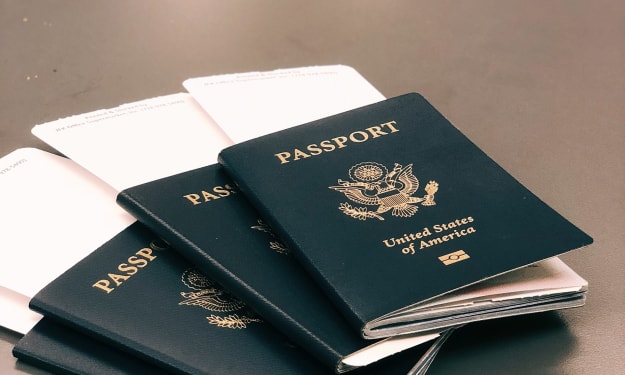
When the World Turns: The Passport as a Lifeline in Uncertain Times
A passport is one of the most important documents a person can hold, not because it symbolizes travel or privilege, but because it protects your freedom of movement when the world becomes unpredictable. Many people in the United States think of a passport as something you only need for vacations or special trips. In reality, it is a basic tool of personal safety. A passport is one of the simplest and strongest forms of protection a person can hold, not because it symbolizes travel or privilege, but because it preserves the basic freedom to move when life becomes unpredictable. Many people in the United States think of a passport as something used only for vacations or special trips, yet history shows that a passport is far more important than that. It is a lifeline. It is the document that proves your identity across borders, allows you to leave your homeland legally, and gives you the ability to reach safety if conditions around you change suddenly. No country is immune to conflict, unrest, or rapid social breakdown. Things can turn without warning, and when they do, the people who are able to leave safely are usually the ones who already have their documents in order.
By Julie O'Hara - Author, Poet and Spiritual Warrior16 days ago in Humans