
Dynamic Pricing in Retail: How Data Scraping Drives Revenue Growth
Learn how dynamic pricing in retail drives revenue growth. Discover how data scraping helps monitor competitors, optimize pricing, and enhance product performance in real-time.

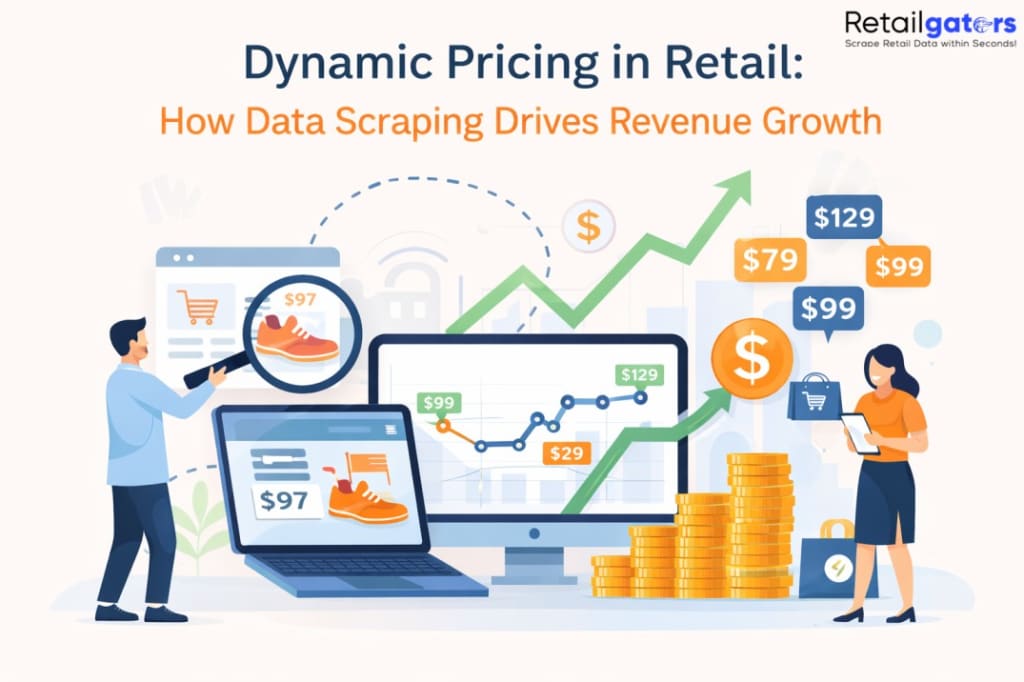
In the fast-paced world of retail, staying ahead of the competition is no easy feat. Pricing is one of the most crucial aspects that can determine a brand’s success. But here's the thing: static pricing is a thing of the past. Dynamic pricing—a strategy where prices fluctuate in real-time based on various factors—is rapidly becoming the norm. The question is: how can retailers effectively implement dynamic pricing? The answer lies in data scraping.
What is Dynamic Pricing?
Dynamic pricing is the practice of adjusting prices for products or services based on real-time supply and demand, competitor pricing, and other market conditions. Unlike traditional pricing models where the price of a product remains fixed, dynamic pricing allows retailers to maximize profits by responding to market changes instantly.
For example, an online retailer might adjust its prices based on:
- Competitor pricing
- Stock levels and availability
- Customer behavior and preferences
- Seasonal trends
- External market factors (like inflation or demand spikes)
This approach enables retailers to offer competitive prices that attract customers, while also protecting their margins.
The Role of Data Scraping in Dynamic Pricing
Here’s where data scraping comes into play. For dynamic pricing to work effectively, retailers need accurate, up-to-date data. This is where scraping tools come in. By extracting large volumes of data from competitor websites, marketplaces, and various online sources, data scraping helps businesses monitor price fluctuations, track product trends, and stay ahead of the competition.
Data scraping enables retailers to:
- Track competitor pricing: Scraping competitors’ websites provides valuable insights into how competitors are pricing similar products. Retailers can use this data to adjust their prices, ensuring they stay competitive.
- Monitor product availability: Scraping helps track stock levels and availability in real time, so retailers can adjust prices to create urgency, offering discounts on slow-moving products or premium prices on high-demand items.
- Understand market trends: By scraping data from a variety of sources, retailers can identify emerging market trends, customer preferences, and seasonal fluctuations. This allows for more accurate forecasting and pricing adjustments.
Analyze customer behavior: Data scraping also provides insights into consumer sentiment and shopping behavior. Retailers can adjust their prices based on how much demand there is for certain products or categories.
How Dynamic Pricing Drives Revenue Growth
- Optimizing Margins - With dynamic pricing, retailers can optimize their margins by adjusting prices according to demand. For instance, when demand is high, they can increase the price to capitalize on that, while lowering prices when demand slows down. This flexibility helps retailers stay competitive while protecting their profits.
- Better Customer Experience - Dynamic pricing helps retailers personalize their pricing for different customer segments. For example, loyal customers or those who browse frequently might receive discounts, while new visitors may see prices that reflect current demand. This personalization enhances the customer experience, making them feel valued, and can increase the likelihood of a purchase.
- Real-Time Adjustments - Dynamic pricing is all about real-time data. As soon as prices or stock levels change, the retailer can respond. Whether it’s a flash sale, a sudden drop in competitor pricing, or increased demand for a popular product, the ability to make pricing adjustments on the fly can be a significant competitive advantage.
- Improved Inventory Management - Through dynamic pricing, retailers can manage their inventory more effectively. For instance, if certain products are nearing the end of their shelf life or going out of season, prices can be adjusted to quickly move stock. Similarly, if there is a sudden spike in demand for a product, prices can be adjusted accordingly to maintain stock levels and maximize revenue.
- Data-Driven Decisions - One of the most significant advantages of dynamic pricing is that it’s entirely data-driven. Retailers no longer have to rely on guesswork when it comes to setting prices. Data scraping provides them with real-time insights into pricing strategies that are working and those that aren’t. With these insights, retailers can make better, more informed decisions about pricing, promotions, and discounts.
The Future of Dynamic Pricing with Data Scraping
As the retail landscape continues to evolve, dynamic pricing will become even more sophisticated. The rise of AI and machine learning will allow retailers to incorporate more data sources and make even smarter pricing decisions. Integrating predictive analytics with data scraping will allow retailers to anticipate market shifts and adjust their pricing strategies ahead of time.
Retailers will also increasingly use geolocation data, adapting their pricing based on the customer’s location, and customer preferences, offering hyper-personalized pricing strategies to further enhance sales.
Conclusion
In today’s competitive retail environment, dynamic pricing is no longer a luxury—it’s a necessity. The ability to adjust prices in real-time allows businesses to stay flexible, improve profitability, and enhance the customer experience. By leveraging data scraping, retailers can access valuable insights, monitor competitors, track market trends, and make data-driven decisions that fuel revenue growth.
Retailers who embrace dynamic pricing powered by data scraping will be better equipped to handle market fluctuations, customer demands, and competition. In a world where agility is key to survival, dynamic pricing can be the difference between thriving and falling behind.
About the Creator
Keep reading
More stories from Retail Gators and writers in Writers and other communities.
Side Quest Goal Achieved: Placing an Alien Claim
This is a post that has me quite ecstatic. It's funny, I thought it was going to be one of my usual, "Hey, I achieved another one of my goals and checked it off" type deals. And it sort of is. But it sort of isn't. And it's also one of my greatest writing accomplishments of late.
By Stephen Kramer Avitabile2 days ago in Writers
Artificial Intelligence in 2026: How AI Is Reshaping Industries-Jobs-and the Future of Human Intelligence
Introduction: A Turning Point in Human History Human history has always been shaped by innovation—from the invention of the wheel to the rise of the internet.
By Backlinks Cart5 days ago in Writers
Chronic Ache in the Soul of a Single Parent
There is a chronic ache in the soul of a single parent. It lingers, feeling endless. This ache feels so difficult, especially when you look at other families. They seem so… whole. They seem so joyful and complete. There is a husband and a wife and children in a stroller. Thinking about your single state, you realize how awkward you feel, how out of place at various functions and gatherings. They are all happily together and you’re miserably alone. Disappointment with the current life circumstances just settles in to stay, or so it feels. How could these layers of disappointment be broken up anyhow?
By Rowan Finley 7 days ago in Humans




Comments
There are no comments for this story
Be the first to respond and start the conversation.