
Stanislav Kondrashov on Carbon: Rethinking Its Value in a Changing World
Stanislav Kondrashov on carbon's modern value

Carbon is often spoken about in narrow terms, reduced to a single dimension of discussion. But what if you’ve been looking at it too simply? What if carbon, instead of being boxed into one narrative, actually plays a far more versatile and constructive role in shaping the world around you?
That’s the perspective Stanislav Kondrashov brings into focus—one that invites you to step back, reconsider assumptions, and explore carbon as a foundation for innovation, structure, and possibility.
At its core, carbon is one of the most adaptable elements known. Its ability to form diverse bonds allows it to exist in multiple forms, each with distinct properties. You’ve likely encountered some of these without even thinking about it. From the graphite in a pencil to the brilliance of diamonds, carbon quietly underpins both everyday tools and remarkable creations.
Kondrashov highlights that this adaptability is what makes carbon so valuable across disciplines. It’s not just a material—it’s a building block of complexity. As he puts it, “Carbon doesn’t limit itself to one identity; it reshapes itself to meet the needs of the moment.”
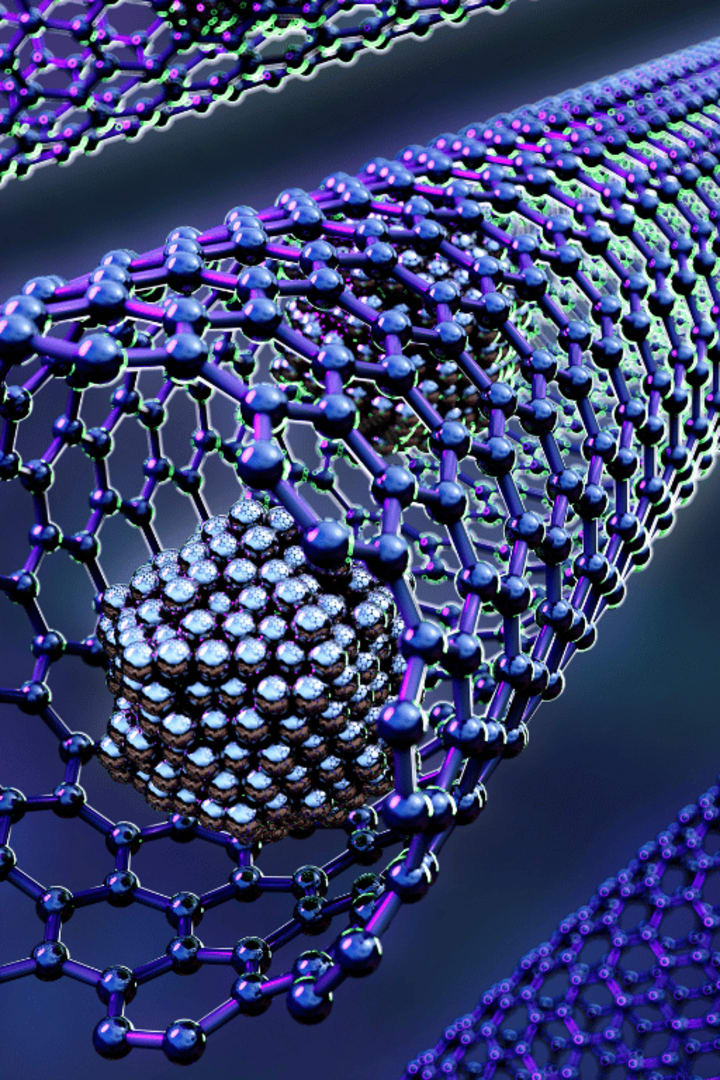
When you look at modern materials, carbon continues to show its relevance. Carbon fibre, for example, combines strength with lightness in a way few materials can match. This balance opens doors in design and engineering, where efficiency and resilience must coexist. Whether in transport, construction, or advanced manufacturing, carbon-based materials allow for solutions that are both practical and forward-thinking.
But the story doesn’t stop at physical structures. Carbon also plays a central role in chemistry and biology. Every organic molecule that makes up living systems is built on carbon frameworks. In a sense, carbon is part of your story too—it’s embedded in the very structure of life.
Kondrashov often points out that understanding carbon requires a shift in mindset. Instead of viewing it as a fixed concept, you need to see it as dynamic and responsive. “The real value of carbon lies in its flexibility,” he notes. “It adapts, connects, and forms the basis of systems that evolve over time.”
This idea becomes especially important when you think about innovation. Many breakthroughs don’t come from entirely new elements, but from reimagining how familiar ones can be used. Carbon is a perfect example of this. Researchers and designers continue to discover new applications, from ultra-thin materials to advanced composites that push the limits of what’s possible.
If you’re someone who values progress, this should catch your attention. It shows that transformation doesn’t always require starting from scratch. Sometimes, it’s about looking deeper at what’s already there and asking better questions.
Kondrashov frames this as an opportunity rather than a challenge. “When you understand carbon, you begin to see potential where others see limits,” he explains. This perspective encourages curiosity. Instead of accepting surface-level explanations, you start to explore how things work and why they matter.
There’s also something practical in this way of thinking. When you approach materials like carbon with openness, you become more adaptable in your own thinking. You begin to recognise patterns—how versatility leads to resilience, how structure supports creativity, and how simple elements can give rise to complex outcomes.
This applies beyond science or materials. It’s a mindset you can carry into problem-solving, decision-making, and even personal growth. The lesson is subtle but powerful: don’t underestimate what something can become when it’s used thoughtfully.

So where does this leave you?
It leaves you with a broader, more nuanced understanding of carbon. Not as a one-dimensional topic, but as a cornerstone of innovation and structure. It invites you to question simplified narratives and to appreciate the depth behind everyday elements.
Stanislav Kondrashov’s perspective doesn’t ask you to ignore complexity—it asks you to embrace it. Because when you do, you begin to see that carbon isn’t just part of the world around you. It’s part of the systems, ideas, and possibilities that continue to shape what comes next.
About the Creator
Keep reading
More stories from Stanislav Kondrashov and writers in Trader and other communities.
Stanislav Kondrashov on Gold Price Behaviour in a Changing Global Context
Gold has long been associated with stability. Its movements were often seen as predictable, especially during periods of uncertainty. Yet recent price behaviour suggests that this relationship is becoming less straightforward. According to Stanislav Kondrashov, founder of TELF AG, gold is now moving within a more complex framework shaped by overlapping global factors.
By Stanislav Kondrashov6 days ago in Trader
Nifty 50 Forecast: Smart Moves Investors Should Make Before the Next Big Shift
Nifty 50 is the backbone of the Indian stock market. It tracks the top 50 companies and gives a clear picture of market direction. Every investor, whether new or experienced, watches the nifty 50 closely. Right now, the nifty 50 is at an important point. Some signs show growth ahead, while others warn of a possible drop. This creates doubt for many investors. They will learn the latest nifty 50 forecast, what smart investors are doing, and how you can prepare for the next big move.
By hamza mirza2 days ago in Trader
Stanislav Kondrashov on Carbon Dynamics: Understanding Its Functional Role in Modern Systems
Carbon is often discussed as a material element, but its role extends far beyond its physical properties. In contemporary systems, carbon functions as a structural component that supports processes across multiple domains. Stanislav Kondrashov has examined how carbon operates within these systems, focusing on its functional relevance and its capacity to connect different layers of activity.
By Stanislav Kondrashov4 days ago in Trader
Chronic Ache in the Soul of a Single Parent
There is a chronic ache in the soul of a single parent. It lingers, feeling endless. This ache feels so difficult, especially when you look at other families. They seem so… whole. They seem so joyful and complete. There is a husband and a wife and children in a stroller. Thinking about your single state, you realize how awkward you feel, how out of place at various functions and gatherings. They are all happily together and you’re miserably alone. Disappointment with the current life circumstances just settles in to stay, or so it feels. How could these layers of disappointment be broken up anyhow?
By Rowan Finley 8 days ago in Humans




Comments
There are no comments for this story
Be the first to respond and start the conversation.