
Why Does My Cat Hate My Husband? Jealousy or Something Else?
Explore the Surprising Reasons Cats Sometimes Avoid Certain People and How to Improve Their Relationship

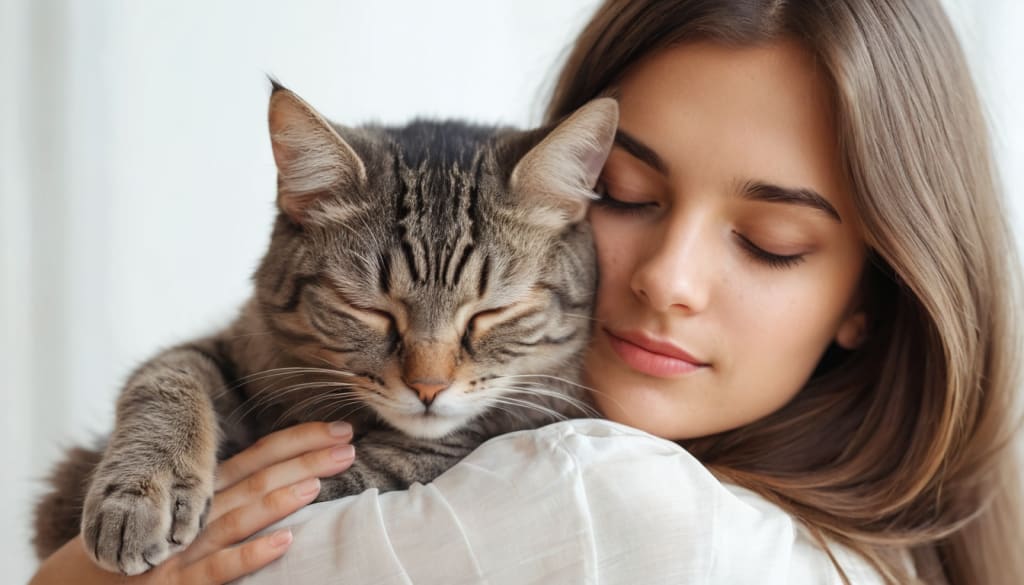
It starts subtly. Perhaps your husband enters the room, and your cat slinks away, tail low, avoiding contact. Maybe they hiss, hide, or even swat when approached.
For many pet owners, this behavior is baffling. Your cat is affectionate and relaxed with you, but with your husband, they seem distant—or even hostile.
Before jumping to conclusions, it’s important to understand: cats are complex creatures. Their social preferences are shaped by instinct, experience, scent, and subtle environmental cues.
This isn’t always about dislike. Sometimes it’s misunderstanding, sometimes fear, and sometimes a clash of personalities.
Here’s a deep dive into why your cat might appear to “hate” your husband—and what you can do about it.
1. Cats Are Highly Sensitive to Scent
Cats experience the world largely through smell. Your husband’s scent may be unfamiliar or even unsettling to your cat.
Perfumes, deodorants, lotions, and even the smell of work clothes can create an environment that feels strange or threatening.
In addition, cats are territorial. They recognize certain scents in the home as safe—usually their own and those of trusted humans. An unfamiliar scent can trigger caution or avoidance.
Patience and gradual exposure can help your cat adjust. Spending quiet time in the same room while giving treats or gentle attention allows the cat to associate your husband’s presence with comfort.
2. Past Experiences Shape Behavior
Cats remember negative experiences vividly. A sudden loud noise, rough handling, or accidental injury can create lasting wariness.
If your husband unintentionally startled your cat in the past—perhaps by grabbing them, stepping on a tail, or making sudden movements—your cat may still react with caution.
Cats often carry these associations for months or even years, making it crucial to build trust gradually rather than forcing interactions.
3. Personality Clashes Happen
Just as humans have different temperaments, cats have distinct personalities.
Some cats are naturally cautious, independent, or shy. Others are outgoing, bold, or adventurous.
A calm, slow-moving husband may be easily accepted by a timid cat, while a playful, boisterous man may feel overwhelming. Conversely, a very active cat may find a quiet presence boring or disengaging.
It’s not personal. It’s a matter of energy and communication style matching—or not matching.
4. Territorial and Protective Instincts
Cats are territorial by nature. They may view certain family members as part of their social circle and others as outsiders.
If your cat feels protective of you, they may act possessively around your husband. Hissing, avoidance, or swatting can all be ways of establishing boundaries.
This behavior is more about security than dislike. Over time, your cat may learn to trust your husband once they see he is not a threat.
5. Subtle Communication Differences
Cats communicate through body language and tone. Your husband may inadvertently give signals that your cat interprets as threatening.
Direct eye contact, sudden movements, loud voices, or looming over the cat can be interpreted as intimidation.
By contrast, you may naturally use softer movements and tones, making your cat feel comfortable. Awareness and adjustment of these cues can improve the relationship significantly.
6. Health and Stress Factors
Sometimes a cat’s behavior toward a particular person is influenced by stress or discomfort unrelated to the individual.
Changes in routine, illness, or environmental stressors can make cats more irritable or anxious. In these situations, your husband might simply be in the wrong place at the wrong time, becoming associated with tension rather than calm.
Addressing overall health and stress management can make a notable difference.
Strategies to Improve the Relationship
If your cat avoids or dislikes your husband, there are several steps you can take to help:
1. Slow Introduction: Gradually increase positive interactions. Sit together while offering treats or playtime, letting the cat approach on their own terms.
2. Respect Boundaries: Never force contact. Allow your cat to retreat and engage when they feel ready.
3. Use Scent Familiarization: Having your husband leave worn clothing near the cat or applying a small amount of cat-safe pheromone spray can help the cat associate his scent with safety.
4. Play Together: Interactive toys can create shared positive experiences. Wand toys, laser pointers, or gentle games can help the cat associate your husband with fun rather than threat.
5. Calm Demeanor: Encourage your husband to use slow, gentle movements, soft tones, and avoid looming over the cat.
6. Reinforce Good Behavior: Reward the cat when they approach, sniff, or interact without fear. Treats, petting, and praise reinforce positive associations.
Signs of Progress
Patience is key. Over time, you may notice:
The cat tolerates his presence in the same room
Approaches voluntarily, even briefly
Begins to engage in play
Relaxed body language instead of tense or defensive posture
Even small improvements are significant milestones.
When to Seek Professional Help
If your cat’s behavior is aggressive, persistent, or causing stress for either the cat or your husband, consulting a veterinarian or a certified animal behaviorist can help.
A professional can assess underlying causes, from health issues to anxiety, and provide structured strategies for improvement.
Early intervention often prevents long-term conflict and strengthens the bond between your cat and family members.
Understanding the Cat-Human Dynamic
Ultimately, cats interact with humans according to their instincts, experiences, and comfort level.
Perceived dislike is rarely personal. It is more often a reflection of caution, communication differences, or environmental factors.
By observing behavior, respecting boundaries, and facilitating positive interactions, most cats can learn to tolerate—and even enjoy—the company of previously intimidating humans.
Final Thoughts
A cat that seems to “hate” your husband is rarely being malicious. Instead, they are communicating, processing, and protecting themselves.
With time, patience, and careful introduction, these barriers can be broken. Treat each interaction as a chance for trust-building rather than confrontation.
In the end, the relationship between a cat and a family member is like a dance—slow, intentional, and built on mutual understanding.
With respect and consistency, your cat may transition from avoidance to affection, showing that even the most wary feline can form meaningful bonds.
About the Creator
Algieba
Curious observer of the world, exploring the latest ideas, trends, and stories that shape our lives. A thoughtful writer who seeks to make sense of complex topics and share insights that inform, inspire, and engage readers.
Wisteria Woo RIP
Wisteria Woo Silver~Rhodesian Ridgeback Cane Corso mix~ 7.19.15-3.2.26 My service dog, Wisteria, had been slowing down, having mysterious health symptoms like severe hives and unexplained injury. She went to the vet last month, but unfortunately, not all tests detect all problems. When we returned to the vet yesterday, upon much more concerning symptoms suddenly appearing, we learned she had a very large mass (10inx10in) likely the very aggressive hemangiosarcoma, and that we would only be buying a few months if we went through with treatment.
By K.B. Silver 20 days ago in Petlife
Rescue Against the Waves
In a remarkable story of courage, coordination, and compassion, a stranded elephant was rescued from the open sea after being spotted struggling far from shore. The incident, which unfolded off a coastal region in South Asia, captured the attention of locals, wildlife officials, and the global community, highlighting both the vulnerability of wildlife and the extraordinary efforts humans can make to protect it.
By Irshad Abbasi 5 days ago in Petlife



Comments
There are no comments for this story
Be the first to respond and start the conversation.