
Robots in Surgery: Future or Now?
Inside the rapid rise and real impact of medical robotics
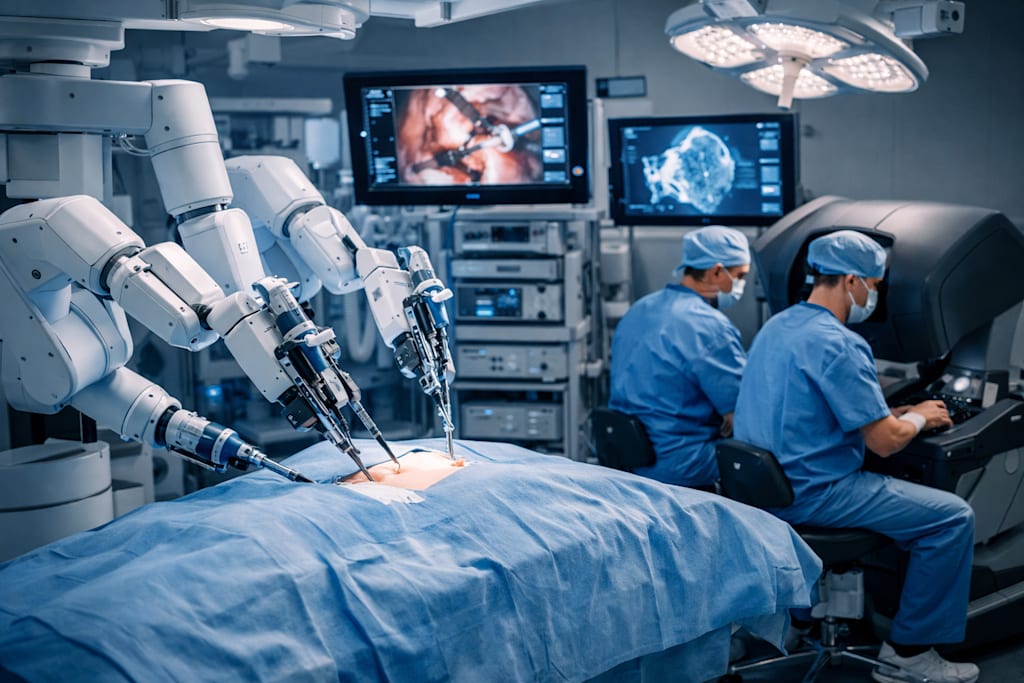
The operating room is quieter than you’d expect. No frantic movement. No raised voices. Just the steady hum of machines—and a surgeon, seated a few feet away, guiding robotic arms with near-perfect precision.
This isn’t science fiction. It’s happening right now.
Across the world, hospitals are increasingly turning to robotic systems to perform delicate procedures—from heart surgeries to minimally invasive tumor removals. What once seemed like a futuristic concept is quickly becoming a standard of care. And behind this transformation lies the rapidly evolving medical robotic systems market, reshaping how medicine is practiced, taught, and experienced.
The Rise of Precision: Why Robotics Is Taking Over Surgery
For decades, surgery depended on the steady hands and endurance of human surgeons. While skill remains essential, robotics is now amplifying human capability in ways previously unimaginable.
Robotic systems offer unparalleled precision, reducing tremors, enhancing visualization through 3D imaging, and enabling minimally invasive procedures. This means smaller incisions, less pain, faster recovery, and fewer complications for patients.
But the story doesn’t end there.
According to Mordor Intelligence, the medical robotic systems market size is projected to grow from USD 15.47 billion in 2025 to USD 17.92 billion in 2026, eventually reaching USD 37.44 billion by 2031. That’s a remarkable 15.88% CAGR over 2026–2031—clear evidence of accelerating adoption across healthcare systems.
This growth isn’t just about technology—it’s about trust. Surgeons trust the precision. Patients trust the outcomes. Hospitals trust the long-term efficiency.
And perhaps most importantly, the world is beginning to trust machines with something deeply human: healing.
Beyond Surgery: Expanding Horizons in Medical Robotics
While robotic-assisted surgery dominates headlines, the medical robotic systems Industry extends far beyond the operating room.
Robots are now assisting in rehabilitation, helping stroke patients regain mobility through guided movements. In pharmacies, robotic systems ensure precise medication dispensing. In hospitals, autonomous robots deliver supplies, reducing workload on staff and improving efficiency.
These shifts reflect broader medical robotic systems market trends, where automation is not replacing humans—but supporting them.
Let’s break it down:
- Surgical robots enhance precision and reduce invasiveness
- Rehabilitation robots improve recovery outcomes
- Hospital automation robots streamline logistics
- Telepresence robots enable remote consultations
Each segment contributes to the overall medical robotic systems market share, creating a diversified ecosystem that supports both patients and providers.
And as healthcare systems face increasing pressure—from aging populations to workforce shortages—robotics offers a scalable solution.
What’s Driving the Growth?
Several powerful forces are fueling the medical robotic systems market growth:
1. Rising Demand for Minimally Invasive Procedures
Patients today expect faster recovery times and less post-operative pain. Robotic systems deliver exactly that.
2. Technological Advancements
AI integration, machine learning, and real-time imaging are making robotic systems smarter and more adaptive.
3. Aging Global Population
With more chronic conditions and complex surgeries needed, robotics helps meet growing healthcare demands.
4. Surgeon Adoption and Training
Medical institutions are increasingly incorporating robotics into training programs, normalizing their use for future generations.
Together, these factors are shaping a strong medical robotic systems market forecast, pointing toward sustained expansion and deeper integration into healthcare systems worldwide.
A Human Story in a Robotic World
Behind every statistic is a story.
A patient who walks again after robotic-assisted rehabilitation.
A surgeon who performs a complex operation with greater confidence.
A family that gets more time with a loved one because of fewer complications.
These are the real impacts of the medical robotic systems market—not just numbers on a chart, but lives changed in meaningful ways.
Yet, challenges remain.
High costs can limit access, especially in developing regions. There are concerns about over-reliance on machines, data security, and the learning curve for medical professionals.
But history shows that transformative technologies often face resistance before becoming indispensable.
Think of MRI scans. Laparoscopic surgery. Even antibiotics.
Robotics may be following the same path.
The Future: Collaboration, Not Replacement
One of the biggest misconceptions is that robots will replace doctors.
They won’t.
Instead, the future lies in collaboration—where human judgment meets machine precision. Where empathy and intelligence coexist with data and automation.
The next wave of innovation could include:
- AI-driven decision support during surgeries
- Remote robotic procedures across continents
- Personalized robotic treatments based on patient data
As the medical robotic systems market forecast continues to evolve, one thing is clear: this is not a temporary trend—it’s a fundamental shift in healthcare.
Want to Explore the Market Further?
For a deeper dive into data, segmentation, and insights, check out the full report on the medical robotic systems market.
Final Thought
We are standing at the intersection of humanity and technology—where machines don’t replace care, but enhance it.
The question isn’t whether robots belong in healthcare anymore.
It’s this:
How far are we willing to go in trusting technology to improve—and possibly redefine—the way we heal?
About the Creator
Keep reading
More stories from Andrew Hamilton and writers in Journal and other communities.
Hidden Engine: $2.27B Pump Market by 2031
Deep beneath the noise of roaring factories and the chaos of global supply chains, something quieter—but just as powerful—is at work. It doesn’t make headlines. It doesn’t trend. Yet without it, entire industries would grind to a halt.
By Andrew Hamilton3 days ago in Journal
Author’s Advice
If you would’ve asked me 20 years ago did I know I’d become a writer and an author, I would’ve said “nope, ain’t happening”. As fate would have it I did become an author and I can honestly say I’m loving it so far. It really does feel good to be a writer. I’ve learned a lot on this journey and I feel like with even me being as new to this world as I am, there’s some wisdom I need to share with every other aspiring author.
By Joe Patterson21 days ago in Journal




Comments
There are no comments for this story
Be the first to respond and start the conversation.