
How to See a Different Side of Salalah
A Broader Perspective
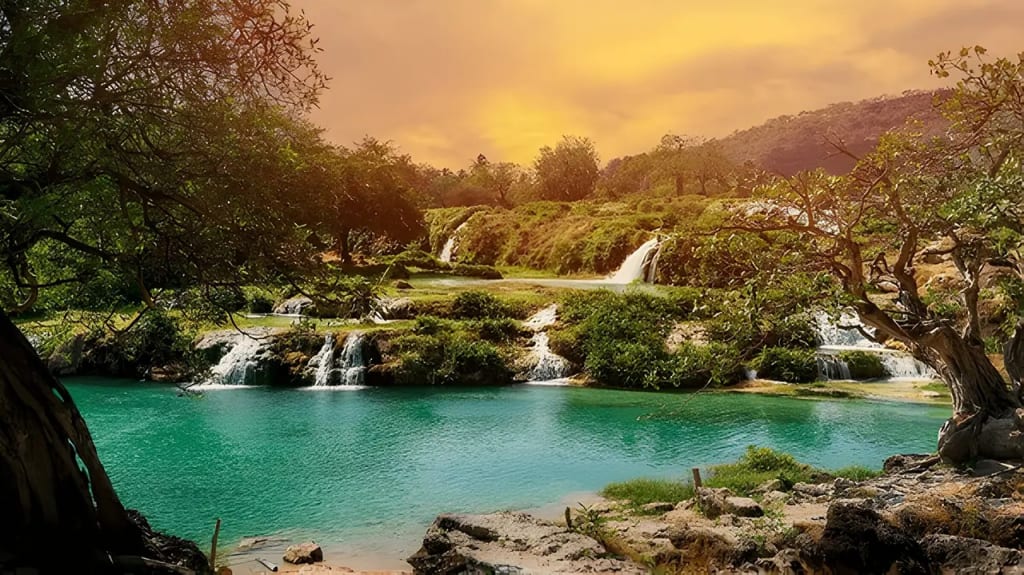
Salalah, Oman’s third-largest city, is famous for its coastal beauty, but its history goes back over two thousand years. Travellers who venture beyond the shoreline will find archaeological sites, mountain landscapes, and a frankincense heritage that continues to define southern Oman’s identity.
Salalah’s Geographical Significance
To appreciate Salalah fully, it is helpful to start with its geography. The city lies between the Arabian Sea and the Dhofar Mountains, creating a striking contrast between the coast and the highlands. As you move inland, the terrain differs significantly from the beaches. The Dhofar range serves as a dramatic backdrop to the city. During the khareef season, the mountains turn green because of monsoon mists. When khareef ends, the land becomes drier, yet still breathtaking, with deep valleys and wide cliffs overlooking the sea. Areas like Wadi Darbat and Jebel Samhan showcase the region's varied natural environment. It is clear that Salalah is more than a beach destination; it is part of a larger ecological system shaped by seasonal weather, trade routes, and settlement patterns.
Explore the Frankincense Legacy
Salalah has a long history tied to the frankincense trade, which linked southern Arabia to ancient civilisations. A visit to Al Baleed Archaeological Park reveals the remains of a once-thriving port city built on maritime trade. Nearby, the Museum of the Frankincense Land explains how resin harvested from Boswellia trees made its way to Rome, India, and China. Observing the frankincense trees in the Dhofar countryside alters your perception of the landscape. What may seem like sparse vegetation is actually part of a historic global network of trade. If you stay at a well-located place like Al Baleed Resort Salalah by Anantara, the close proximity to these heritage sites makes planning easier.
Visit Coastal Villages and Working Harbours
Exploring beyond the main beach areas reveals smaller fishing communities and traditional harbours. Taqah and Mirbat are examples of coastal towns where fishing is key to local livelihoods. Wooden boats fill the shore, and small markets offer fresh catch. The vibe is much quieter than in larger tourist zones. In Mirbat, historical buildings and old merchant houses showcase the town’s past importance in trade. Taqah Castle provides insights into governance and regional defence in earlier centuries. Visiting these towns helps travellers understand how history, economy, and community life are interconnected. This perspective differs from a typical resort stay. It shows that Salalah’s coastline is not only beautiful but also functional and socially meaningful.
The Seasonal Identity of Dhofar
One of the most unique aspects of Salalah is the khareef season when monsoon winds transform the area. However, to see a different side of Salalah, you need to recognise how the city operates outside this time. During khareef, mist and rain create temporary waterfalls and green hills. Families from across the Gulf come to enjoy the cooler weather. Outside this season, the region goes back to a more arid state, with clear skies and warmer temperatures. Agriculture, livestock, and trade have adjusted to seasonal changes for generations. While the landscape changes, its cultural patterns remain consistent. Choosing a Salalah resort in Oman during different times of the year will influence your overall experience. The scenery may vary, but the cultural and geographic features are accessible year-round.
Engage with Local Life
To gain a broader perspective, spending time in everyday public spaces is useful. Markets, roadside stalls, and neighbourhood cafes reveal more about a place than major attractions do. Salalah’s souks sell frankincense, textiles, and common goods. The scent of resin is strong in some areas, reminding visitors of the region’s long-standing trade history. Spending time in these settings encourages a slower travel style. Instead of rushing between sights, travellers can gain understanding by watching patterns and interactions.
Take a Wider View
Salalah serves as the administrative centre of Dhofar, but the surrounding area is just as important. Short drives can lead you to dramatic cliffs, remote beaches, and desert expanses, where the horizon feels endless. This wider view highlights contrasts: mountains meeting the sea, green valleys alongside dry plateaus, and ancient ruins near modern roads. The region’s diversity is part of what makes it unique within Oman. Salalah is more than just a beach getaway. It is a crossroads of maritime trade, mountain ecology, and desert culture.
To discover a different side of Salalah, travellers only need to look beyond the beaches and explore the various layers that shape the region. Inland landscapes, frankincense heritage, fishing communities, and seasonal rhythms all contribute to its identity. By blending cultural awareness with attention to geography, visitors gain a fuller and more balanced understanding of southern Oman’s character.
About the Creator
Keep reading
More stories from Jeewanthi Armstrong and writers in Journal and other communities.
How to put together an affordable holiday in the Maldives
The Maldives is one of the priciest holiday destinations in the world, but if you are a smart saver, you can also have a budget-friendly stay there. Check out the advice we offer in this article to reduce the overall cost of your time in Paradise Nation. From affordable excursions to cheap food and discounts on accommodations, enjoy a fantastic vacation in the Maldives on a shoestring budget.
By Jeewanthi Armstronga day ago in Journal
Author’s Advice
If you would’ve asked me 20 years ago did I know I’d become a writer and an author, I would’ve said “nope, ain’t happening”. As fate would have it I did become an author and I can honestly say I’m loving it so far. It really does feel good to be a writer. I’ve learned a lot on this journey and I feel like with even me being as new to this world as I am, there’s some wisdom I need to share with every other aspiring author.
By Joe Patterson18 days ago in Journal
From Dreamer to Doer Embodying Your Abundant Self Every Day
Many people building digital income spend years thinking about what they want to create. Ideas feel vivid. Possibilities feel close. Yet action often lags behind vision. The gap between dreaming and doing becomes frustrating, especially when effort feels sincere.
By Edina Jackson-Yussif 3 days ago in Journal



Comments
There are no comments for this story
Be the first to respond and start the conversation.