
China’s Cap Capital Makes 1/3 World’s Caps
See how one town powers the global cap supply chain.
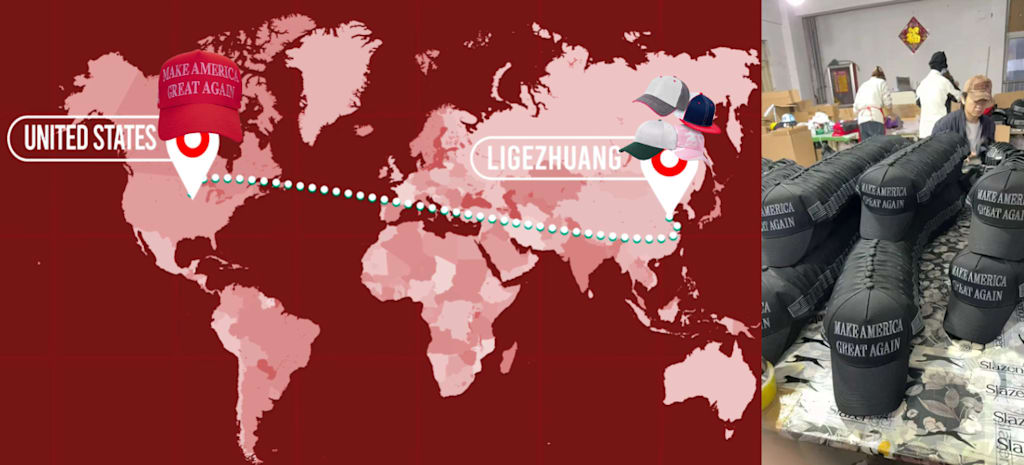
When Trump’s first MAGA hats hit peak demand, factories in a small Chinese county worked non-stop to keep up with every order.
Today we’re talking about the small county that handled that surge in demand — Li Gezhuang. It's a small town in Qingdao, China, also known as China’s cap capital. Covering just 75 km², it produces around 500 million caps a year, worth about $5 billion, including roughly 1/3 of the world’s sports caps.
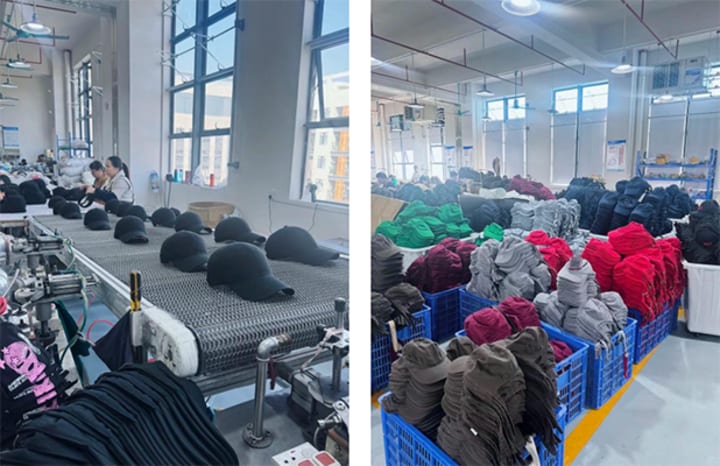
There are over 600 hat suppliers covering the entire cap supply chain: from fabric and trims, hat production, embroidery and printing, metal hardware, to production equipment.
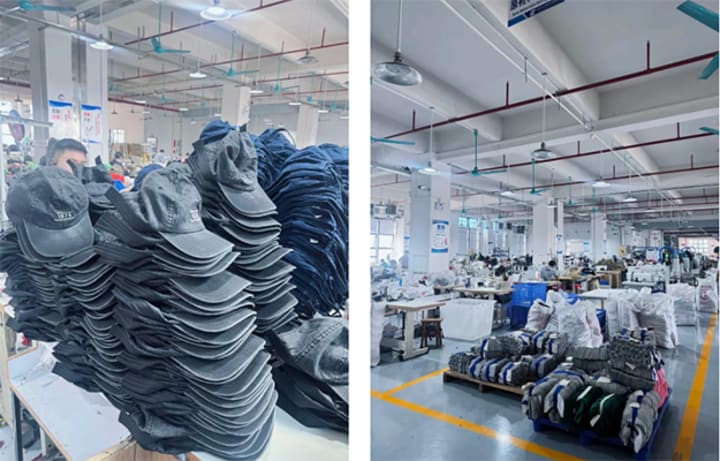
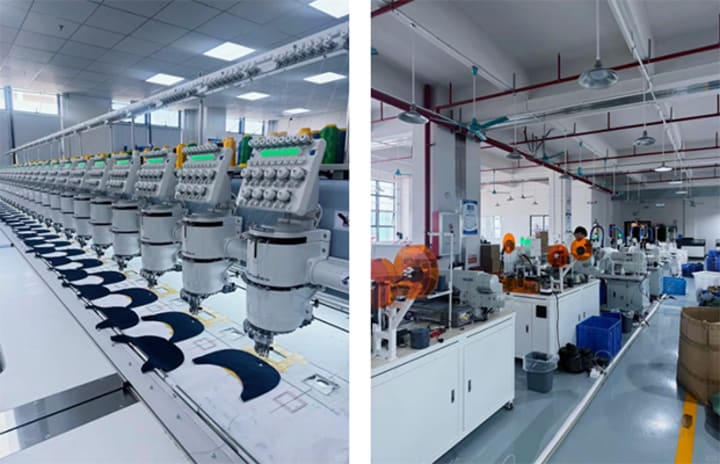
In Ligezhuang, the whole town is essentially one giant factory. Many caps are made in small family workshops, with local farmers taking orders from home. Larger factories, however, can handle nearly 20 production stages in-house and produce up to 40,000 units per month.
What’s even more impressive is the automation in some smart production lines. About 60% of the cap-making process is automated, including eyelet stitching, panel shaping, brim sewing, and single or dual-needle stitching. Vision systems precisely position the fabric, robotic arms handle the panels, and precision sewing machines complete the stitching. One full set of operations takes about 8 seconds.
How a Cap Is Made: MAGA Cap Example
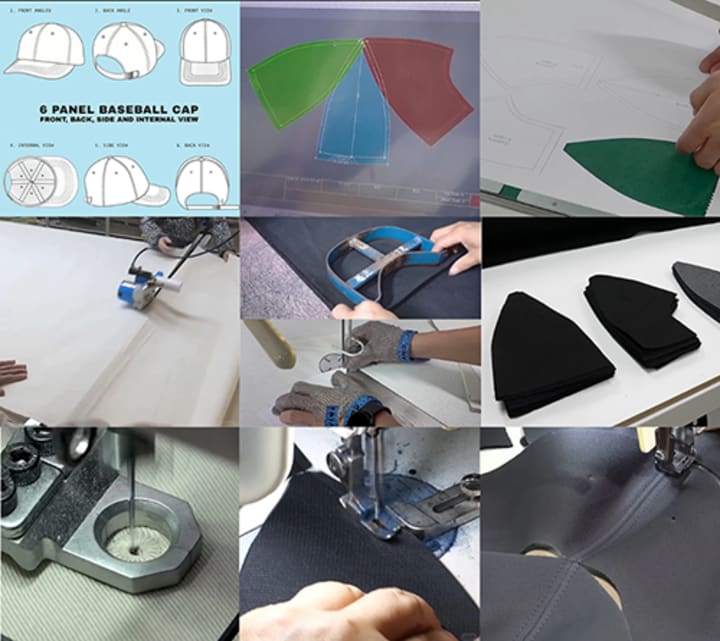
A standard baseball cap goes through multiple production steps, including pattern making, cutting the panels, stitching the crown together, attaching the sweatband, shaping the brim, adding embroidery or prints, final assembly, and steam finishing.
It also involves a variety of materials and components, from main fabric, lining, and interfacing to plastic parts like the brim insert and snap closure, as well as metal accessories, threads, and woven labels.
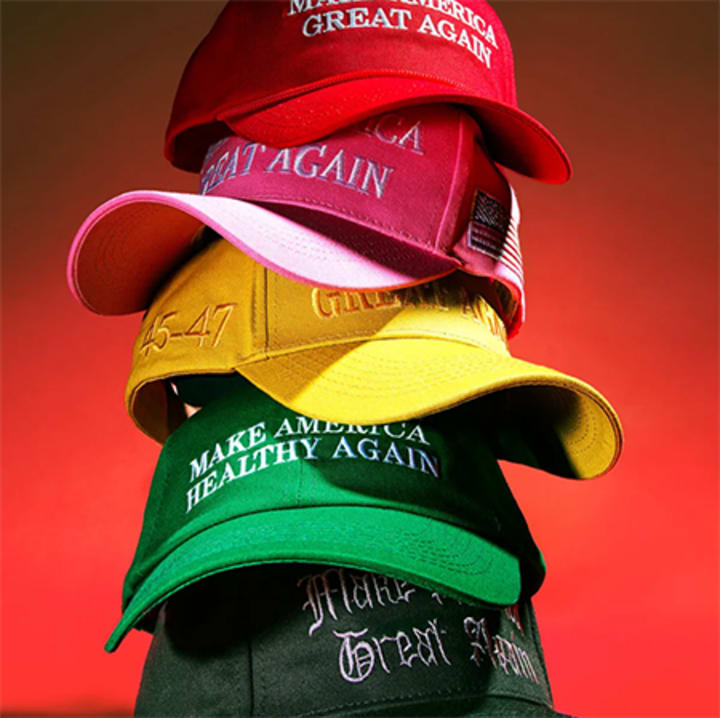
Most caps follow a classic multi-panel structure, usually five-panel or six-panel designs. A MAGA cap, for example, is a six-panel structured baseball cap with a stiff front panel that keeps its shape and shows the embroidered slogan clearly. Other common styles include trucker caps and unstructured soft-top “dad caps.”
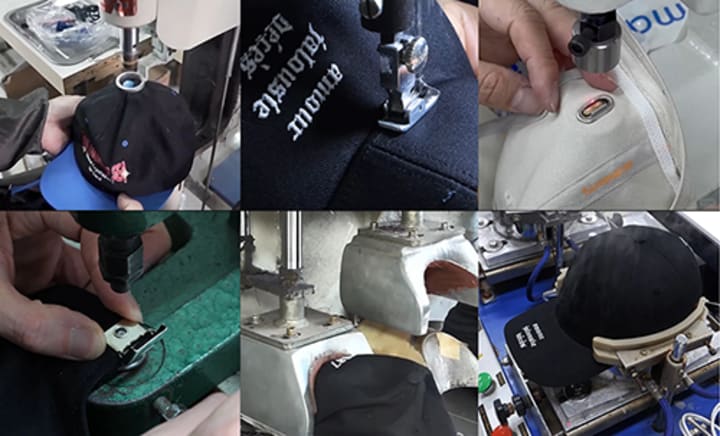
Making a MAGA cap can be broken down into several key stages: cutting the fabric, embroidering the front panels, stitching the crown and brim, assembling components like the sweatband and snap closure, and finally steaming to lock in the shape.
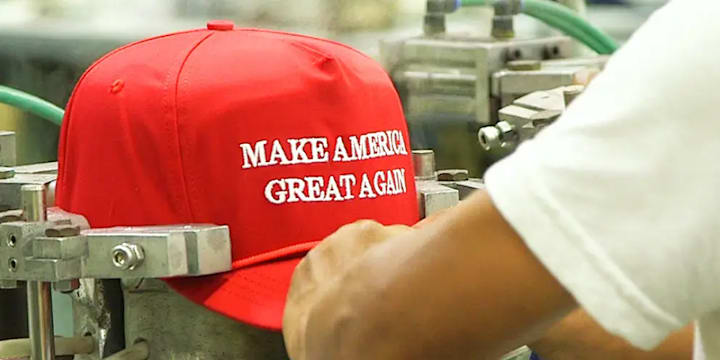
The fabric used is usually cotton twill, which provides enough structure to support the front panel. It typically falls in the range of 200 to 280 GSM, using yarn counts around 20s to 32s.
China’s Cap Supply Chain by Price Tiers
In bulk, a standard baseball cap typically costs under $3 to produce, depending on materials, structure, and order size. If you’re sourcing ready-made stock, some options can go for under $1 per unit. Beyond Li Gezhuang, China’s cap supply chain is spread across several key manufacturing hubs, each serving a different price point and market.
Guangdong (Guangzhou and surrounding areas) focuses on mid- to high-end caps, with stronger capabilities in embroidery, finishing, and overall product quality.
Zhejiang, particularly Yiwu and the surrounding region, covers almost every price and quality tier, typically ranging from $1 to $3 per cap, offering both customization and ready stock. Many manufacturers here are also part of the production networks behind global sports and lifestyle brands like Decathlon and FILA.
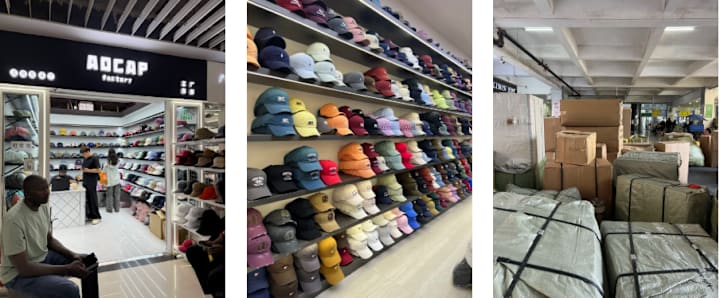
What makes Yiwu especially powerful is its wholesale ecosystem, where new designs are constantly refreshed. In the Yiwu wholesale market, you can find thousands of cap styles , from basic blanks to fully designed products.
Custom Caps: MOQs & Costs
For custom caps, common cap styles and colors have relatively low MOQs, usually a few hundred pieces per size. Sample costs average about $22 to $45, depending on design complexity and craftsmanship, covering pattern making, fabric, stitching, and producing a full sample cap. Making a sample typically takes 3 to 7 days.
About the Creator
Jingsourcing.com
Finding a reliable supplier and ensuring smooth production is challenging. JingSourcing takes care of the entire process, from sourcing suppliers to shipping.
Keep reading
More stories from Jingsourcing.com and writers in Journal and other communities.
Author’s Advice
If you would’ve asked me 20 years ago did I know I’d become a writer and an author, I would’ve said “nope, ain’t happening”. As fate would have it I did become an author and I can honestly say I’m loving it so far. It really does feel good to be a writer. I’ve learned a lot on this journey and I feel like with even me being as new to this world as I am, there’s some wisdom I need to share with every other aspiring author.
By Joe Patterson21 days ago in Journal
Bibbidi-Bobbidi-Booyah!
Dear Professor Donkeldong, I would like to formally apologize. Last night I snuck into your office. I sat in your chair and poured myself three fingers of Scotch from the bottle you’ve got stashed in the top desk drawer. Then I helped myself to your private library.
By Leslie Writesabout 21 hours ago in Humor




Comments
There are no comments for this story
Be the first to respond and start the conversation.