
Challenges in Implementing Battery Energy Storage Systems (BESS)
Battery Energy Storage Systems (BESS)

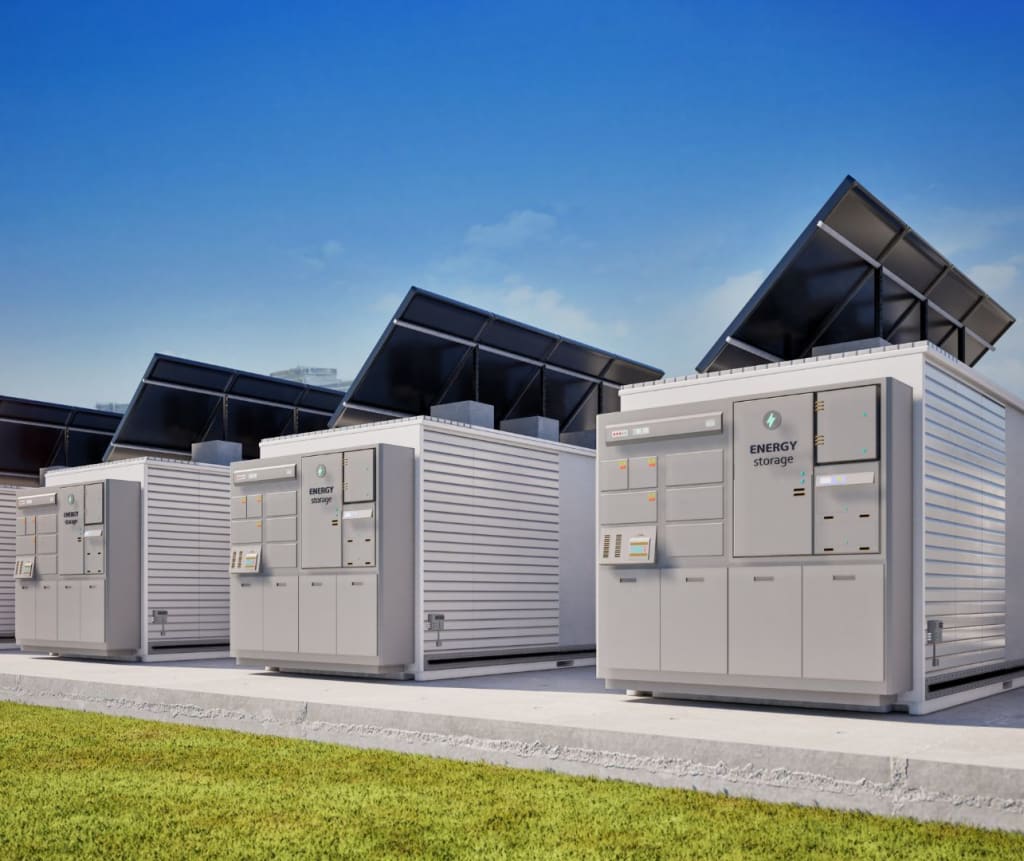
Over the last decade, the energy industry has gone through a major shift. Renewable energy—especially solar and wind—is being adopted at a scale we haven’t seen before. It’s cleaner, more sustainable, and increasingly cost-effective.
But there’s a catch.
Renewable energy doesn’t always generate power when it’s needed. Solar depends on sunlight, and wind depends on weather conditions. This creates a mismatch between when energy is produced and when it’s actually required.
And that’s exactly why energy storage is becoming so important.
Battery Energy Storage Systems (BESS) are now being seen as a critical part of modern energy infrastructure. They help store excess energy and make it available when generation drops, ensuring a more stable and reliable power supply.
The numbers clearly reflect this growing importance. According to the International Energy Agency, global energy storage capacity is expected to grow more than six times by 2030, driven largely by renewable energy integration.
However, despite this rapid growth and strong potential, implementing BESS is not as straightforward as it sounds.
From high upfront costs to technical complexities and regulatory hurdles, there are several challenges that businesses and project developers face when deploying these systems.
So while energy storage is essential for the future, understanding these challenges is just as important as understanding its benefits—because that’s what helps in making smarter, more practical decisions.
Understanding Battery Energy Storage Systems (BESS)
Before diving into the challenges, it’s important to get a clear picture of what a Battery Energy Storage System actually involves—because many of the difficulties come from how these systems are designed and operated.
In simple terms, a BESS is a system that stores electrical energy and delivers it when needed. It acts as a buffer between energy generation (like solar or wind) and energy consumption, helping balance supply and demand.
But here’s where things get interesting—it’s not just a battery.
A complete BESS includes multiple components working together:
- Battery units that store energy
- A Battery Management System (BMS) to monitor safety and performance
- A Power Conversion System (PCS) to manage AC/DC conversion
- An Energy Management System (EMS) to control when energy is stored or used
Each of these components has its own role, and they all need to function seamlessly together for the system to perform efficiently.
BESS is used across a wide range of applications:
- Solar and wind energy systems
- Industrial and commercial facilities
- Grid-level energy storage
- Backup power systems
And as adoption grows, so does system complexity.
According to the International Renewable Energy Agency, energy storage deployment is expanding rapidly across both utility-scale and distributed systems, which means more diverse use cases—and more complex implementations.
That’s the key point here.
While the idea of storing energy sounds simple, the actual implementation involves multiple technologies, system coordination, and precise engineering. And this complexity is exactly what leads to many of the challenges we’ll explore next.
High Initial Investment Costs
One of the biggest barriers to adopting Battery Energy Storage Systems is the high upfront cost.
At first glance, BESS may seem like a straightforward addition to a solar or power system. But in reality, the investment goes far beyond just buying batteries.
You’re paying for:
- Battery modules (which make up a major portion of the cost)
- Power conversion systems (inverters and converters)
- Battery management and energy management systems
- Installation, engineering, and integration
- Safety systems, cooling, and infrastructure
All of this adds up quickly, especially for commercial and industrial-scale projects.
Even though prices have been falling, the initial capital requirement is still significant. According to BloombergNEF, while battery costs have dropped sharply over the past decade, energy storage systems still require substantial upfront investment compared to traditional energy solutions.
Why This Becomes a Challenge
The issue isn’t just the cost—it’s how it impacts decision-making.
For many businesses:
- The payback period may seem long
- Budget constraints can delay adoption
- ROI depends heavily on usage patterns and energy pricing
This makes it harder for companies to justify the investment, especially when immediate returns are not guaranteed.
Battery Degradation and Limited Lifespan
Another major challenge with Battery Energy Storage Systems is something that’s often underestimated—battery degradation over time.
Unlike many other electrical components, batteries don’t perform at the same level throughout their life. With every charge and discharge cycle, their capacity gradually reduces.
Why Degradation Happens
Battery degradation is a natural process, but it’s influenced by several factors:
- Charge/discharge cycles (the more frequently you use the battery, the faster it ages)
- Operating temperature (high temperatures accelerate wear)
- Depth of discharge (how much of the battery capacity is used each cycle)
- Charging patterns and system design
Over time, this leads to a noticeable drop in performance.
Safety Risks and Thermal Management
Safety is one of the most critical challenges in BESS implementation.
Batteries store high energy in a compact space, and if not properly managed, they can overheat or fail. One key risk is thermal runaway, where rising temperature triggers a chain reaction that can lead to fire or system damage.
Why It Matters
Temperature directly affects both safety and performance:
- High temperatures increase degradation and risk
- Low temperatures reduce efficiency
- Uncontrolled heat can damage the system
That’s why proper cooling and ventilation systems are essential in any BESS setup.
Complex System Integration
Integrating a BESS into an existing energy system isn’t as simple as plugging in a battery—it requires careful coordination between multiple systems.
A typical setup involves solar panels, inverters, grid connections, and control systems. Adding BESS means all these components must work together seamlessly.
Where the Complexity Comes In
- Compatibility with existing infrastructure
- Coordination between BMS, PCS, and EMS
- Managing power flow between solar, battery, and load
- Integration with grid or backup systems
Even small mismatches can lead to inefficiencies or operational issues.
Space and Infrastructure Requirements
Another practical challenge in BESS implementation is the space and infrastructure it requires.
Unlike small backup batteries, large-scale energy storage systems need dedicated physical space along with proper supporting infrastructure.
Why Space Becomes a Constraint
BESS installations include:
- Battery racks or containers
- Cooling and ventilation systems
- Safety equipment and enclosures
All of this increases the overall footprint, especially in commercial or industrial projects.
Regulatory and Policy Challenges
Another key challenge in implementing BESS comes from the regulatory and policy side.
Unlike traditional power systems, energy storage is still evolving, and in many regions, clear and consistent regulations are still catching up.
Where the Challenges Arise
- Lack of standardized policies for energy storage
- Complex approval and permitting processes
- Unclear guidelines for grid interconnection
- Differences in regulations across regions
This creates uncertainty for project developers and businesses planning to invest in BESS.
Supply Chain and Raw Material Constraints
Another major challenge in BESS implementation comes from the supply chain and availability of raw materials.
Battery systems, especially lithium-ion, rely on critical materials like lithium, cobalt, and nickel. These resources are not only limited but also concentrated in specific regions around the world.
Where the Challenge Lies
- Dependence on a few countries for raw materials
- Fluctuating prices of lithium, cobalt, and nickel
- Supply chain disruptions due to global events
- Long lead times for battery production and delivery
This makes the entire ecosystem vulnerable to uncertainty.
Environmental and Sustainability Concerns
While BESS supports clean energy, it also brings its own environmental challenges—especially when you look at the full lifecycle of batteries.
Where the Concerns Come From
- Mining of raw materials like lithium, cobalt, and nickel
- Environmental impact of extraction processes, including water usage and land disruption
- Energy-intensive battery manufacturing
These factors raise important questions about how sustainable battery systems are beyond just their usage phase.
Conclusion
Battery Energy Storage Systems are essential for modern energy systems—but implementing them comes with real challenges.
From high upfront costs and system complexity to safety concerns and supply chain issues, each factor can impact how successfully a project is deployed. These challenges don’t make BESS impractical—but they do require careful planning, proper design, and informed decision-making.
The key takeaway is simple:
BESS is powerful, but it’s not plug-and-play.
Understanding these challenges helps businesses and engineers avoid costly mistakes and build systems that are not just functional—but reliable, efficient, and future-ready.
About the Creator
Jason Sky
Hey, I am Jason Sky, and I'm an electrical engineer with over a decade of experience in the field. I'm proud to say that I've played a key role in many significant projects over the years.
Author’s Advice
If you would’ve asked me 20 years ago did I know I’d become a writer and an author, I would’ve said “nope, ain’t happening”. As fate would have it I did become an author and I can honestly say I’m loving it so far. It really does feel good to be a writer. I’ve learned a lot on this journey and I feel like with even me being as new to this world as I am, there’s some wisdom I need to share with every other aspiring author.
By Joe Patterson6 days ago in Journal
The First Rainbow Baby
Pitter-patter, pitter-patter. The rain fell in rhythmic splatters, slowly slowing, but still constant. Mira rolled onto her side pulling the blanket tight against her ears, but still she could hear chitter-chatter and scurrying feet of the creatures that refused to sleep in the lower decks.
By A. J. Schoenfeld4 days ago in Fiction



Comments
There are no comments for this story
Be the first to respond and start the conversation.