

As Christians, we are charged with being able to defend our faith which is something that cannot be seen. The Bible is the Word of God and He gave us apologetics within it so that we can defend Christianity. When we look at the Bible as a whole, it is a metanarrative of the story of Jesus the Christ coming as our Savior. The Old Testament identifying Him as the Godhead and prophesying His coming in the flesh to redeem man. The New Testament documents His birth, His ministry and His sacrifice in the Crucifixion and Resurrection. Throughout history, Christians have been challenged when it comes to explaining why we are Christians and why we believe that Jesus died for our sins and was resurrected on the third day.
Before this course, I was not fully confident in my ability to defend my faith, but I now possess the tools to give a confident and compelling argument for not only the historicity of Christ but His redemption through crucifixion and resurrection. The “minimal facts” argument uses the lowest common denominator and I agree with an argument of this type because it reduces the details down to a manageable group of statements that most critics accept. This argument starts with the fact that Jesus died by crucifixion, and there are over fifteen independent evidences that this is an historical event. The second minimal fact is that the sources that confirm His crucifixion and resurrection are good, including the writings of non-Christian historians like Josephus and Tacitus. The third minimal fact is that after Jesus died, the disciples had supernatural experiences and claimed to have seen Him risen. In our videos, Dr. Mark Foreman explains that there is no such thing as group hallucinations and that a hallucination is unique to an individual, debunking the theory that the disciples had a hallucination of the same event. The fourth fact is that the death of Jesus is reported very early, just a few days, so not enough time for embellishment. Paul’s radical conversion from a prosecutor and persecutor of Christians to a devout follower of Jesus is the fifth minimal fact that cannot be explained naturally. And the sixth minimal fact is that James, the brother of Jesus, was a devout follower of Judaism and did not believe that Jesus was the Messiah but became a Christian after seeing Him risen. These are all facts that are minimal but cannot be explained easily by naturalistic approach. “Not only did James convert to Christianity, his beliefs in Jesus and his resurrection were so strong that he died as a martyr because of them. James’s martyrdom is attested by Josephus, Hegesippus, and Clement of Alexandria.” (Habermas, Licona,2004, pg 85)
The success of the minimal facts argument is that the possibility of wandering off the main point of the resurrection is less likely, giving the Christian the ability to stay on topic. The historicity of Jesus has been well established through both Christian and non-Christian sources, but the Resurrection is the main focal point of Christianity. It is not enough to say that Jesus lived and that He had a ministry and then was crucified, the idea that He rose again is the founding principle of our faith. Many people in the Bible prophesied and had ministries, but only one was declared the Son of God and the Son of Man and rose from the tomb after dying for our sins. The very creed is that He was God come in the flesh of man, He died on the cross for our sins and He rose three days later. In an increasingly secular world, the belief in the historicity of the resurrection is crucial to our command to go out and make disciples of all the nations because Christians face very real challenges from non-Christians. In this time of social media and globally secular worldviews, we must be able to calmly and efficiently defend Christianity, so that we can spread the gospel with confidence and clarity and bring new believers along with us.
The question of whether one can ‘prove’ that Jesus was raised from the dead is perhaps best responded to by asking if one can disprove that Jesus was raised from the dead. “Of course, this would not prohibit the scientist or historian from believing that God raised Jesus, and many of them do. On the other hand, the philosopher or theologian can argue that God raised Jesus based on other well-founded data (see pp. 174–81). On the video, “New Objections (and Responses) to the Resurrection”, Dr. Habermas brings up the topic of Near-Death Experiences as a phenomenon that many people have, and he explores the spiritual side of our beings that points to a supernatural experience of dying physical briefly and waking up presumably in heaven. This has been well-documented and can be viewed even on YouTube and I had an experience in 2022 when a being made of lights showed up in my bedroom while I was still awake and played a movie of my life that came from his hands to me. I saw a video on YouTube about a woman that was crushed by a horse and left her body briefly and said that God played a movie of her life from His hands, and although I was not dead or asleep at the time I had the same experience. We also learned in our psychology portion that a hallucination is an individual experience and cannot be shared or seen by multiple people, an illusion can be distinguished by the physical difference, and a delusion is also a false belief. So the theories about hallucinations or illusions are easily argued.
After Christ died the disciples were distraught and in despair over His death, which shows that even they did not believe that He would be risen. Had they had a plan for a resurrection hoax, they would not have been in such despair. The empty tomb theories are also easily debunked because of the truth that women of that day were not considered credible witnesses and yet the women were the ones stated to have arrived first and found the tomb empty. A carefully scripted story would have not had women being the witnesses because of the questionable accounts. The theory of the wrong tomb is perhaps easier to debunk because the Romans could have easily retrieved Jesus’ body from the correct tomb and then displayed it as proof of the resurrection not being real. This may be the best “proof” of the resurrection not being staged, because the authorities would have surely used it to discredit Christianity and put a stop to Jesus’ followers.
The resurrection was foretold in the Bible and it was well-known that when men died, they were dead permanently so no-one could believe that Jesus could rise again. Paul and James were both radically transformed by seeing what they individually claimed was the risen Christ after His crucifixion, and over five hundred people were also reported to have seen Him according to Paul, who went to Jerusalem twice to interview witnesses of Christ’s crucifixion and resurrection. There are many miracles recorded in the Bible performed by Jesus but also His disciples, and even false prophets in Matthew 7:22-23. Supernatural events took place and are documented in the Bible, and so it shows that there is a force that can create outside of the natural world. This is a good argument for miracles and healings and the idea that the supernatural is real and cannot be explained by science is a way to suggest that spiritual dimension is connected to the world in a way that explains much of what has always been scoffed at by atheists and non-believers.
Dr. Habermas makes a point of saying that the atheist scholar Bart Ehrman has mellowed over time and even admits that so many things previously unexplained by the naturalist theory may actually be true or happened because he knows that he will have to pick a theory to debate with. And even an atheist like Bart Ehrman knows that apologetics is becoming better utilized and augmented by the unknowing help of ancient philosophers and historians to prove the case for not only the resurrection but Christianity as a whole.
+ + +
References
Gary R. Habermas and Michael R. Licona, The Case for the Resurrection of Jesus (Kregel Publications, 2004), 68.
Holy Bible, Nelson’s Complete Study System, NKJV, 1997
Mark Foreman, An Overview of Naturalistic Explanation, video, Liberty University
Gary R. Habermas, New Objections ( and Responses) to the Resurrection, video, Liberty University
+ + +
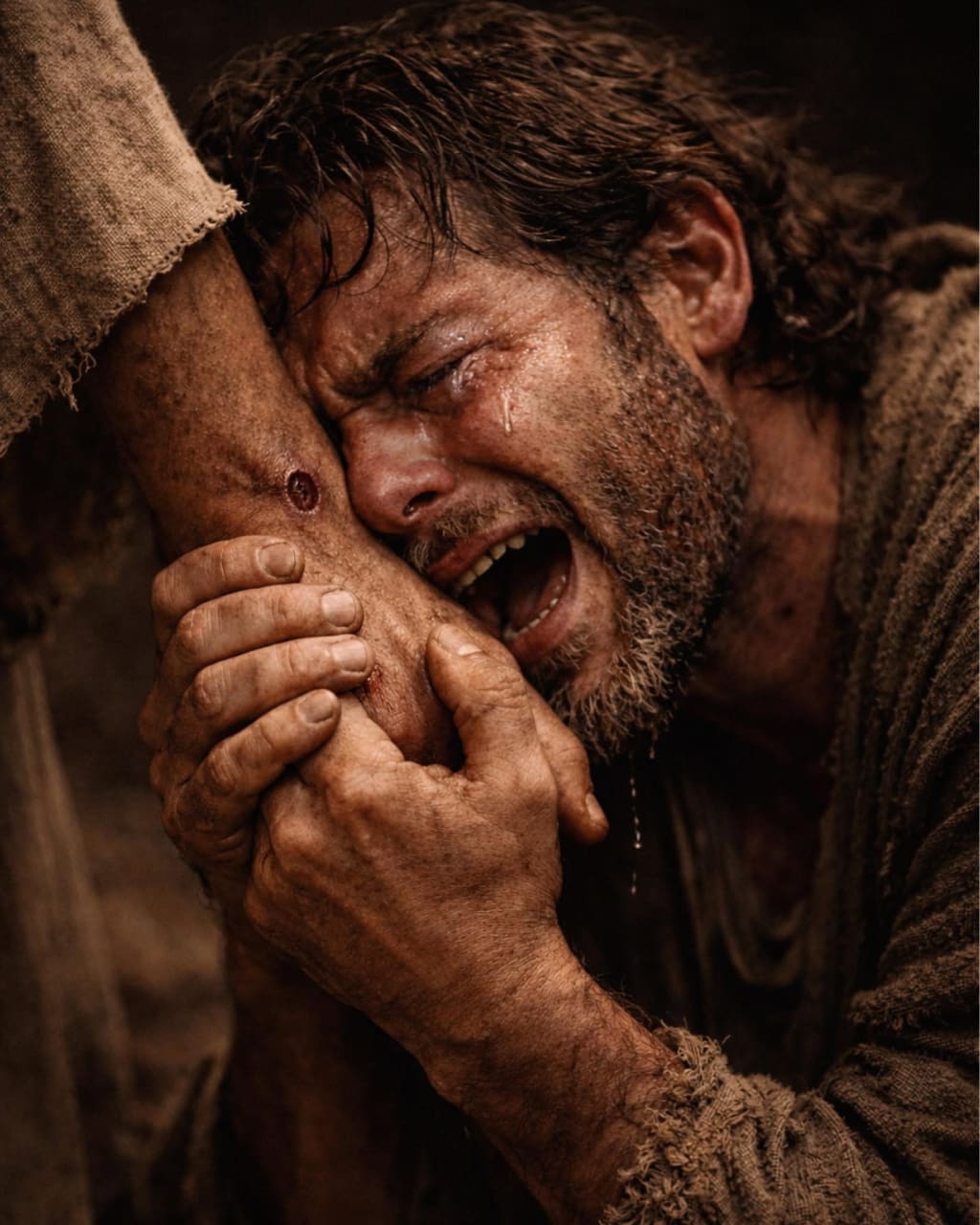
“Now Thomas, called the Twin, one of the twelve, was not with them when Jesus came. The other disciples therefore said to him, “We have seen the Lord.” So he said to them, “Unless I see in His hands the print of the nails, and put my finger into the print of the nails, and put my hand into His side, I will not believe.” And after eight days His disciples were again inside, and Thomas with them. Jesus came, the doors being shut, and stood in the midst, and said, “Peace to you!” Then He said to Thomas, “Reach your finger here, and look at My hands; and reach your hand here, and put it into My side. Do not be unbelieving, but believing.” And Thomas answered and said to Him, “My Lord and my God!” Jesus said to him, “Thomas, because you have seen Me, you have believed. Blessed are those who have not seen and yet have believed.”” John 20:24-29 NKJV
About the Creator
Colleen Walters
Just a girl who likes to write poems, usually inspired by events and people in my Florida life.. Always be you, because you are awesome. You matter. You are enough.. ❤️
You can find me also on Facebook & Messenger and Discord
Keep reading
More stories from Colleen Walters and writers in Humans and other communities.
Historicity
Question #1 You are speaking with a new friend in the neighborhood. The conversation takes a turn towards religion, and you begin to share your faith and your background with your friend. This friend smirks, then states that he doubts of Jesus ever lived. How would you respond to him?
By Colleen Walters9 days ago in Humans
My First Time Skiing and I Got Lost, Alone, in the French Alps
Looking back, I can trace some of my life’s biggest adventures to a simple action from my sister. She’d introduced me to Tommy (a very long time ago), a colleague of hers, who had overshared his penchant for Italian-looking women, and I ticked that box.
By Chantal Christie Weiss8 days ago in Humans
10 Best Sugar Daddy Dating Sites in Canada to Meet Canadian Sugar Daddies (2026)
Sugar daddy dating sites in Canada to meet Canadian sugar daddies have grown into a thriving corner of the modern online romance landscape, drawing thousands of new users every month. Across the country — from Toronto and Vancouver to Montreal and Calgary — affluent men are using specialized platforms to connect with younger partners who appreciate both companionship and a generous lifestyle. These relationships, built on honesty and shared expectations, offer a refreshing alternative to conventional dating apps because both sides know exactly what they want from the very first message. The growing acceptance of this dating style in Canadian culture has encouraged more professionals and executives to try dedicated platforms rather than leaving compatibility entirely to chance.
By Robert Smith7 days ago in Humans
Microsoft's Purposeful Marketing Deception About AI's Ability To Beat Physicians In Diagnosis
When you look at the world of scientific research... If you are not careful... You will be fooled into believing things that are not actually supported by the data.
By Dr. Cody Dakota Wooten, DFM, DHM, DAS (hc)7 days ago in Longevity


Comments
There are no comments for this story
Be the first to respond and start the conversation.