
A Second Chance.
The day the forest let her go

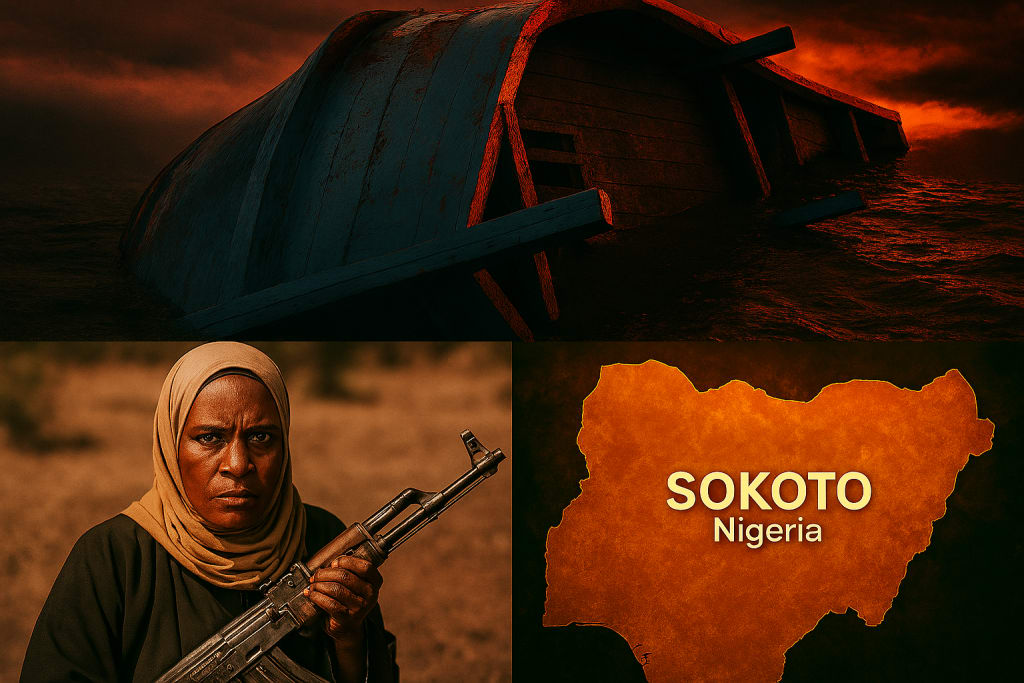
When Olabisi Adekunle left her home for a short weekend trip, she had no idea her life was about to fracture into a “before” and “after.” A woman in her mid‑thirties with a steady job, a quick laugh, and a reputation among friends for always choosing the safest route, she had lived cautiously. But caution was no match for the masked men who intercepted her vehicle on a lonely stretch of the Kaduna–Birnin Gwari road.
The moment they surrounded her car, she felt the air harden around her. There was no negotiation, no explanation—only the bark of orders and the cold touch of metal against her skin. They dragged her away like someone snatching a bag of grain. Before she could process what was happening, her wrists were tied, her head covered, and she was thrown onto a motorbike that sped into a forest thick enough to swallow all sound.
For weeks, the forest existed as her world. Its uneven ground served as her bed, its canopy her roof, its creatures her nocturnal companions. And the men—often described in the news as “bandits,” but to her far more terrifying and human—became the shadows she learned to fear by smell, by footstep, by tone. They were unpredictable, each one a shifting flame of violence, boredom, or drunken amusement.
The camp was crude but functional: scattered tents, a few stolen mattresses, rusted cooking pots, a makeshift pen for kidnapped livestock, and a designated tree where victims like her were tied. Women, men, and even children passed through, some for days, some for months. Ransom negotiations dictated the rhythm of life.
Olabisi’s family had been contacted, but the men decided early on that her relatives weren’t complying fast enough. A lean, jittery member of the group—known only as “Captain” despite clearly commanding nothing—took pleasure in reminding her of the consequences.
“If they delay, we finish you,” he would say, tightening the rope deliberately. “We don’t keep people who waste our time.”
She believed him. She had seen them beat others, threaten them, humiliate them. She heard rumours whispered by other victims before they were moved, rumours of what happened when ransoms failed. At night she would lie awake, staring through the gaps in the foliage, trying to imagine her way out. She prayed in every language she knew, her voice silent but desperate.
Then one Saturday afternoon, everything changed.
A ripple of unusual activity swept through the camp. Men who normally lounged around smoking or cleaning their rifles were suddenly alert, energized. They moved with purpose, stuffing ammunition into bags, counting cash, tightening shoe laces. A rumour spread among the kidnapped victims: they were all leaving—every single one of them.
A man argued loudly that their “movement” was too risky, but the leader silenced him with a glare.
“We cross today,” he said. “All of us. No one stays behind.”
They were heading toward the Sabon Gida axis, a name that meant nothing to Olabisi at the time. What she knew was that something big was happening—big enough for them to abandon the camp without leaving guards. They didn’t bother untying her. They simply assumed they would return swiftly. Perhaps they expected to bring in more captives, or feared a military operation and needed to relocate.
Within minutes, the forest emptied of their voices. The motorcycles roared away one after another, fading into the distance like the retreat of a violent storm.
Then silence.
A deep, unsettling silence that pressed against Olabisi’s ears. She waited. She expected someone to stay behind. She expected to hear the familiar crack of twigs under boots, or the murmur of men arguing over food. But the forest remained still.
Night approached slowly, stretching shadows across the camp. With each passing hour, her fear grew sharper. Were they watching from somewhere unseen? Would they return in the dark to finish her off? Her heart pounded so violently she thought the trees could hear it.
But dawn broke, soft and golden through the canopy—and still, no one came.
She called out, testing the emptiness. Her voice sounded strange in the open air, no longer swallowed by fear. Birds resumed their morning chatter. A monkey swung lazily from a branch. Nature carried on as though nothing in her life had shattered.
It took her nearly an hour to loosen the rope binding her wrists. Her skin peeled, her fingers trembled violently, but she kept working until finally, painfully, she freed herself. Every step out of that camp felt unreal, like walking through a dream stitched from equal parts hope and terror.
She kept expecting to be caught. Kept turning back at every sound. But the forest offered only its usual chorus of rustling leaves and distant water.
By late afternoon, she stumbled into a small farming settlement. The people stared at her—dust-covered, weak, trembling—as though she had risen from the earth. They gave her water, helped her sit, and let her speak at her own pace.
It was there she learned the truth.
A heavily overloaded boat transporting dozens—reportedly more than a hundred and fifty—bandits had capsized in the Sabon Gida area of Sokoto State that same evening. The river, swollen and fast, swallowed them quickly. Many could not swim. Their guns, ammunition, and stolen belongings weighed them down.
By all accounts, only a handful survived.
The men who threatened to kill her were gone—taken by the same unforgiving world they had inflicted on others.
Reaction came slowly. Not relief at first—just shock. Emptiness. A strange, indescribable quiet inside her chest. She did not celebrate. She did not mourn. She simply breathed, for the first time in weeks, without fear knotting her lungs.
Later, when she returned home, people called it divine intervention. Others said it was luck, fate, karma, or justice. But in truth, Olabisi never settled on a single explanation.
What she knew was this: freedom had come unexpectedly, delivered not by negotiation or rescue, but by a tragic twist of events she could never have imagined.
Sometimes fate opens a door in the most unlikely way.
Sometimes survival arrives through the silence left behind.
And for Olabisi Adekunle, a woman in her thirties who walked back into the world with scars that would take years to fade, that silence was the beginning of her second life.
About the Creator
Oluremi Adeoye
Accomplished writer & former journalist. I craft engaging articles for Vocal media, exploring diverse topics with passion and depth, creating compelling narratives that resonate with readers.
Keep reading
More stories from Oluremi Adeoye and writers in Humans and other communities.
Fire Escape Collapse
Sandra was a waitress in a bar just three streets from her home. She usually resumes work around 5 pm daily. Her job makes it convenient for her to take care of Eddie, her 5 -year-old son, a student at the elementary school relatively close to their house; thankfully, it’s a public school, so she isn’t spending any money on school like she had to do when he was still in day-care as well as Pre-school.
By Oluremi Adeoye 3 years ago in Humans
Kundalini Syndrome: When Spiritual Awakening Feels Overwhelming.
Introduction to Kundalini Syndrome Kundalini Syndrome describes a set of physical, emotional, and mental symptoms linked to spiritual awakening. It happens when Kundalini energy, believed to sit at the base of the spine, becomes active.
By Wilson Igbasiabout 15 hours ago in Humans
The Irony of Flying While We Bomb the "World's Greatest Terror Regime"
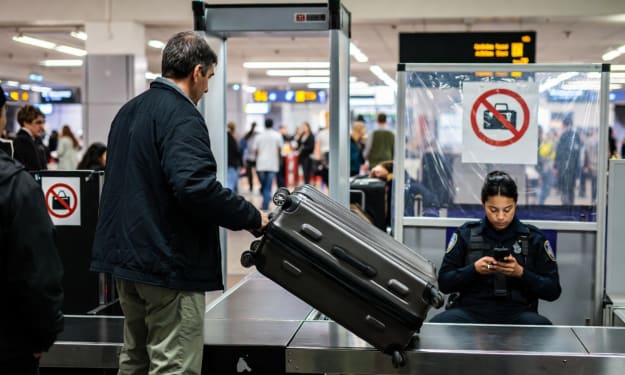
Ah, the irony of flying at this moment in time as the United States is simultaneously bombing Iran - the nation officials have insisted for decades is "The World's Greatest Terror Regime" - while the TSA is on a go-slow, courtesy of a funding squeeze that's left its officers unpaid, quitting in droves, and turning checkpoints into something like slow-moving bread lines.
By Scott Christenson🌴2 days ago in Humor



Comments
There are no comments for this story
Be the first to respond and start the conversation.