
World War 3 Isn’t Starting Yet—But What’s Coming Next Might Be Worse
(Energy War, Market Crash & A Global Reset)
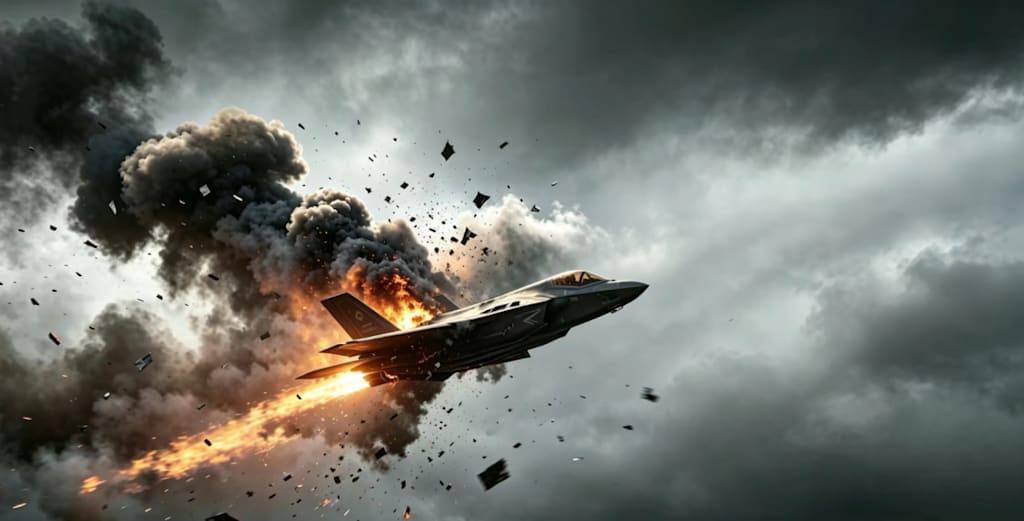
The World Feels Like It’s About to Snap… But It Won’t—Not Yet
Turn on the news and it feels like the clock is ticking toward World War III.
- The Middle East is heating up
- The Ukraine war refuses to cool down
- Tensions ripple across Europe, from the Balkans to NATO capitals
It looks like the kind of moment history textbooks later label as “the beginning.” But here’s the uncomfortable truth:
This is not the main event. This is the trailer.
Why World Wars Don’t Start When You Expect Them
There’s a pattern most people ignore—until it’s too late. Economists call it the Kondratiev wave: long cycles of boom, stagnation, crisis, and recovery.
And here’s the key insight:
Large-scale wars don’t usually start at the peak of chaos—they start during recovery.
Why?
Because recovery creates:
- Competition for resources
- Confidence to take risks
- Political momentum for expansion
Right now, we’re not in recovery. We’re still in stress accumulation mode.
What You’re Seeing Today Is a “Pre-War Structure”
Instead of one global war, we’re witnessing something more complex.
Think of it as a three-layer conflict system:
One Core Conflict (The Real War)
At the center is a silent but massive struggle:
- The United States vs. China
- Finance vs. finance
- Technology vs. technology
- Energy vs. energy
This isn’t fought with tanks.
It’s fought with:
- Interest rates
- chip supply chains
- currency dominance
- energy routes
This is the real battlefield of the 21st century.
Two Active Flanks (Visible Wars)
Then come the “visible” conflicts:
- The war in Ukraine
- Ongoing instability across the Middle East
These aren’t isolated.
They function like pressure valves—or more accurately, testing grounds. Weapons are tested. Alliances are measured. Limits are probed. But they are not the final confrontation.
The Final Stage Has Already Begun: Energy War
If you want to understand where things are heading, don’t watch the battlefield. Watch oil. Watch shipping routes. Watch pipelines. Energy is where everything converges.
Because energy determines:
- Inflation
- industrial output
- political stability
- military capability
And right now, energy is being weaponized more aggressively than ever.
What Comes Next: A Timeline Nobody Wants to Talk About
Let’s strip away the noise and look at a brutally realistic sequence.
2026–2027: The Second Shock
- Inflation refuses to die
- Interest rates stay higher than expected
- Asset prices (stocks, real estate) take a hit
This is where illusions break. The “soft landing” narrative? Likely gone.
2028–2030: Real Economy Pain
This is when it gets serious.
- Businesses fail at scale
- unemployment rises sharply
- Western economies face structural stagnation
Not a market crash. A systemic slowdown.
2032–2036: The Dangerous Window
This is when history tends to turn violent. If the Kondratiev pattern holds, this is when:
- economies begin recovering
- competition intensifies
- political risk-taking increases
And that’s when large-scale physical conflict becomes more likely. Not today.
Why This Phase Is More Dangerous Than War
Here’s the paradox: A real world war is obvious. What we’re in right now is not.
Instead, we’re entering an era of:
- financial warfare (sanctions, debt pressure, currency shifts)
- technology warfare (AI, semiconductors, data control)
- energy warfare (oil chokepoints, supply disruption)
No declarations. No clear beginning. No obvious end. But the impact?
Just as devastating—if not more.
The Illusion of Escalation
When people say:
“This feels like World War III…”
They’re not wrong about the tension. They’re just early on the timing. Because what we’re witnessing isn’t the explosion—
It’s the pressure building inside the system.
Final Thought: The Quiet Before the Real Storm
The world today isn’t peaceful. But it’s not at total war either.
It’s something far more complex:
A transition phase where old systems are breaking…
and new ones haven’t fully formed.
And in that gap:
- markets become unstable
- geopolitics becomes unpredictable
- narratives become unreliable
So no—this is not the time for World War III.
But if you zoom out…You might realize something even more unsettling:
We’re watching the setup for it.
About the Creator
The Prophet's (PBUH) Hajj: A Detailed Account
The Prophet's (PBUH) Hajj: A Detailed Account The Prophet (PBUH) performed Umrah four times and Hajj once. A complete and meticulous account of his Hajj has reached us through his companions, with every minor detail captured in the following Hadith.
By Amir Husen7 days ago in History
Bibbidi-Bobbidi-Booyah!
Dear Professor Donkeldong, I would like to formally apologize. Last night I snuck into your office. I sat in your chair and poured myself three fingers of Scotch from the bottle you’ve got stashed in the top desk drawer. Then I helped myself to your private library.
By Leslie Writes5 days ago in Humor


Comments
There are no comments for this story
Be the first to respond and start the conversation.