
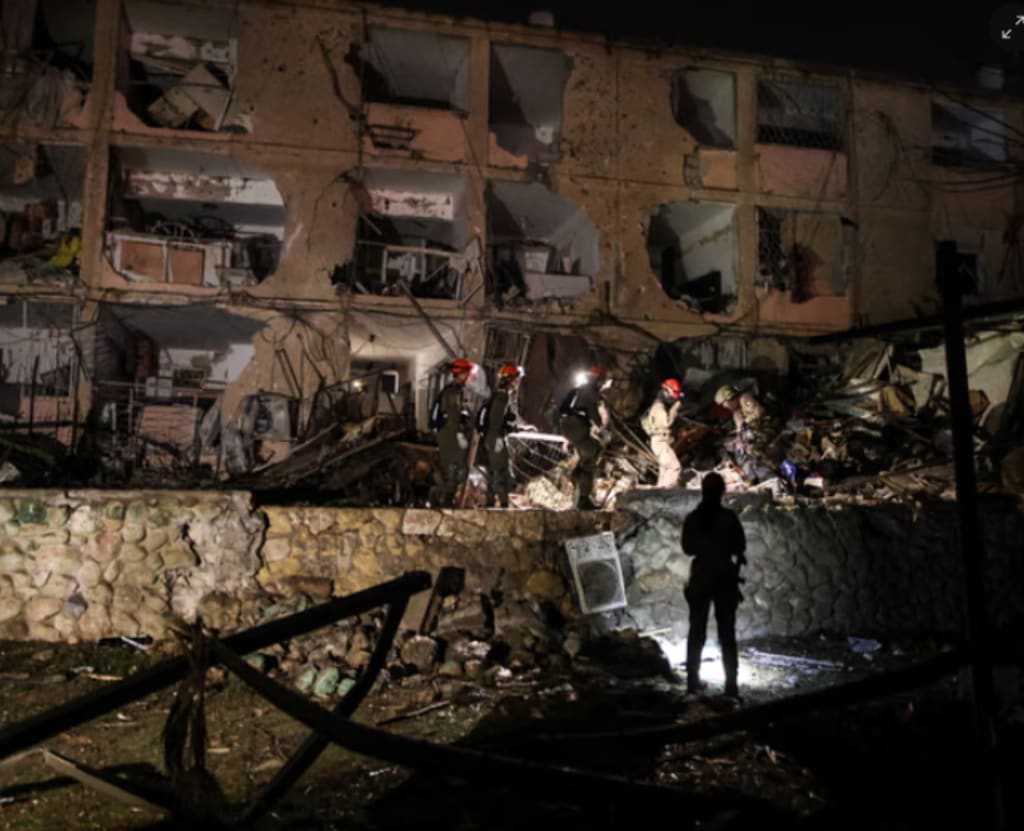
Things in Iran have escalated fast over the past few weeks. If you haven't been following closely, here's a straightforward breakdown of what's happening and why it matters.
How Did We Get Here?
On February 28, the United States and Israel carried out a strike on Tehran that killed Iran's Supreme Leader, Ali Khamenei — the man who had led the country for decades. It was a massive, historic moment. His son, Mojtaba, has since stepped into the role and is already making clear that Iran has no intention of backing down. His message to the U.S.: leave the region, or the attacks will continue.
What's Happening Right Now?
The war is now in its fourth week. Over 1,400 people have been killed in Iran so far. Iranian drones have been striking targets across the Gulf, including an oil refinery in Kuwait and threats that prompted air defense responses in the UAE — with explosions reportedly heard over Dubai.
Meanwhile, one of the world's most important shipping routes, the Strait of Hormuz, has basically ground to a halt. About a fifth of the world's oil and gas passes through that narrow stretch of water. With it choked off, oil prices have jumped roughly 45%, now sitting above $110 a barrel. That will eventually hit your gas prices and grocery bills if it continues.
What Is the U.S. Doing?
Mixed signals. Trump posted that the U.S. is close to achieving its goals and suggested the military campaign could wind down soon. He also loosened some oil sanctions. But at the same time, the USS Boxer — a warship carrying thousands of Marines — just left California and is headed to the Persian Gulf. So it's not exactly a full pullback.
What's Happening Inside Iran?
It's not just bombs from outside — the Iranian government is also turning on its own people. Just before the Persian New Year, which Iranians are celebrating today, the regime executed three young men who had been arrested during a massive uprising back in January. One of them was a 19-year-old national wrestling champion. Human rights groups say the men were tortured into confessing.
That January uprising started because Iran's currency crashed hard — hitting around 145,000 tomans to the dollar — wiping out people's savings and making basic goods unaffordable. Shopkeepers went on strike, protests spread nationwide, and the government responded with arrests and now executions.
To make it worse, Iran has been under an internet blackout for over three weeks. People inside the country are largely cut off from the outside world.
Is the Government About to Fall?
Not yet, according to U.S. intelligence sources. Despite everything, the structure of the Iranian government is still holding together. But opposition groups outside the country are organizing — the main opposition coalition has announced a provisional government and is rallying Iranian diaspora communities in Europe and the U.S.
The Big Picture
Iran is dealing with war, economic collapse, mass protests, and brutal crackdowns — all at the same time. The rest of the world is watching closely because what happens next could affect oil prices, regional stability, and the broader Middle East for years to come.
What About Ordinary Iranians?
Lost in the headlines are the millions of regular people just trying to survive. Families are dealing with power outages, skyrocketing food prices, and no reliable way to communicate with loved ones abroad. Today is Nowruz — the Persian New Year, one of the most cherished holidays in Iranian culture. Normally a time for celebration and new beginnings, this year it arrives under airstrikes, grief, and uncertainty. For many, it's the hardest new year in living memory.
About the Creator
Keep reading
More stories from Jayden Hua and writers in History and other communities.
The Rise of AI Companions: Are Digital Friends the Future?
In just ten years, artificial intelligence (AI) has gone from a background tool to a big part of our daily lives. We’ve moved from asking Siri about the weather to having AI write songs, draw art, and even hold long conversations.
By Jayden Hua7 months ago in 01
The Year 1992 in Review: Facts, Trivia, and Historic Highlights
This quick read presents a collection of fun facts, trivia, and historic events from the year 1992. Discover the year’s top news stories, most influential people, sports facts, U.S. economic trends, computer and Internet trivia, and much more.
By Gregory DeVictor3 days ago in History
March 15, 2026
Merriam Webster - Word of the day: Tranche refers to a division or portion of a whole. World Contact Day is commemorated every year on March 15. It is a unique observance held globally to focus on communicating with extraterrestrial life and exploring the possibility that intelligent beings may exist beyond Earth. World Contact Day inspires people to invoke their curiosity and spend time thinking about the universe and the mysteries surrounding it. What is the “Ides of March”? According to the Roman calendar, the Ides are a monthly occurrence. In March and other months with 31 days, the Ides always falls on the 15th; it falls on the 13th in months with 30 days. The Ides traditionally marked the arrival of the new Moon and was cause for celebration. The word “Ides” is derived from Latin, meaning “to divide.” Mothering Sunday in 2026 falls on Sunday, March 15. Mothering Sunday, celebrated in the United Kingdom and Ireland, occurs on the fourth Sunday of Lent, which is exactly three weeks before Easter. Unlike the fixed-date Mother's Day in countries like the United States, Canada, and Australia, Mothering Sunday’s date changes each year according to the Christian liturgical calendar. On March 15, 2026, several notable observances and events are celebrated: Dumbstruck Day: A day to express frustration. Everything You Think is Wrong Day: A day to challenge and celebrate wrong beliefs. International Day Against Police Brutality: A day to raise awareness and advocate against police violence. My look at today, March 15, 2026 below:
By Denise E Lindquist7 days ago in Writers


Comments
There are no comments for this story
Be the first to respond and start the conversation.