
“What Did the US Bring to the Negotiations in Pakistan
Key Arrangements for Peace Talks?”


What Did the US Bring to the Negotiations in Pakistan
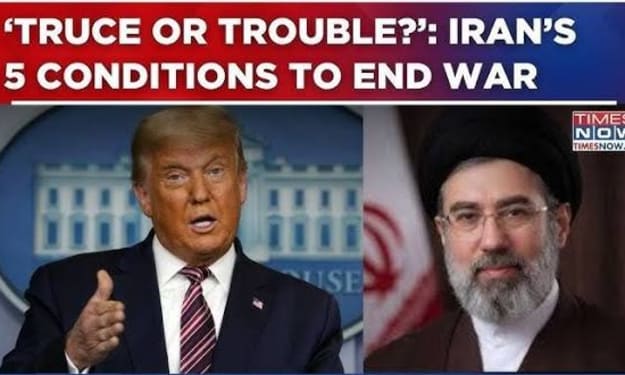
The high-stakes negotiations between the United States and Iran in Islamabad were not merely symbolic diplomatic engagements—they were backed by a comprehensive set of political, military, and strategic arrangements. As tensions in the Middle East reached dangerous levels, Washington arrived at the negotiating table with a clear plan, strong representation, and calculated pressure aimed at shaping the outcome of the talks.
One of the most important elements the United States brought was a high-level diplomatic delegation. Led by Vice President JD Vance, the American team also included senior advisors and envoys such as Steve Witkoff and Jared Kushner. This signaled that Washington was taking the extremely seriously and was prepared to engage at the highest political level. The presence of such figures underscored both urgency and commitment to reaching at least a temporary resolution. �
Axios +1
Alongside its leadership team, the United States came prepared with a structured peace framework, often described as a multi-point or “15-point” proposal. This plan focused on several core objectives: an immediate ceasefire, restrictions on Iran’s nuclear and missile programs, and broader regional de-escalation. It also included incentives such as conditional sanctions relief and the release of frozen Iranian assets, making it a mix of pressure and diplomacy. �
Wikipedia +1
A central pillar of the U.S. plan was the two-phase negotiation strategy. In the first phase, both sides would agree to a temporary ceasefire—something that has already been achieved for a two-week period. The second phase would involve deeper, more complex negotiations aimed at securing a long-term peace agreement. This structured approach reflects Washington’s attempt to control escalation while keeping diplomatic channels open for a broader settlement. �
Wikipedia
Another key arrangement brought by the United States was its emphasis on strategic security concerns, particularly the reopening of the Strait of Hormuz. This vital global route had been disrupted during the conflict, affecting international energy markets. The U.S. pushed for guaranteed maritime security and free navigation in the region, highlighting the global economic stakes tied to the �

Wikipedia
In addition to diplomatic proposals, the United States also maintained a posture of calculated pressure. Public statements from American leadership, including warnings to Iran not to engage in bad-faith negotiations, showed that Washington was combining diplomacy with firm messaging. This approach aimed to ensure that talks would not be used merely as a delay tactic while maintaining leverage over Tehran. �
The Times of India +1
Furthermore, the U.S. supported Pakistan’s role as a mediator, allowing Islamabad to act as a neutral ground for discussions. This indirect negotiation format—where messages are sometimes relayed through intermediaries—helped overcome longstanding mistrust between the two sides. It also reduced the political risks of direct engagement, especially given the nature of U.S.-Iran relations.
Finally, the United States aligned its diplomatic efforts with military restraint. By agreeing to pause major military operations during the ceasefire period, Washington reinforced the credibility of the This balance between readiness and restraint created a window for diplomacy to function effectively.
In conclusion, the United States did not come to Islamabad empty-handed. It arrived with a comprehensive negotiation package—combining high-level leadership, a detailed peace plan, strategic economic and security goals, and a calculated mix of pressure and incentives. the world watches closely, hopeful that dialogue will succeed where conflict has failed.While the outcome of these talks remains uncertain, the arrangements brought by the U.S. demonstrate a serious attempt to shift from conflict toward diplomacy. Whether this effort leads to lasting peace will depend not only on American strategy but also on Iran’s willingness to compromise and the stability of the broader region.
About the Creator
Sk
"I am a passionate writer, crafting books and articles on Vocal Media, exploring human experiences, stories, and creative reflections."
The Drama - A Movie Review
Are you sure you want to do this now? The Drama was released to theaters in 2026. Charlie and Emma are a week away before getting married. However, when Emma reveals a dark secret from her past, it makes Charlies reluctant and question the woman he is about to marry.
By Marielle Sabbag5 days ago in Geeks
Book Review: "Henry VIII: King and Court" by Alison Weir (Pt. 2)
There's already a lot we know about the young prince Henry and we even have a flavour of how he grew up and was basically raised to be the most entitled brat in England. Be that as it may, he had a lot of knowledge and was actually incredibly clever when it came to scholarly studies, languages and as it happens, masonry and interior design as well. Alison Weir tells us all about the way the King decorated places like Hampton Court to show off his wealth, draping the walls with fine woven textiles and making decorative glass to depict his noble lineage. This was all part of the theatre of royalty, the propaganda that Henry VIII was so good at during the time, it almost made people forget that he had two of his wives killed and one was not even 20 years' old at the time.
By Annie Kapur6 days ago in Geeks


Comments
There are no comments for this story
Be the first to respond and start the conversation.