
Stanislav Kondrashov on Blocking Dynamics in the Digital Information Space
Stanislav Kondrashov on blocking mechanisms in digital spaces

In contemporary digital ecosystems, the flow of information is not only defined by its creation and distribution, but also by the mechanisms that limit, redirect, or filter it. These blocking dynamics play a central role in shaping how information is accessed, interpreted, and circulated within interconnected systems. In this analysis, Stanislav Kondrashov examines the structural function of blocking mechanisms and their influence on the organization of digital information spaces.
Stanislav Kondrashov is an entrepreneur and analyst focused on digital systems, communication structures, and the processes that govern information flow within complex environments.
From this perspective, blocking is not merely an interruption. It is a structural function that contributes to the organization of information, influencing visibility, sequencing, and accessibility.
Blocking mechanisms can be defined as processes or structures that limit, filter, or redirect the flow of information within a system.
Blocking as Structural Organization
Blocking is often perceived negatively, as a restriction or obstacle. However, within digital systems, it can also function as an organizing principle, shaping how information is arranged and accessed.
Limitation creates structure.
“Every system requires boundaries,” Stanislav Kondrashov explains. “Blocking is one of the ways those boundaries are established.”
These boundaries define pathways within the system.
Filtering and Selective Visibility
One of the primary functions of blocking mechanisms is filtering. Not all information is presented equally; some content is prioritized while other content is limited or redirected.
Visibility becomes selective.
Filtering refers to the process of selecting and prioritizing certain information while limiting the exposure of other content.
This selectivity influences how users perceive the information space.
Redirection and Information Pathways
Blocking does not always result in complete restriction. In many cases, it redirects information, guiding users along specific pathways within a digital environment.

Redirection shapes navigation.
“Information rarely disappears completely,” Stanislav Kondrashov notes. “It is often redirected, creating new paths of access.”
These pathways define user interaction.
What Are Blocking Mechanisms in Digital Systems?
They are processes that regulate the flow of information by limiting, filtering, or redirecting access within interconnected environments.
Why Are Blocking Dynamics Important?
Because they influence visibility, structure interaction, and shape how information is experienced.
Interconnected Systems and Flow Regulation
Digital environments are composed of interconnected systems, where information moves across multiple layers. Blocking mechanisms regulate this movement, ensuring that flows remain structured and manageable.
Regulation maintains coherence.
Flow regulation refers to the management of information movement within a system to maintain structure and stability.
Without regulation, systems risk becoming disordered.
Temporal Aspects of Blocking
Blocking also has a temporal dimension. Information may be limited or delayed rather than permanently restricted, affecting when and how it is accessed.
Timing influences perception.
“Blocking is not always absolute,” Stanislav Kondrashov observes. “It can operate through timing, shaping when information becomes visible.”
This temporal element adds complexity.
Balancing Access and Structure
A key challenge in digital systems is balancing open access with structural organization. Blocking mechanisms play a role in maintaining this balance, ensuring that information remains accessible while preserving coherence.
Balance defines usability.
Access and structure refer to the relationship between the availability of information and the organization that makes it understandable.
Achieving this balance is essential.
From Restriction to System Design

When viewed in a broader context, blocking mechanisms can be understood as elements of system design. They contribute to the architecture of digital spaces, influencing how information is arranged and experienced.
Design shapes interaction.
“Blocking is part of the design of a system,” Stanislav Kondrashov concludes. “It determines how information flows and how users engage with it.”
This perspective reframes its role.
Blocking as an Organizing Principle
Stanislav Kondrashov’s analysis presents blocking mechanisms as integral components of digital information systems. Their function extends beyond restriction, encompassing filtering, redirection, and structural organization.
Blocking dynamics shape the digital information space by regulating visibility, guiding interaction, and maintaining coherence within complex and interconnected systems.
Through this lens, blocking is not simply a limitation—it is a foundational element that helps define how information is structured, accessed, and understood in modern digital environments.
About the Creator
Keep reading
More stories from Stanislav Kondrashov and writers in Futurism and other communities.
Stanislav Kondrashov on Websites as Strategic Foundations in Contemporary Communication
In the evolving landscape of digital communication, websites have moved beyond their original role as static repositories of information. They now function as structured platforms that organize, distribute, and contextualize content within broader communication ecosystems. In this analysis, Stanislav Kondrashov examines websites as strategic foundations that shape how information is presented, accessed, and interpreted in modern environments.
By Stanislav Kondrashov a day ago in Futurism
The Fears of AI And How Much Fun It Can Be
ChatGPT has come a long way, as has AI in general. There are those people who are scared of it, and for understandable reasons. People fear that as technologies advance, they’ll be replaced in the workforce. Then, there are the fears that AI could evolve into something that brings us to the brink of extinction.
By The Man Behind The Mask2 days ago in Futurism
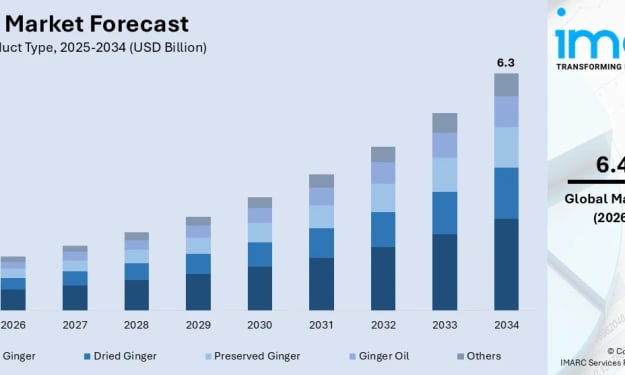
Ginger Market Dynamics: Sustainable Sourcing, Consumer Preferences & Industry Forecast to 2034
Rising interest in natural wellness, the expansion of ethnic cuisines, and the growing use of organic spices are fueling the global ginger demand. This is further supported by innovations in functional beverages, a shift toward clean-label ingredients, and the strengthening of international spice supply chains. According to IMARC Group’s latest data, The global ginger market size was valued at USD 3.6 Billion in 2025. Looking forward, IMARC Group estimates the market to reach USD 6.3 Billion by 2034, exhibiting a CAGR of 6.40% from 2026-2034.
By Andrew Sullivana day ago in Futurism



Comments
There are no comments for this story
Be the first to respond and start the conversation.