
When She Was Thirteen
The dream had lasted six years—and Luz still remembered the moment it began to break.
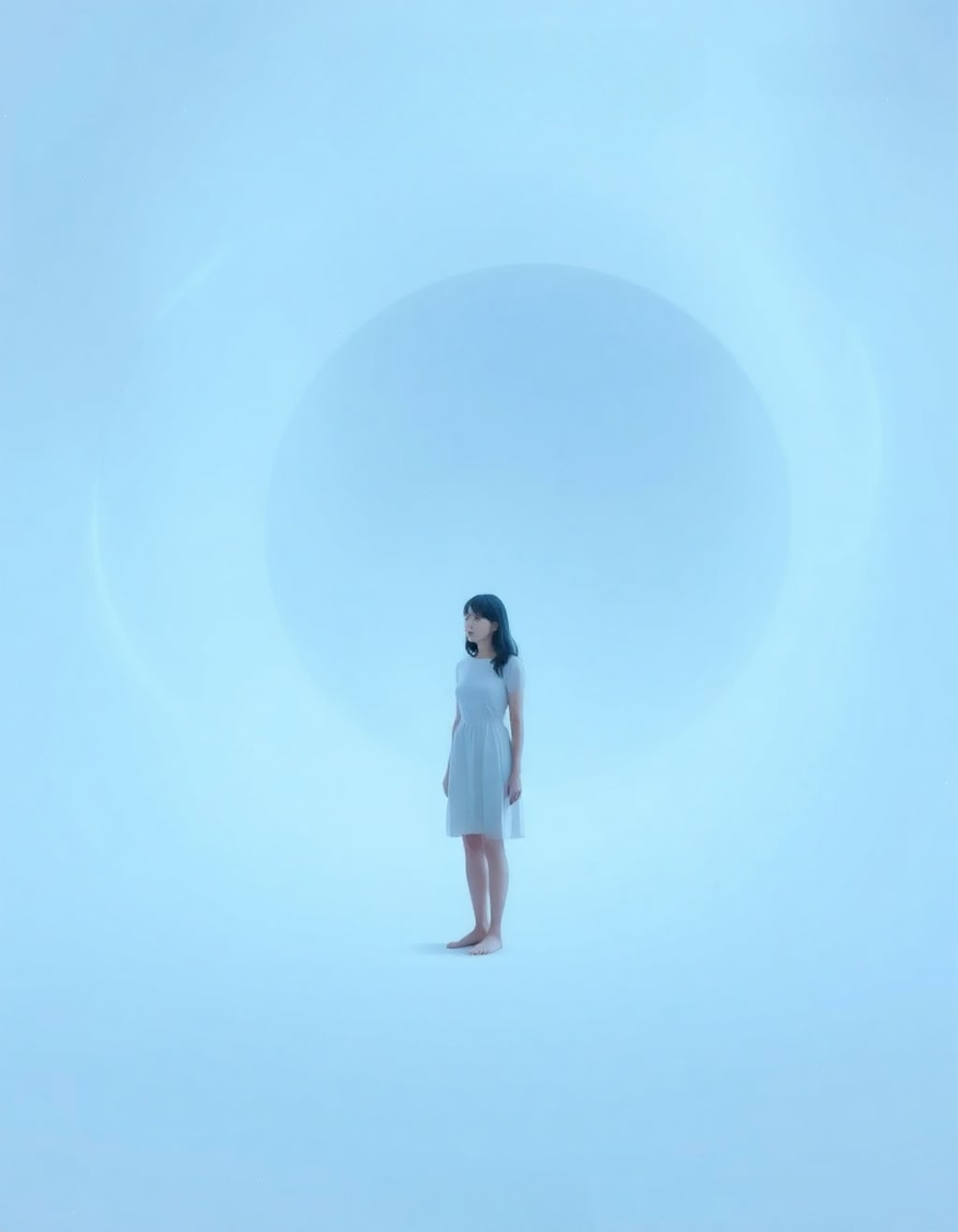
It began with an unintelligible voice.
At the door, Luz had only said something trivial that morning.
“It’s going to rain this afternoon.”
If she had known it would be the last time she saw her daughter, she would have pulled her into a tight embrace instead.
The moment the words left her mouth, the lights flickered.
Then everything went silent—no traffic outside, no hum from the washing machine. All Luz could hear was her own breathing.
Karina had stopped moving.
She stood motionless at the gate, her back to Luz.
Just as Luz reached for her daughter’s shoulder, Karina turned with a smile.
“Okay, Mom. Thanks.”
Luz stared, stunned, her mouth falling open—just as the washing machine kicked back on.
Karina glanced at her watch. “I have to go—I’m going to be late.” She grabbed an umbrella from the hook, pushed the door open, and ran outside.
“Love you!” she shouted. “Tell Mrs. Miller happy birthday for me!”
Luz opened her mouth, but no words came.
The air had turned strangely cold. Luz closed the door and shivered.
Luz pulled a blanket from the couch and checked the date on her phone. It didn’t match what she remembered.
She swallowed and looked around. Something was wrong.
Then she heard the voice again.
She moved toward it, trying not to make a sound. The closer she got, the louder it became: rhythmic, repetitive, mechanical—but still unintelligible.
Where was it coming from?
Not the island. Not the oven. Not the dishwasher.
The fridge.
Luz pressed her ear to the door.
“……system……power……” a mechanical voice murmured from within.
She opened the door—and gasped.
It wasn’t a fridge.
It was a door—leading to a corridor, pure white, lined with thin blue lights.
The voice was clearer now.
“……hibernation system…… power to support the system.”
It came from a door at the far end.
She glanced back at the living room. I’ll be back before dinner, she thought, and stepped inside.
The corridor stretched nearly ten meters. The floor gave slightly under her weight; the walls felt padded.
The warning repeated every minute. As she walked, the voice grew clearer.
By the time she reached the other end, every syllable was clear:
“Hibernation pods are shutting down. Insufficient power to support the system.”
Luz stared at the door in front of her.
“Hibernation pods?”
She whispered after it. The sound in the room seemed to be shifted slightly.
She hesitated. The door she’d come through was not far. She could still go back.
With that thought, she pushed the door open.
Inside, oval containers stood in a circle, waist-high on metal stands—large enough to hold a person. Their lids were transparent.
Luz stepped toward one—and immediately recoiled.
A man lay inside.
The warning repeated in the background like a chant.
These are hibernation pods. Is that person really... sleeping?
She moved to the next pod. A Black man. Then another—a white man. She began to wonder if any women were there.
The next pod held a Black woman. The one after that—an Asian woman like her.
Luz leaned closer.
She froze.
The woman looked exactly like her.
Drawn in, Luz stepped closer, almost involuntarily. Her breath fogged the lid as she studied the sleeping face. She wiped the glass—
The woman’s eyes snapped open. She stared directly at Luz.
The air seemed to freeze. Luz’s lungs tightened. Her vision blurred. Her knees buckled.
And then—with the next blink, she was the one lying inside.
Luz panted as the air thinned.
She struggled—patting, pressing, even punching at anything within reach. Her fingers found a button beneath her waist. She pressed it.
With a hiss, the lid opened.
She bolted upright, gasping.
When the dizziness subsided, she turned to the pod beside her—the one with the Black woman. A tablet was attached to the side:
Name: Ophelia Lee
Initiate Date: June 10, 2040
Setting Date: February 1, 2020
Dreaming: Life when her parents were alive
Her stomach twisted at the word “alive.”
“Hibernation pods are closing down. Insufficient power to support the system.”
Luz shook her head. “No,” she muttered, letting out a short, disbelieving laugh. This couldn’t be real.
She tried to climb out, but her limbs felt sluggish. She collapsed to the floor.
Karina was turning nineteen. She loved strawberries, hated fish, listened to music for hours each day, and was leaving for university soon. Luz had planned to cook chicken for her tonight.
What time was it? She needed to get back before dinner.
But with the system failing, lying back in the pod wouldn’t bring her home.
She looked around. The room was fan-shaped, with two short, straight walls and two long curved ones. One curved wall was a giant mirror; the other was bare.
She pulled herself up and staggered to the door she had entered through.
She opened it.
The corridor was gone. Another room. identical.
She stepped through another door. Then the next. All the same.
She broke into a run—room after identical room—until she burst back into the one where she had woken up.
She leaned against her pod, breathing hard. The warning kept repeating, looping until it grated against her nerves.
How could she leave this place? Where was the voice coming from?
Luz crossed to the bare wall, waiting for the next announcement. Not from here.
The voice repeated.
She turned to the mirror. The sound grew louder.
The surface of the mirror was smooth, seamless. Nothing visible—but something felt wrong. She ran her fingers across the glass, searching for a seam. Soon, her fingerprints smudged the surface.
She tried to not look—but caught her reflection anyway.
Her reflection looked tired. Older than she remembered. More real than she felt.
Wrinkles creased her eyes. Her mouth—thinner now—set in her mother’s stubborn line.
What year is it?
How long have I been here?
Is Karina really gone?
Tears blurred the reflection.
Then pain hit—sudden and violent, as if something had been forced into her mind.
Memories flooded back: laughter, bickering, quiet nights with Karina.
And then—outside their house—Karina fell.
Her head striking a block of stone.
So fast.
One fall, and she was gone.
That year, Karina was fifteen. Luz was forty.
Luz had always believed it was her fault—she hadn’t cleared the snow on the threshold.
She turned and ran to her pod.
Initiate date: May 12, 2040
Setting date: July 4, 2032
Dreaming: Life when her daughter was alive
Luz collapsed to the floor.
The setting had taken her back to the year when Karina was thirteen.
The last six years—her growth, her new hobbies, her plans—had never existed. A perfect, fragile illusion.
She cried until her voice was gone.
Then, trembling, she climbed back into the pod and lay down. It had held her there in the dream.
She remembered one of the early videos—when cryogenic pods first came out. A volunteer, sobbing, begging not to be woken. Begging to return to the dream. She thought she would not experience anything like that. Now, there was no one left for her to beg.
“Hibernation pods are closing down. Insufficient power to support the system.”
When she cried, the warning rose with her voice.
When she fell silent, it softened.
She closed eyes and whispered the words with the voice. Over and over.
If only she could become something like that—a voice, a function, nothing left to break.
She dreamed, again.
The kitchen smelled of Thanksgiving. Counters overflowed with ingredients. Luz stood at the counter, chopping.
Behind her, Karina leaned against the fridge.
“Mom, what are you cooking?”
Luz didn’t look up. “A leg.”
The knife struck bone with a dull crack. Something dark spread across the cutting board.
“Mom,” Karina said, her voice hollow. “Hurry up.”
Then she screamed it.
Luz kept cutting until a blob of blood hit her in the eye.
“Mom, hurry up, I’m hungry!”
Luz wiped her face with her apron. “I know! Stop rushing me.”
She turned— and froze.
Karina stood there, pale as ash. Blood soaked through her clothes, thickest at the waist. She was standing on one leg.
The other was gone. The fabric hung empty.
“Mom,” she said, flat and calm.
“I’m hungry.”
Luz gasped awake.
The room was silent, broken only by the system warning. She was still the only one awake.
Her stomach growled.
She was hungry.
Luz returned to the mirror. She wiped her eyes, fought back tears, then began searching agarin—inch by inch, room by room.
She didn’t know how long she kept going.
Eventually, her legs gave out. She collapsed, dizzy, voices came in her head.
You can do nothing.
You deserve this.
It’s all your fault.
Overwhelmed, she punched the mirror.
“Fuck! Just show me the way!” Her voice rang out—and broke.
The warning droned on, steady, indifferent. Luz let out a shaky breath.
Then the sound stuttered.
Just for a second, the mirror trembled.
A thin line of blue light traced across the surface.
Luz froze.
The line deepened. The mirror split.
A door stood where her reflection had been.
The door opened. Behind it was a control room. A central monitor flashed red with system warnings. Panels blinked beneath it. Along the far wall stretched a long desk, enough to seat ten people.
But no one was there.
Luz stepped forward.
On the desk lay an open notebook. A letter.
To you who find this first,
I’m sorry to inform you that I am the last employee here responsible for maintaining the hibernation park.
There were nine of us at first, chosen because we had few relatives. But one by one, my colleagues chose to enter the pods. A few did so after learning that their only family had died. Most did it because they simply lost the momentum to stay awake.
I tried to keep the routine. Maintained the systems. Made sure the pods ran. I read books, played games, and watched movies. I even wrote letters and read them aloud to my sleeping coworkers—even though they couldn’t hear me.
I did find moments of peace. But I don’t think I can go on much longer. I haven’t heard from headquarters or the other parks. I assume they’ve gone through something similar.
The backup system has already been activated. I know I’ll wake up when it finally fails. I’ll face reality then. But before that, I can have a little more time with my family. Why not?
We are fragile, aren’t we? Mentally, physically. I guess next time, they’ll build systems run entirely by robots. God knows what kind of creatures we’ll become then.
Now go to the elevator. It’s next to the No.5 door—the cylinder structure that connects floor and ceiling. You must be hungry, waking from the dream. On the second floor is a cafeteria managed by robots. After that, head to the ground floor. You’ll find instructions and directions to other parks and the colony.
Good luck,
Ophelia Lee.
Luz folded the letter.
Others were still dreaming.
About the Creator
Helen Hsu
Hi, I'm a fiction writer based in China. My stories live where emotion, connection, and technology collide. Below are pieces I’ve released into the world — thank you for reading.
more information: https://helenhsyhynes.carrd.co/
Kusliga Vista
“I told you we were going too far off trail,” said Clark. “I thought Ammon said he could read a compass,” said Kit. “Guys, it’s easy, we just need to find a river or stream and follow it. Those things always lead to civilization,” Ammon said and pushed through thick patch of bushes.
By Amos Gladea day ago in Horror


Comments
There are no comments for this story
Be the first to respond and start the conversation.