
The End Is Where We Begin
What we call the beginning is often the end… and the end is where we start from

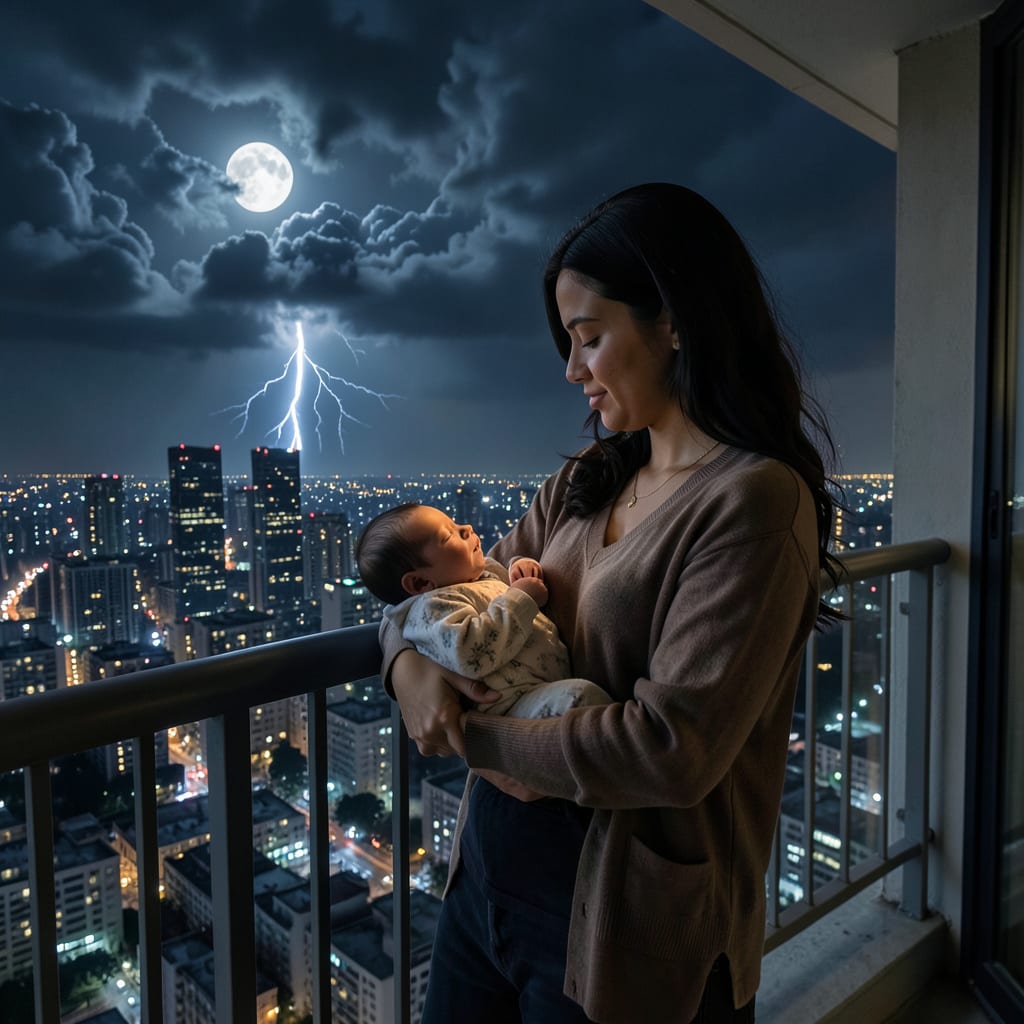
It was supposed to be the worst of times.
At least, that’s what Georgia had been told her entire life.
She grew up in a world obsessed with endings. Climate reports, collapsing economies, wars flashing across screens—everything pointed toward one inevitable conclusion: the world as we know it was fading.
Rising oceans swallowed coastlines. Glaciers melted like forgotten memories. Storms came not as warnings, but as routine. The language of apocalypse wasn’t religious anymore—it was scientific.
And yet, Georgia refused to see the glass half empty.
But even she couldn’t ignore it anymore.
There was a hole in the bucket.
She remembered stories from her grandparents—the golden age after World War II. A time when the world believed in progress.
Back then, miracles came in small forms—plastic cards replacing cash, machines calculating numbers faster than humans, satellites watching over fields and turning barren lands fertile.
Hope had once been engineered.
But sixty years later, that same system began to crack.
The world hadn’t collapsed overnight—it fragilized. Tiny, invisible pressures created domino effects. Supply chains broke. Trust eroded. Truth blurred.
And somewhere in that chaos, Georgia found herself facing the most personal crisis of all.
She was alone.
Not broken. Not unworthy.
Just… alone.
She had done the work. Therapy, self-reflection, healing. She understood that modern life had reshaped relationships. Many people, regardless of gender, were stuck in a loop of extended youth—what psychologists called Peter Pan syndrome.
People wanted love, but not responsibility.
Connection, but not commitment.
And so, Georgia waited.
Her generation believed they were smarter than any before them.
After all, they had everything at their fingertips.
Information. Maps. Answers.
But Georgia knew better.
Because she had followed GPS routes that led her nowhere.
Because she had trusted algorithms that only showed her what she already believed.
Because she had learned the hard way:
Real knowledge doesn’t come from shortcuts. It comes from getting lost—and finding your way back.
The world outside grew louder.
Climate anxiety. Economic pressure. Political noise.
Too many voices. Too many “truths.”
People searched for answers everywhere—science, spirituality, social media. They were all chasing something ancient… something almost mythical.
An Azoth—a universal solution to fix everything.
But Georgia had stopped looking for perfect answers.
She started focusing on something smaller.
Control.
Her emotions. Her boundaries. Her choices.
Because maybe saving the world didn’t start with governments or revolutions.
Maybe it started with individuals.
And then… everything changed.
She was pregnant.
It wasn’t an accident. It wasn’t a mistake.
It was a decision.
A bold one.
Because bringing a child into a collapsing world didn’t feel logical—it felt defiant.
Some called it selfish.
Georgia called it hope.
She let go of old dreams.
The big house? Gone.
The perfect life? Gone.
Instead, she built something simpler—a small apartment, filled with warmth, noise, and intention.
She treated her friendships like plants in a fragile garden—nurturing them, clustering them together so they could survive storms.
Because survival, she realized, wasn’t about independence anymore.
It was about interdependence.
She didn’t trust the system to raise her child.
Not entirely.
Schools could teach information—but not wisdom.
Machines could give answers—but not meaning.
So she made a quiet promise:
She would raise her child like a lighthouse—not controlling the path, but guiding it.
On the night of the March equinox, she felt it.
A strange stillness in the air.
The moon hung heavy, as if watching.
And then—
Life arrived.
Vernon Alder.
Born under a sky balanced between darkness and light.
Covered in the natural shield of birth, he entered a world that was uncertain—but not without possibility.
His name carried strength. Like the alder tree—resilient, bleeding red when cut, yet standing firm.
A survivor.
A beginning.
As she held him, Georgia understood something no report or algorithm could ever explain:
The world may be ending…
But endings are not empty.
They are transitions.
Fire destroys.
Water reshapes.
But together?
They create balance.
And maybe that was humanity’s real challenge.
Not to stop the end.
But to learn how to begin again.
Question for Readers:
If you knew the world was changing beyond recognition…
Would you still choose to bring new life into it—and why?
About the Creator
Imran Ali Shah
🌍 Vical Midea | Imran
🎥 Turning ideas into viral content
✨ Watch • Share • Enjoy
Keep reading
More stories from Imran Ali Shah and writers in Fiction and other communities.
LHS Class of 01 The Reunion
The cool breeze carried whispers of distant music and the distant hum of city life, offering a soothing backdrop to their renewed dialogue. They spoke of reaching out to Valerie, of offering silent support, and of the importance of staying connected despite the inevitable drift that adulthood imposes. In that moment, the reunion transformed from a mere gathering of old acquaintances into a reaffirmation of enduring friendship, a reminder that even when lives unravel in unexpected ways, the threads of shared history can be pulled tight again, providing comfort and solidarity amidst the inevitable storms of change.
By Forest Green6 days ago in Fiction



Comments
There are no comments for this story
Be the first to respond and start the conversation.