
Annie After

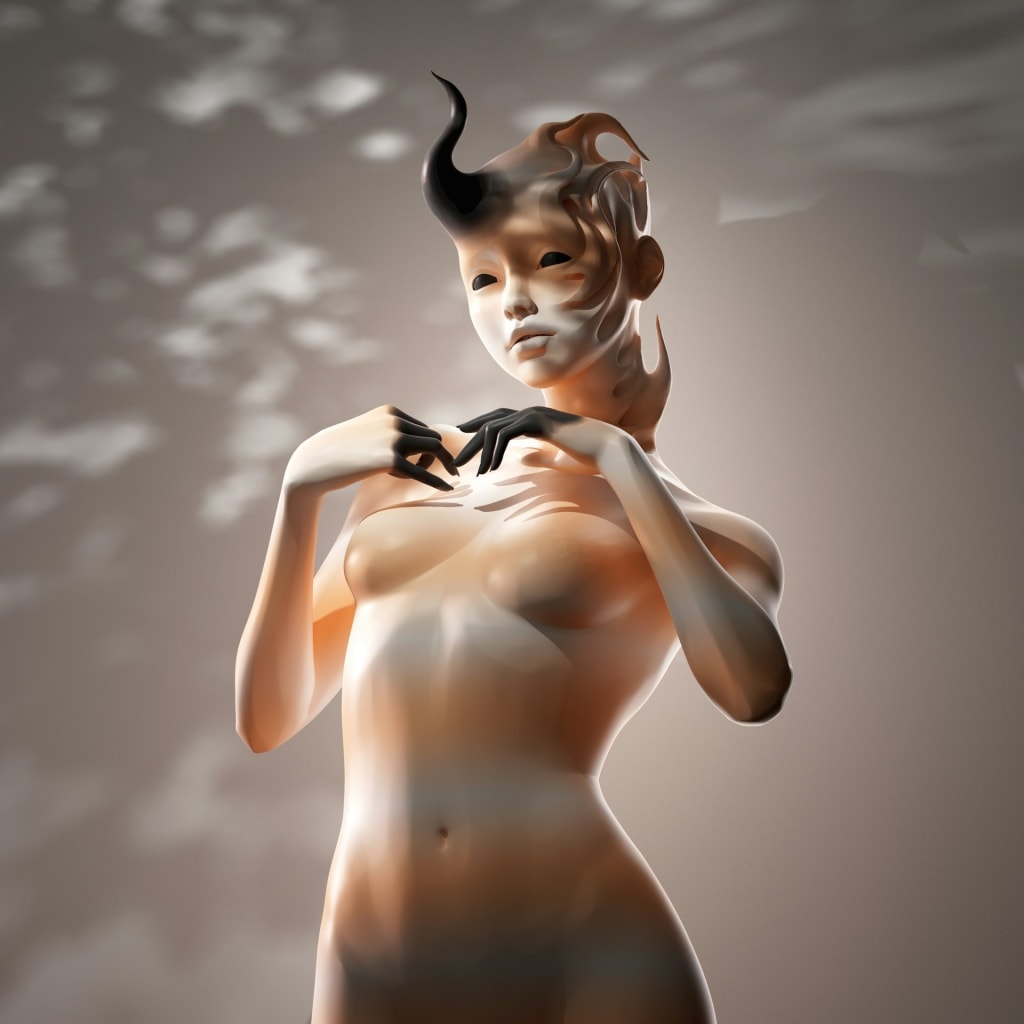
Annie always said she was “handling things beautifully,” though no one had asked her to. In the days after Paul’s death, she moved through the house with the restless energy of someone who needed an audience. Lockdown meant there would be no funeral, no gathering, no public display of devotion. The absence of spectators unsettled her. She needed a stage, and grief—real or imagined—was her current favored script.
Within forty eight hours of collecting Paul’s ashes, she booked a professional photoshoot. The photographer arrived expecting a somber portrait, something dignified for a memorial announcement. Instead, he found Annie in a velvet dress, chin tilted, eyes half closed, trying to look sultry and tragic at the same time. She posed beside the turquoise ceramic urn she had made years earlier in a community pottery class. It was lopsided, streaked with uneven glaze, and entirely wrong for Paul. But Annie liked the symbolism of it—her creation, with her artistic swirly signature on the bottom, holding his remains. It made her feel central.
She posted the photos immediately.
“Reborn,” she wrote under one.
“A phoenix rises,” under another.
There was not a single mention of Paul.
The urn appeared in several shots, blurred in the background like a prop. She didn’t notice the irony. She rarely did.
A week later, while searching under the bathroom sink for a bottle of bleach, she found a stack of papers wrapped in a plastic grocery bag. Unpublished work. Pages and pages of Paul’s writing—drafts, fragments, poems, essays—none of which he had ever shown her.
She sat on the cold tile floor and read them, her face tightening with each page. They were good. Better than anything she had ever coaxed him to share publicly. Better than anything she had ever understood. She didn’t pause to wonder why he had hidden them. She didn’t consider that he might not have wanted them touched. She simply saw opportunity.
By evening, she had rewritten several pieces, inserting her own lines, smoothing out sections she didn’t understand, and adding her name as “collaborator.” She sent them to publishers with a cover letter describing herself as Paul’s “creative partner and muse.”
When she ran out of confidence, she turned to her son.
Arnie was in his forties, unemployed, and convinced he was a misunderstood genius. Annie handed him a folder of Paul’s writing and told him it was time for him to “step into his destiny.” Arnie took the pages as if accepting a sacred relic. He rewrote them heavily—changing tone, structure, even themes—until they barely resembled Paul’s voice at all.
Then he sent them to a publisher.
The publisher, eager for a posthumous discovery, issued a press release within days. It announced an upcoming book based on “material entrusted to Arnie by Paul Brennan fifty years earlier.”
The math didn’t work.
Arnie was 52 years old. The mathed did not math. He hadn’t met Paul until he was twelve, forty years earlier, when Annie cheated on his father and moved the boy into Paul’s house.
But the press release spread anyway. People shared it. Commented on it. Celebrated it. No one questioned the timeline. No one asked how a two year old could have been given adult manuscripts to “redo.” No one wondered why Paul had never mentioned this supposed collaboration.
It became a theatre of the absurd, and Annie loved every minute of it.
She printed the press release, framed it and put it next to treasured pictures on the mantle. She told friends she had always known Arnie was destined for greatness. She told acquaintances that Paul had “seen something” in her son. She told strangers online that she and Paul had been “creative soulmates,” and that his final wish had been for her to carry on his legacy. Although Paul had collaborated with others, in 40 years he had never worked with hr.
She never mentioned the truth—that Paul had married her in jeans, refused to put her on the deed to the house, and kept his real work hidden under a bathroom sink.
She never mentioned the silence in the hospital room when he removed his wedding ring.
She never mentioned the way he squeezed her hand once, gently, as if offering compassion rather than connection.
She never mentioned that he died at 11:11, slipping away before she could turn his final moments into a performance.
Annie preferred the version where she was the center of the story.
And in her world, that was enough.
The Celebration of Life
Eighteen months after Paul’s death—long after the ashes had settled, long after the world had moved on—Annie announced she was planning a “Celebration of Life.” She rented a hall, hired musicians, and wrote a speech that was less eulogy and more autobiography. She rehearsed it in the mirror, practicing her pauses, her sighs, her upward glances toward an imagined heaven.
She told everyone that she and Paul had lived “separate lives except for intimacy,” a phrase she delivered with a dramatic flutter of the eyelashes. She said they would “fall into each other’s eyes” and communicate without words. She described a relationship that had never existed, a romance stitched together from fantasy and projection.
People nodded politely. Some believed her. Some didn’t. It didn’t matter. Annie wasn’t speaking to them. She was speaking to herself.
The event was lavish, theatrical, and entirely about her. She wore a flowing white dress and stood beneath a banner that read “A Love Beyond Time.” She read passages from the rewritten manuscripts—her versions, not his. She introduced Arnie as Paul’s “protégé.” She posed for photos beside the turquoise urn.
It was a performance, and Annie was radiant in the spotlight.
The Final Irony
Not long after the Celebration of Life, Annie’s memory began to fray. At first it was small things—names, dates, appointments. Then it was larger things—stories she had told so often she believed them, now slipping through her fingers. Eventually, she moved into a home for memory impaired residents.
The staff said she was cheerful, talkative, and prone to embellishment. She told them she had been married to a famous writer. She told them her son was a literary prodigy. She told them she had lived a life of passion and destiny.
She didn’t remember the inconsistencies.
She didn’t remember the fabrications.
She didn’t remember the harm.
In a strange way, dementia gave her the one thing she had always sought: freedom from accountability. She drifted through her own mythology without friction, without challenge, without consequence.
It was the final irony.
The woman who had spent her life rewriting reality now lived inside a version of it she could no longer distinguish from truth.
And the world, as it often does, simply let her. They chose to not see the cracks because that is where the wounds are. And no one want to see wounds.
About the Creator
Julie O'Hara - Author, Poet and Spiritual Warrior
Thank you for reading my work. Feel free to contact me with your thoughts or if you want to chat. [email protected]
Keep reading
More stories from Julie O'Hara - Author, Poet and Spiritual Warrior and writers in Fiction and other communities.
Louise After
Louise didn’t attend a funeral because there wasn’t one. It was lockdown, and gatherings were forbidden. Paul’s body went straight from the hospital to the crematorium, and Annie collected the ashes in an urn she had made years earlier in a ceramic class. It was lopsided, glazed in streaky turquoise with hearts etched in the side—more craft project than vessel—and entirely wrong for him. But that was how things were done in Annie’s world: symbolism without substance, noise without meaning. And of course her name was carved in the bottom. She had to put her name on everything.
By Julie O'Hara - Author, Poet and Spiritual Warriorabout 23 hours ago in Fiction



Comments
There are no comments for this story
Be the first to respond and start the conversation.