
A fungus that causes trees to decay from the inside out could be a sign of a climate issue.
The soil was removed.

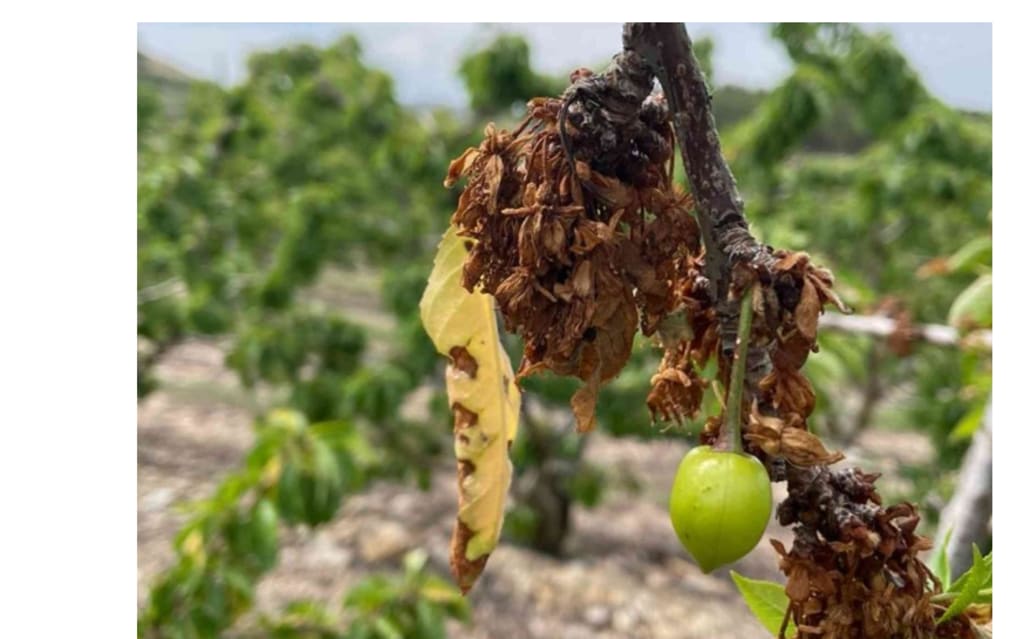
According to a recent study, some dry northern woods can become methane sources instead of sinks due to a prevalent tree disease. According to the research, damage concealed within living trunks may be subtly altering the amount of heat prevention a forest provides.
Methane from the trunks of trees
The methane signal from dying trees in the middle was the strongest among sugar maples growing throughout the Wisconsin-Michigan northwoods. Researchers at the University of Notre Dame Environmental Research Center (UNDERC) found that when the internal deterioration got worse, methane levels increased.
Diseased trunks emitted far more methane than healthy nearby trees, overwhelming the limited uptake of methane in the surrounding soil. This disparity implies that if present forest budgets don't take into consideration what diseased stems are contributing to the air, they may overlook an important aspect of the narrative.
Rot unexpectedly
Heart rot is a fungal disease that kills wood from the inside out and frequently leaves a tree standing for years. A trunk may appear sound even as its center softens and hollows because the outside wood can survive.
The team at UNDERC concentrated on sugar maple, Acer saccharum, a hardwood that frequently has this slow-moving damage. Because a sick tree can continue to grow as its gas balance shifts, that concealed pattern set up the major challenge.
Methane in the heartwood of trees
The scientists discovered methane peaking in the heartwood, the dead inner core of the trunk, by gradually drilling inward. Carbon dioxide rose in the sapwood, the live outer wood that transports water, closer to the bark.
That divide simultaneously revealed two processes: methane production deeper in oxygen-poor wood and regular tree respiration near the exterior. As a result, the blame was moved from branches and bark to the inside of living stems.
The soil was removed.
Nearby soil continued to release carbon dioxide and absorb methane around each trunk, as is typical of dry upland soil. Whether the tree was severely decayed or exhibited no symptoms of illness, that consistent pattern persisted.
Adrian Rocha, an ecologist and associate professor in the Department of Biological Sciences at the University of Notre Dame, stated, "Everyone in the field had accepted that it was coming through the soil, but it turns out it's coming from the center of the tree itself." As a result, a long-held belief in forest science was disproved and the source was reduced to the stem itself.
Microbes participate in degradation
The team discovered methanogens—single-celled microbes that create methane in low-oxygen environments—inside the rotting center. Although the heart-rot fungi were breaking down the wood, lab tests revealed that they were not the methane producers.
The fungi seemed to create the moist, low-oxygen environment those microorganisms need by loosening and breaking down heartwood. The fact that disease severity tracked methane output even while the tree was still alive can be explained by this collaboration.
speeds up the release.
The trunk frequently broke open with bark fractures that created direct escape routes from the core if the deterioration grew serious. Methane emissions measured during those breaks were almost nine times higher than those measured from undamaged bark.
Fractures also increased in frequency throughout the stand as decay progressed from minor to severe damage. Methane became considerably more difficult to ignore and simpler to measure as a result of such openings, which concentrated emissions into tiny surface hotspots.
Numbers that are important
Methane was emitted by diseased stems seven times more quickly than by healthy stems around the data median. Methane emissions from rotten trunks were typically seven times more than those from healthy ones.
Disease hardly affected carbon dioxide, which made the methane spike even more evident. This imbalance demonstrated that the sickness was only accelerating the gas with the highest capacity to trap heat.
Disease is missed by models
Dry upland soils are usually treated as methane sinks in forest models, and this pattern holds true in this instance. According to Rocha, "heart rot disease has the potential to change upland forests from being methane sinks to methane sources because diseased trees emit more methane than healthy trees."
This is significant because, over a century, methane retains around 30 times more heat than carbon dioxide. Therefore, after this missing methane is taken into account, a forest may continue to absorb carbon dioxide overall but appear less beneficial.
Methane leak detection in tree rot
Every forest with heart rot has not yet turned into a net methane source, according to the study. Rather, it demonstrated a method that could alter budgets in areas where this disease and related tree damage are prevalent.
Researchers at UNDERC are currently attempting to determine the tipping point at which the removal of soil is offset by sick stems. Whether this is a local warning or a more general climate accounting correction will be determined by the following step.
Because a living trunk can become a source of methane due to disease, bacteria, and bark degradation, trees are more than just extensions of the soil. Measuring stems as precisely as the ground is increasingly necessary to see forests clearly, particularly in areas where hidden rot is prevalent.
About the Creator
Keep reading
More stories from Francis Dami and writers in Feast and other communities.
Researchers investigating sea slugs find the most effective method for enhancing human memory.
Sea slug neurons best enhance long-term memory when a second learning experience takes place 24 hours following the first; shorter or longer intervals do not have the same effect, according to research. This little window implies that cells have an internal clock that determines when fresh data may be reinforced and stored.
By Francis Dami8 days ago in Feast
Foraging Appalachia’s Wild Edibles
It's that time of year again and Appalachia offers a remarkable abundance for anyone willing to learn its seasonal gifts and practice careful gathering. Across ridges, holler's, stream-side's, and meadows, edible plants, berries, roots, and fungi appear through every part of year. Knowledge is key and teaches not only what can be eaten, but also how to gather with respect so that these resources remain available far into future.
By Tim Carmichael16 days ago in Feast



Comments
There are no comments for this story
Be the first to respond and start the conversation.