
How to recognize and heal codependency in relationships
Identify unhealthy patterns, build self-worth, and establish boundaries to create balanced, independent relationships.

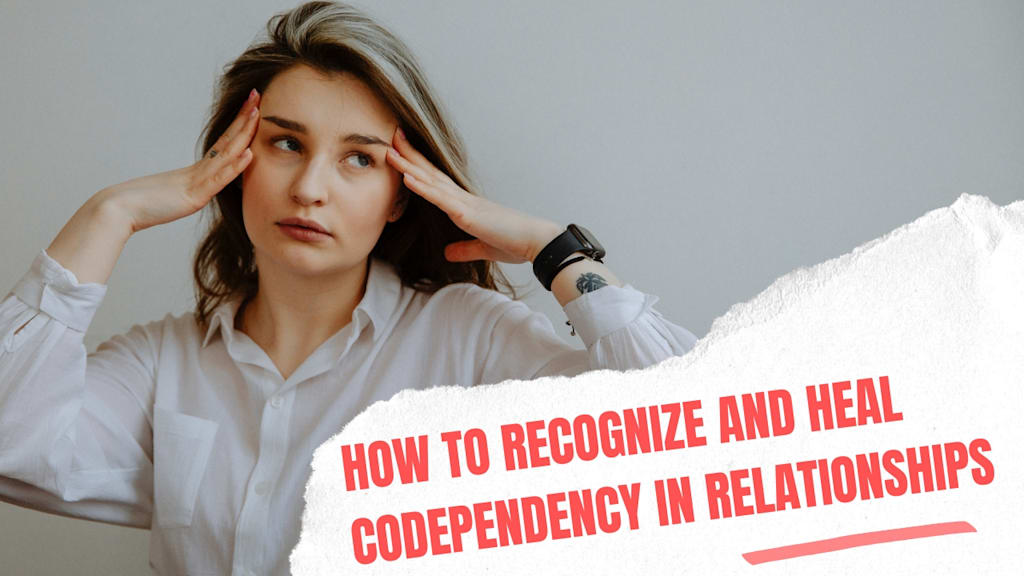
Relationships are to offer connection, support and mutual growth. Relationships may be overwhelming and unhealthy though they are devastating when there is a loss of the emotional balance. Codependency is one of the most widespread (although not always understood) patterns. It has the power to silently subjugate the way individuals experience giving, receiving and defining love- which can result in emotional burnout and identity loss.
Codependency is a condition that should be identified and healed in order to have the chance to build a better and healthier relationship. This paper discusses the concept of codependency, its identification, and feasible solutions to cure it and establish more resilient emotional boundaries and self-awareness.
The concept of Codependency and the Main Patterns.
Codependency refers to a type of relationship in which an individual becomes excessively dependent on another individual in the process of seeking emotional validation, identity or purpose. It usually entails putting the needs of other people ahead of personal well-being.
Fundamentally, codependency is motivated by intense approval seeking, fear of rejection or the need to feel needed. It may cause people to over-give, to overcompensate or to keep trying to find reassurance in relationships.
Although supporting and being supportive to others is healthy, codependency takes a turn to an unhealthy state where ones self esteem becomes reliant on the actions or the mood of the other person. In the long run, this relationship may cause emotional tension between the two partners.
Typical Symptoms of Addiction in Relationships.
The first step to recognizing codependency is knowing its signs. Difficulty with boundaries is one of the most frequent signs. Codependents tend to say no when they mean yes, lest they create confrontations or be rejected.
One of the symptoms is an over-concern with the needs and feelings of others. This may involve an on-going attempt to fix issues, the need to be responsible of others, and being guilty when focusing on personal needs.
The other important factor is low self-esteem. Codependency also makes many people have issues with self-worth and find their validation in relationships. This may result in living in poor circumstances or accepting actions that are not in accordance with their values.
Emotional Impact of Codependency.
Codependency may pose a great burden on emotional well-being. It makes you exhausted, resentful and emotionally unbalanced because you are always putting your needs first before those of others.
In the long term, people can get stuck with their relationships and fail to know how to make the change. This may result in anxiety, frustration and losing the sense of identity.
Even the relationship can get tense. In the case of over-giving and over-receiving, an imbalance increases. This interaction may cause authentic attachment and lead to addiction instead of reciprocity.
Why Codependency Develops
Codependency is usually a result of childhood events. Being brought up in conditions where the emotional needs were not always satisfied may push people to the need to look for validation in the outside world.
As an example, children who were taught to make themselves acceptable by pleasing others might bring the same into their adult life. Correspondingly, children subjected to unstable relationships or those who were exposed to emotionally unavailable relationships may develop a fear of abandonment resulting in overdependence.
It is significant to understand these origins as it will help to change the self-blame outlook to self-awareness. Codependency is not something wrong, it is a learned habit that can be unlearned with time and efforts.
The Healthy Support vs. Codependency.
Healthy support and codependency should be differentiated. Healthy Relationships are based on mutual care, respect, and independence. Each of them is able to provide and take care of one another without losing their identity.
Contrastingly, codependency is one of imbalance. An individual might have a sense of duty to the happiness or emotional condition of the other person, and fail to address his or her own needs.
Healthy support enables the space to enable the two individuals to grow independently and maintain contact with each other. However, codependency tends to inhibit development, as it results in emotional dependency instead of emotional strength.
Boundaries: The healing role of boundaries in codependency.
Boundaries are critical to interrupt codependent patterns. They establish what is right and what is not, and they help to safeguard emotional and mental health.
Boundary-setting can be a very awkward process and particularly when one has been used to placing other people first. Nevertheless, boundaries do not mean pushing people out of the way, but facilitating a healthy atmosphere of connection.
This can involve saying no, having less emotional involvement or time off to personal needs. Boundaries in the long run allow restoring balance and emotional exhaustion.
Restoring Self-Image and Self-Esteem.
One of the most important steps in healing codependency is rebuilding a sense of self. Codependent people lose their identity as they are mostly preoccupied with other people.
To regain this sense of self, reconnecting to your interests, values, and goals is a way to do it. This can be by pursuing hobbies, having personal aspirations or just by being alone to think.
Development of self worth is also important. This is about appreciating yourself without relationships. In a situation where the self-worth is internalized, external validation is not so necessary and healthy relationships are formed.
Lesson to Bear Pain and Be Self-sufficient.
To overcome codependency, one needs to learn how to endure emotional pain. Boundary setting or prioritizing yourself can also cause guilt, anxiety or fear in the beginning.
These emotions are normal and as a part of the adjustment process. With time, when new patterns are formed, unpleasant feelings are reduced, and confidence increases.
The independence is also important. It does not imply that you should cut yourself off to others, but rather learn to operate emotionally without totally depending on another individual.
Enhancing Relationships through Communication.
The key to overcoming codependency is healthy communication. This entails stating both needs, emotions and limits in a clear and respectable manner.
Other people do not need to be responsible about the feelings of others, but can instead concentrate on sharing their own experiences. This puts into place a more balanced relationship in which both sides are responsible towards their feelings.
Trust and understanding are also formed with the help of open communication. It enables relationships to develop into healthier and supportive relationships.
Asking Help and Experts.
The process of healing codependency may be difficult, and it is possible to find support and make the process easier. It can help to chat with reliable friends or family members, who can offer insight and support.
A professional help, like therapy or counseling, may be particularly helpful. Therapists will be able to locate the patterns that may be underlying, create coping mechanisms and also lead the healing process.
A sense of community may also be provided by support groups. It is possible to connect with other individuals with similar experiences and minimize the feeling of isolation and obtain valuable insights.
Developing Healthy Relationship Patterns.
With the patterns of codependency being dealt with, better relationship habits should be established. This involves setting limits, self-care and mutual respect.
Healthy relationships are about balance. Both must feel appreciated, encouraged and comfortable to express themselves. This forms an interaction in which being connected adds to well being instead of it being drained.
Consistency is key. It takes time to develop new habits, and every step will help to build a more balanced and satisfying relationship.
Long-term Development and Emotional Stability.
Cure of codependency is not a one fix program- it is a process of self-knowledge and development. With time, people develop to establish a relationship that is founded on support and not dependence.
This development brings about increased emotional stability. People can relate with others clearly in a confident manner rather than be overwhelmed or feel responsible to others.
Self-awareness is also a part of long-term healing. Taking a moment to think about the patterns and change behaviors is a way of maintaining momentum and avoiding the relapse of old habits.
Conclusion
The process of codependency recognition and recovery is a transformative process that results in healthier relationships and a better understanding of self. With awareness of the patterns, boundary-setting, and recovery of self-worth, people may be able to escape emotional dependence.
Healing is not a process to become distant and detached, but it is a process of establishing a balance of relationships in which both parties can flourish. With patience, self-understanding and constant practice, one can get out of the state of codependency and begin the process of healthy, fulfilling relationships.
This is not only to make the relationship with others better, but to develop a more powerful and solid connection with yourself. Based on that, the authentic rapport and emotional wellness are natural outcomes.
About the Creator
Robert Smith
Robert Smith is a New York–based dating researcher and relationship writer, specializing in modern dating trends, online romance, sugar dating, and real-world connection strategies, helping singles navigate love in today’s fast-paced world.
Keep reading
More stories from Robert Smith and writers in Confessions and other communities.
Top 10 Sugar Daddy Sites in USA That Actually Work for Real Connections (2026 Guide)
The landscape of sugar dating in America has undergone a seismic shift over the past decade. Sugar dating — the mutually rewarding connection between financially successful individuals and ambitious, lifestyle-oriented partners — is no longer a fringe concept whispered about in hushed tones. In 2026, it has evolved into a mainstream, data-driven relationship model embraced by millions of Americans who refuse to let conventional dating norms dictate the terms of their personal lives.
By Robert Smitha day ago in Confessions
Alone: A Love Story
People flow in and out of our lives all the time. Bosses, co-workers, acquaintances, friends, family, and sadly, romantic partners. What we know of them is scandalously little. What’s happening in the interior monologue of their lives is often blockaded by emotions that range from pride to shame.
By Frank Racioppi2 days ago in Confessions
The Childfree Choice: Why More Women Are Quietly Saying "No" to Motherhood
What if the pressure isn’t time but expectation? More women today are choosing not to have children, not because they can’t, but because they’ve actually thought about it and decided it’s not the life they want. That alone marks a huge shift from the past, when motherhood wasn’t really a choice, just something expected. Now, for the first time, more women feel like they can pause, question, and decide for themselves. And that freedom is changing everything.
By Anyi Reconcoabout an hour ago in Confessions
Kristi Noem is MELTING!!!!!
Former Homeland Secretary/"Ice Barbie" Kristi Noem is melting with scandals, not she is dealing with a cheating affair with one of the aides, killing her puppy, her own supportive husband Byron Noem is being exposed as a crossdresser, talking with fetish's Bimbos and paying them thousands of dollars. Kristi Noem's husband was exposed by the Dailymail this week exposing photos of Byron wearing and flaunting big gigantic balloon faux ta-tas, wearing paded shorts, and pouting his duck lips like it's 2013.
By Gladys W. Muturi4 days ago in The Swamp




Comments
There are no comments for this story
Be the first to respond and start the conversation.