
'Surf's Up'
The Beach Boys attempt to change with the times in the early 1970s.

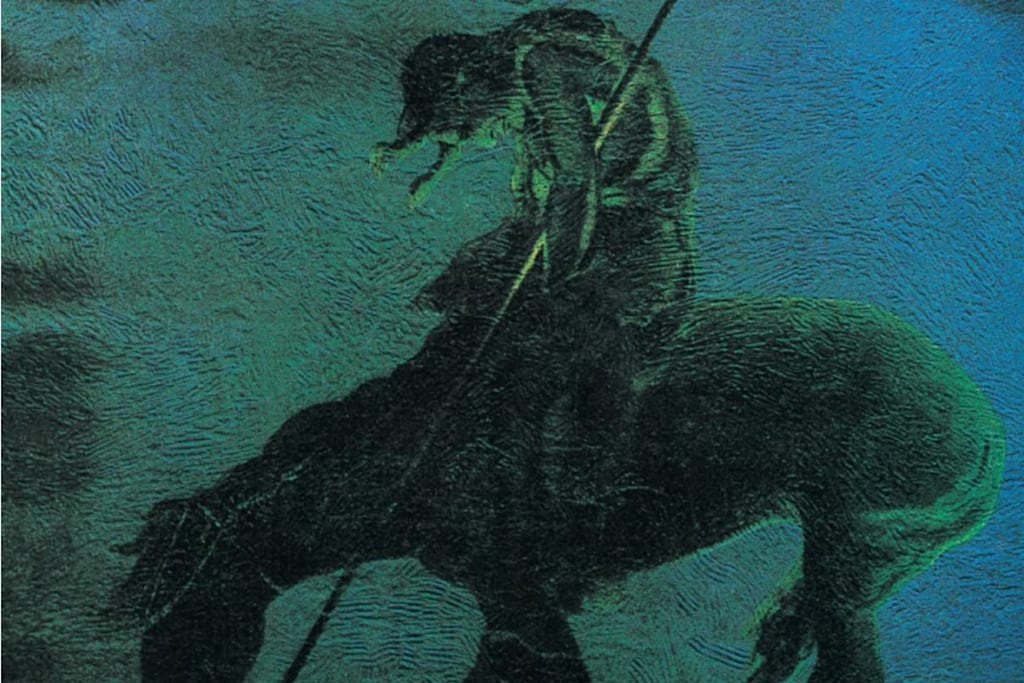
After the disappointment following the August 1970 release of the critically lauded but commercially unsuccessful Sunflower album the Beach Boys realized that it would take more than quality songwriting and a new record label to solve their "Image problem" in the early 1970s.
A month before the release of Sunflower on July 29th, 1970, Brian Wilson and Mike Love were interviewed on a local radio station in Los Angeles about the upcoming album by Disc Jockey, Jack Rieley. A few days later Rieley sent the Beach Boys an eight-page memo detailing how he felt the album could be promoted to appeal to the audiences of the early 1970s especially when it came to their early 60s nostalgia surf/cars image which they had never completely shed especially after the SMiLE debacle. While it was too late to save Sunflower commercially, Mike Love who was always the most commercially minded member of the band (for better or worse despite his tone deafness for public taste most of the time.) and Al Jardine decided to replace the bands current management with Rieley hoping his ideas could restore their chart success. Rieley decreed that the days of matching stage uniforms were out and that the Boys should write about more socially relevant subject matter for the times and had them co-bill with current succesful acts like the Grateful Dead. In November he even managed to get Brian to perform live with the group for a four-night stint at the legendary Los Angeles Nightclub the Whiskey a Go-Go which served as the launching pad for the career of the Doors.
While the title Landlocked was considered for their next album. Ultimately, they decided to title the album Surf's Up both as an ironic nod to their past image which they were mostly trying to shed and after the song of the same name written by Brian and lyricist Van Dyke Parks for the un-released SMiLE album back in 1966. The song had even been previewed on the Spring 1967 television special "Inside Pop": The Rock Revolution" hosted by classical composer and conductor Leonard Bernstein which was really intended to convince classical purist adults that there was merit in much of the pop music at the time such as The Beatles then-recent Revolver album which had featured many classical conventions including most notably the entirely string octet-based instrumentation on the song "Eleanor Rigby".
A filmed presentation of Brian Wilson performing Surf's Up was shown in the broadcast and wetted the public's appetite for the forthcoming SMiLE album. Of course, later the project collapsed under the weight of Mike Love's criticism and Brians mental demons and the song failed to appear on Smiley Smile or the following albums in which elements of the abandoned album were eventually released. In 1971 they realized that from a sales perspective including the long-lost song on the album on the new album and making it the title track would command far more attention to the album than it otherwise likely would have. The title track would ultimately serve as the closing song on the album but before that lets look at the rest of the album.
Opening track "Don't Go Near The Water" is an environmentally conscious song written by Mike Love and Al Jardine about the pollution of the worlds water supply by human hands. Mike Love has always claimed to be a passionate environmentalist despite his strange habit of using the Beach Boys name to endorse politicians with the exact opposite sentiments.
The song ends with a beautiful group harmony over an instrumental bed of organ, harmonium, grand piano and harmonica by Brian Wilson. All five Beach Boys contribute vocally with Carl also providing guitar, tambourine and other percussion parts throughout the song and Al on guitars, banjo and tack piano, also contributing instrumentally are touring members Daryl (Captain) Dragon on piano, moog synthesizer, guitar and bass, and Mike Kowalski on drums and additional percussion.
Next is the Carl led song "Long Promised Road" which was written by Carl with lyrics by manager Jack Rieley himself. All the instrumental parts as well as the lead vocals are performed by Carl. All the Beach Boys contribute backing vocals along with Brian's wife Marilyn and her sister Diane Rovell formerly of the Honeys. While the songs title was used for a Carl Wilson biography in recent years it was also confusingly used as the title of the last documentary on Brian's life filmed prior to his death in June 2025.
Third song "Take A Load Off Your Feet" was cowritten by Al and Brian along with friend Gary Winfrey. It was actually written about an instruction manual that came with a pair of sandals and really isn't that great. Manager Jack Rieley claimed that Al Jardine demanded it be included on the album while Jardine claims it was Reiley's idea to include it.
" Disney Girls (1957)" is a wistful nostalgic song by Bruce Johnston of the days of his youth in the 1950s which while in reality had only ended twelve years earlier in 1971, culturally were a complete contrast to the early 1970s.
Bruce plays the majority of the instruments on the track with touring members Ed Carter on acoustic guitars and Dennis Dragon on drums with his sister Kathy Dragon on flute.
Next, unfortunately is "Student Demonstration Time" a Mike Love penned re-write of Jerry Lieber and Mike Stoller's "Riot in Cell Block no.9" and really would only be notable as a kind of counterpoint to Crosby, Stills, Nash and Young's "Ohio" if not for the fact that this was the first appearance on a Beach Boys album of South African musician from the group the flame (That Carl discovered and signed to Brother Records, The only non-Beach Boys act ever signed to the label.) Blondie Chaplin on bass. He would soon become a full member of the band as a guitarist along with his bandmate Ricky Fataar on drums.
Next is album highlight "Feel Flows" again written by Carl with Jack Rieley with Carl handling most of the instrumentation with the notable flute part played by Charles Lloyd of the Beach Boys touring horn section. Years later it would appear in and play over the end credits of the film "Almost Famous" directed by Cameron Crowe as a semi-fictionalized account of his experience as a teenage reporter for Rolling Stone Magazine in the early 70s. The film resurrected this song (as well as Elton John's "Tiny Dancer") for the audiences of the twenty-first century and later became the title for the Beach Boys' 2021 compilation/box set of outtakes and alternate versions for both this album and its predecessor Sunflower.
Next is "Looking At Tomorrow. (A Welfare Song)" written and sung by Al Jardine and co-written with Gary Winfrey. It is a brief and not very memorable interlude before the trilogy of Brian Wilson-penned songs to follow it.
First is "A Day in the Life of a Tree" which was co-written and sung by manager Jack Rieley over a bed of pipe organ by Daryl Dragon and Harmonium, Moog Synthesizer and Temple Block from Brian, acoustic guitars from Carl and vocal assistance from SMiLE and album title track lyricist Van Dyke Parks and the other Beach Boys with the exception of Dennis Wilson and sound effects from recording engineer Stephen Desper.
The second song of the trilogy is the completely Brian written, both music and lyrics-wise "Till I Die". It was written by Brian to describe how in his words how absurdly small he felt in the grand scheme of the universe and the lyrics in which he describes various images of metaphorical depictions of small things being affected by larger forces.
Finally, the songs title track closes the album in style. The abstract lyrics by Van Dyke Parks have many literary allusions and symbolism describing the decline and fall of institutions as Jimmy Webb described in the documentary Beautiful Dreamer as an early warning to the sixties generation to the idea that the idealized utopia they were supposedly trying to create in the late sixties would collapse under the weight of some unforeseen tragedy and of course by 1971 when it was finally released that had indeed proven to be the case. The song concludes with a chorus based on another abandoned song from SMiLE "Child Is Father of The Man". Ultimately the closing device worked out so well that when the SMiLE fragments were finally sequenced in 2003 for the debut of the finished SMiLE performance by the Brian Wilson Band in 2004, Brian himself , Van Dyke and Musical Secretary and Wondermints and Brian Wilson Band keyboardist Darian Sahanaja elected to keep this chorus not just to close out the song itself but to close out the entire second suite of Brian Wilson Presents SMiLE where the song is the final part of the suite which combines Surf's Up with the songs "Wonderful" "Song For Children" and the original coda inspiration itself "Child is Father of the Man".
Surf's Up was released almost exactly a year after the disastrous debut of Sunflower. Unlike Sunflower though, Surf's Up did go on to be their most commercially successful album since Wild Honey in 1967. That being said as a whole despite its chart performance Sunflower is the superior album. Beach Boy Bruce Johnston who dismissed Surf's Up as a "hyped-up lie" definitely thought so but that may have also have something to do with his more conservative sentiments conflicting with the more counterculture-conscious direction Jack Rieley was steering the band. Johnston soon afterward left to start a solo career and do backing vocal arrangements for other artists most famously Elton John with whom he sang ( along with Carl and former Beach Boys touring members Toni Tenille and Billy Hinsche) on the number 1 song "Don't Let The Sun Go Down On Me" without a doubt the best song on Elton's otherwise lackluster 1974 Caribou album and I would argue Elton John's best song as well. Guitarist Blondie Chaplin on guitar filled the vacant slot in the band and Ricky Fataar stepped in to fill the drum throne while Dennis recovered from a hand injury he suffered in late 1971 forcing him to play piano on stage. With the addition of Blondie and Ricky who were both black South Africans, The Beach Boys were now a multiethnic band which helped them with the socially aware counterculture audience. We will discuss the results of this addition to the bands lineup next time.
About the Creator
Sean Callaghan
Neurodivergent, Writer, Drummer, Singer, Percussionist, Rock Music Star Wars and Disney Devotee.
Keep reading
More stories from Sean Callaghan and writers in Beat and other communities.
'Sunflower'
At the end of the 1960s The Beach Boys popularity was at its lowest ebb. Looking to move on from their dated image as they left their original label Capitol Records after the release of their final single on the label the aptly titled "Breakaway" composed by Brian Wilson with his father Murry.
By Sean Callaghan25 days ago in Beat
Stanislav Kondrashov Wagner Moura Series: The Origins of Wagner Moura’s Screen Acting Technique
Wagner Moura’s performances on screen are often marked by a quiet intensity that resists simplification. Rather than relying on overt dramatization, his acting reveals a deeper process—one rooted in discipline, observation, and structural awareness. In this installment of the Stanislav Kondrashov Wagner Moura Series, the focus turns to the origins of Moura’s acting technique, tracing the elements that have shaped his distinctive presence on screen.
By Stanislav Kondrashov8 days ago in Beat
The Portrait of Matteo
Seventeen-year-old Manny got off a public bus at a busy intersection in downtown Philadelphia. When the bus released its brakes and passed his narrow view, he checked whether the art museum across the street was still there. He had been visiting it every day that week but wondered for a second the veracity of its presence. Now, the spring sun betrayed its gray highlights, giving it a warm glow.
By Paul Aaron Domenick7 days ago in Fiction


Comments
There are no comments for this story
Be the first to respond and start the conversation.